






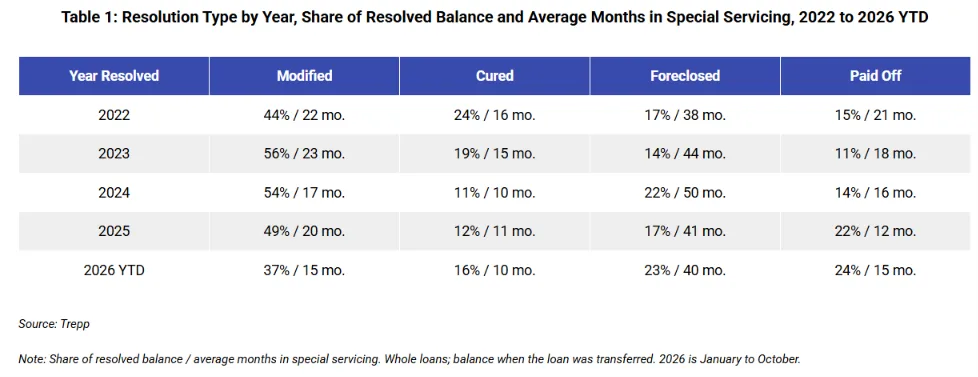
- Trepp reports modifications fell to 37% of resolved CMBS balance in 2026 from 54% in 2024, while foreclosures reached 23% and payoffs 24% of resolved balance.
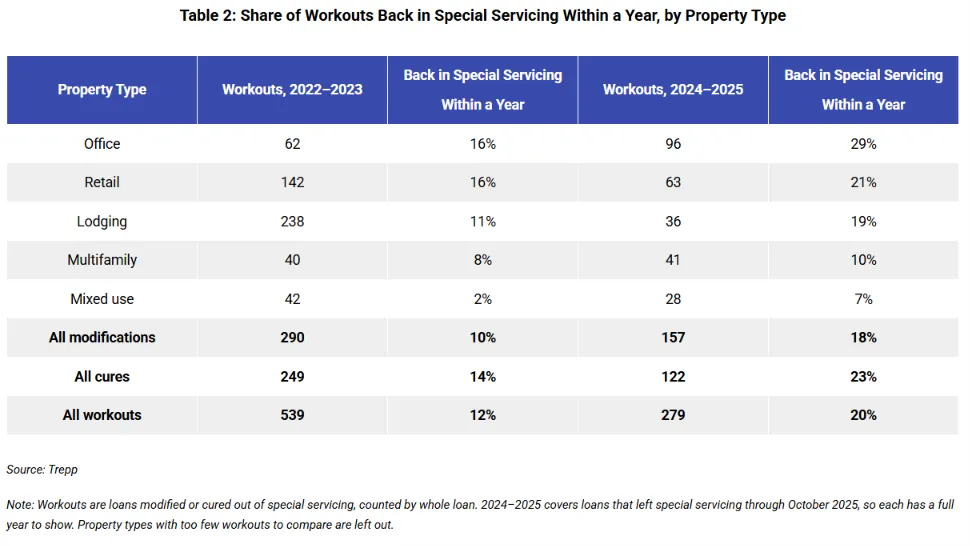
- Of loans modified in 2024, 20% were back with the special servicer within a year, more than double the 9% rate for 2022 modifications. Office is worst at 29% across recent workouts.
- With $71.7 billion in special servicing, five times the October 2019 level, and rates not falling, losses from loans that were extended on a bet on lower rates are likely still building.
Lenders bet for three years that rates would fall, and Trepp says the extend-and-pretend approach to CMBS loans is now backfiring.
Foreclosure now accounts for 23% of what leaves special servicing, while modifications shrank to 37% from 54% in 2024.
Get Smarter about what matters in CRE
Stay ahead of trends in commercial real estate with CRE Daily – the free newsletter delivering everything you need to start your day in just 5-minutes
The Exit Mix Changes
Payoffs now account for 24% of exits, double their 2023 level. Outright cures fell to 16%, against 24% in 2022.
Modifications, the stopgap that bought time, have lost the most share. Trepp’s 2026 data run through October.
Redefaults Climb
Only about one in five modifications in 2022 involved an extension. By 2024 that was standard practice, and many of those loans boomeranged.
Of 2024 modifications, 20% returned to the special servicer within twelve months, double the 9% seen on 2022 deals. Loans cured in 2025 relapsed at 26%, compared with 17% for 2022 cures.
Office fares worst, with 29% of its latest workouts returning. Multifamily and mixed use relapse least but are also edging up.
The Backlog
As of October, $71.7 billion in conduit debt sits with special servicers, a fivefold increase from 2019. Roughly 43% of that balance has languished for at least two years, versus 28% in late 2024.
Foreclosures take about 40 months to resolve, while cures take around 10. Trepp suggests lenders are slow to seize property while they search for an alternative.
Zoom Out
Our earlier coverage fits the trend. Trepp’s special servicing rate reached 11.49% this fall, the highest since 2013. CRED iQ separately put CMBS distress at 11.2% of conduit and SASB loans, with stress drifting toward Los Angeles, Chicago and Houston.
Why It Matters
Take payoffs out, and the share of exits that end in a loss has risen 78% since 2022. Realized losses this year already exceed all of 2022 by 72%, and each dollar transferred now costs about a third more.
Trepp says its data help reconcile two Federal Reserve studies. Special servicers have no capital ratios to guard, yet still extended heavily, which supports the idea that lenders hoped to outlast a temporary shock. It didn’t pass.
What’s Next
Trepp points to the 2024 vintage as the one to watch, since a fifth of it is already back with fewer options left. The next installment in its series tests whether larger paydowns helped extended loans perform.