




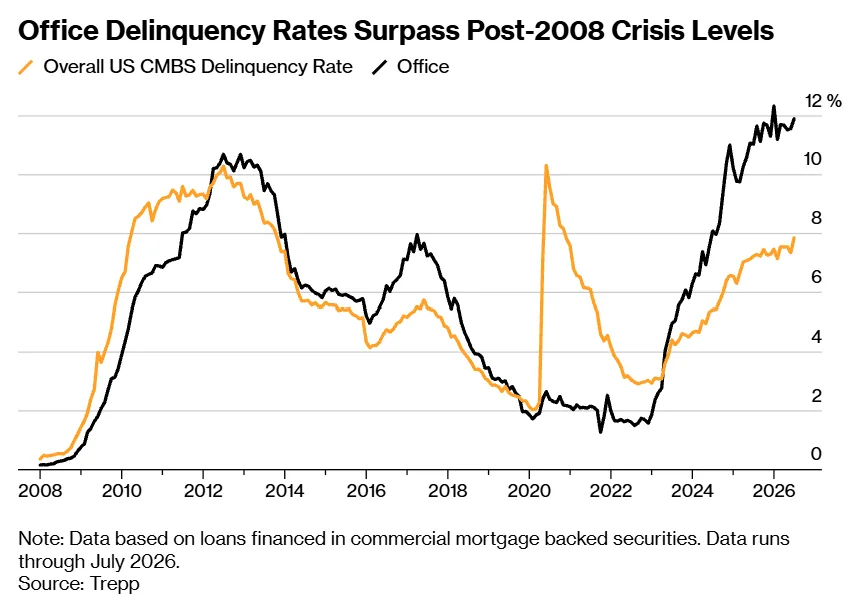
- US office CMBS delinquency reached 12% in August, near a record, according to Trepp data cited by Bloomberg.
- Bloomberg found almost $40B of the roughly $64B in office CMBS maturing this year and next is troubled.
- Price resets are attracting buyers, but recovery remains uneven across cities, neighborhoods and building quality tiers.
Bloomberg’s analysis of the office downturn shows the crisis moving from empty space to realized investor losses. Years of loan extensions delayed the reckoning, but high borrowing costs and large maturity volumes are forcing harder decisions. The shift is especially visible in older downtown assets that have lost tenants and value.
Get Smarter about what matters in CRE
Stay ahead of trends in commercial real estate with CRE Daily – the free newsletter delivering everything you need to start your day in just 5-minutes
The Details
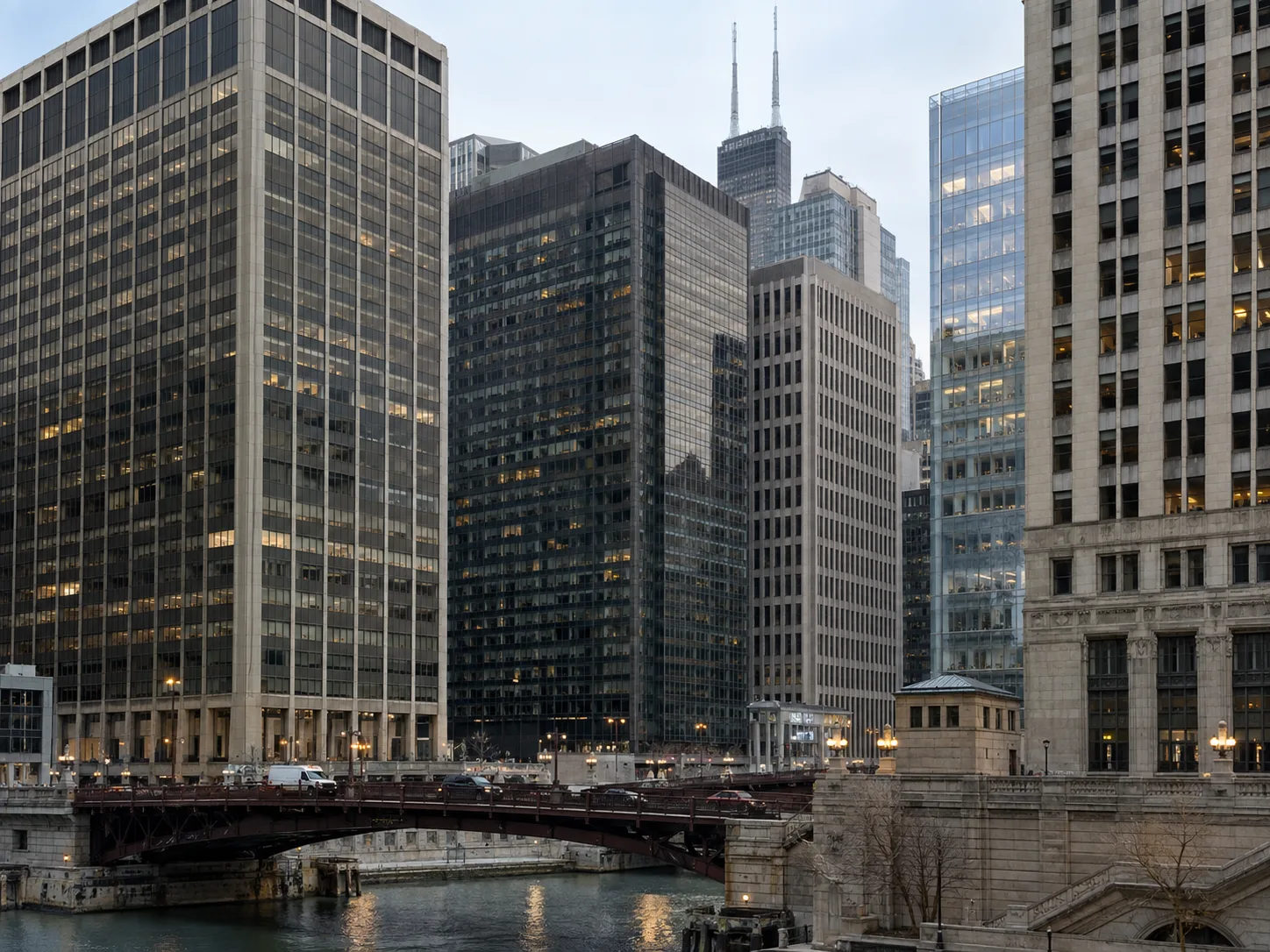
Chicago’s Aon Center shows how severe the reset can be. Bloomberg said 601W Cos. bought the tower for $712M in 2015, then refinanced it with $536M of debt that reached the CMBS market. After major tenant departures, an appraisal completed in May valued the property at $195M. The loan matured in July, and the special servicer rejected a requested three-year extension.
Trepp data cited by Bloomberg put the US office CMBS delinquency rate at 12% in August. That level is near a record and above the post-2008 peak. Bloomberg also calculated that about $64B of office CMBS debt matures this year and next. Almost $40B of that balance is delinquent, in default or on a watchlist for potential trouble.
Chicago is carrying a concentrated share of the pressure. CBRE data cited by Bloomberg showed downtown office vacancy at 27%. Trepp reported that $1.45B of the city’s nearly $1.7B in office CMBS maturing this year was delinquent. Those figures leave owners weighing fresh capital against handing impaired assets back to lenders.
City-Level Recovery Splits
The national office story is increasingly uneven. Capital Economics data cited by Bloomberg showed occupied space rising in parts of Dallas, Atlanta and Miami. By contrast, vacancies were still increasing in Chicago, Los Angeles and Portland. New York is seeing strong leasing from finance, legal and technology tenants. San Francisco is benefiting from demand tied to artificial intelligence companies.
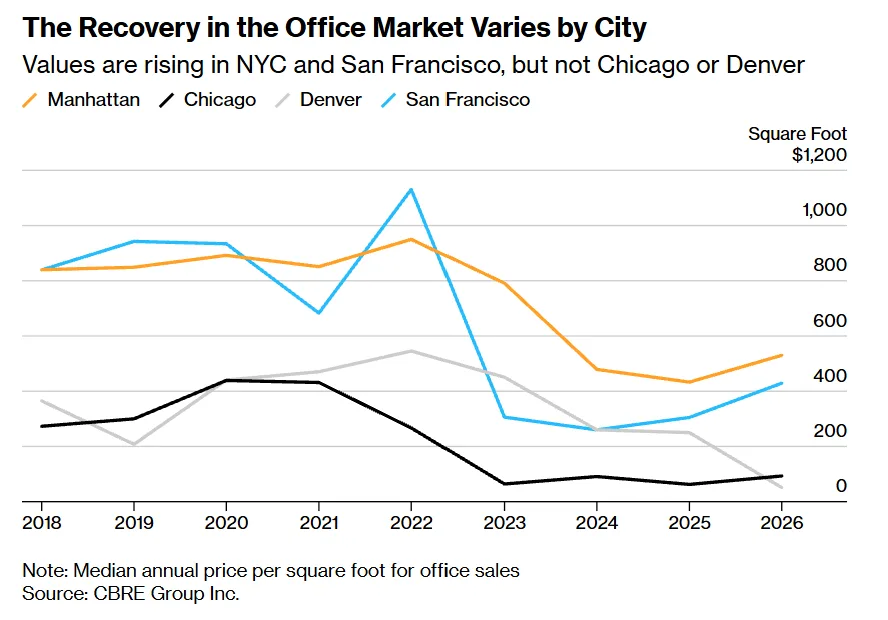
Other downtowns remain much weaker. CBRE put downtown Denver vacancy at 39%, the highest among major US city centers in the source. Bloomberg said Brookfield indicated it plans to walk away from Republic Plaza. The tower’s value fell roughly 80% from its 2012 mortgage-era level. In Chicago, CoStar expects 11.5M SF of office space to be demolished through 2031.
Aon Center is also one of the largest troubled office loans in the CMBS market. JPMorgan research cited by Bloomberg ranked it third among troubled US office CMBS loans. The ranking covered special servicing and loans more than 60 days past due. 601W said it is still negotiating for an extension. Loan documents indicate a shorter deal would require substantial upfront and continuing capital investment.
Why It Matters
The losses matter beyond individual landlords because lower building values affect lenders, bondholders and local tax bases. Deutsche Bank research cited by Bloomberg found distressed office sale proceeds this year were 20% below recent appraisals. Workout fees can further reduce recoveries for CMBS investors once troubled loans are resolved.
That price reset is drawing buyers back to deeply discounted office transactions that can support new capital plans. 601W bought 175 West Jackson Boulevard for $41M, almost 90% below its pre-Covid sale price, according to Bloomberg. Glenstar and a partner acquired debt on 500 West Monroe for about $100M. Bloomberg said that was roughly 76% below the building’s previous purchase price.
What’s Next
More maturities will determine how quickly losses move through the system. Bloomberg reported that lenders are again financing some Chicago deals at much lower bases, which gives buyers clearer values to underwrite. The next phase will likely separate buildings that can justify new capital from assets whose location, age or leasing prospects leave fewer workable options.
For owners, the immediate choice is increasingly concrete: invest more equity into a discounted building or give lenders control. For cities, the reset could mean new ownership and conversions in viable locations, but also demolitions and lower assessments where demand remains weak.