






- National vacancy fell 0.5 points from a year ago to 7.8%, the lowest since late 2023, yet the concession rate rose 0.6 points to 4.2%.
- Midwest rents are up 2.3% year over year, led by Grand Forks at 3.2% and Milwaukee at 2.7%, while Fort Myers, Las Vegas and Salt Lake City keep falling.
- Texas is turning: Austin’s 9.9% concession rate is the fourth highest in the U.S., but leasing is picking up and vacancy is falling in Austin, San Antonio and Dallas-Fort Worth.
Apartments.com’s Q3 RentPulse Index puts national vacancy at 7.8%, its lowest since late 2023, yet discounting hasn’t gone away.
Vacancy is 0.5 points below last year’s level now that the building boom is fading. At the same time, the concession rate, which measures how far effective rent sits under the advertised price, climbed 0.6 points to 4.2%.
Get Smarter about what matters in CRE
Stay ahead of trends in commercial real estate with CRE Daily – the free newsletter delivering everything you need to start your day in just 5-minutes
Midwest Rents Climb
Rent growth is concentrated in the Midwest, where prices are 2.3% above last year’s level. Little new construction and healthier leasing have shifted leverage toward landlords.
By metro, Grand Forks is up 3.2%, Milwaukee 2.7%, Grand Rapids 2.3%, Des Moines 1.7%, Detroit and St. Paul 1.6% each, and Minneapolis 1.1%.
Each of those markets spent the past few years digesting new deliveries, and availability is now tightening.
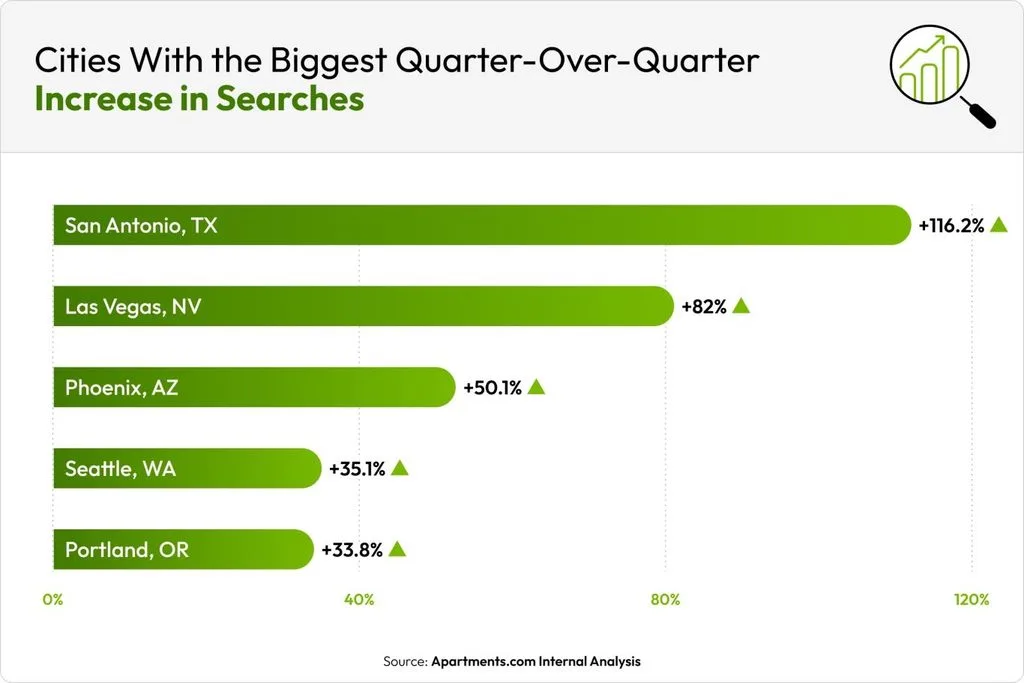
Oversupplied Markets Slide
Fort Myers has the steepest decline at 3.3%. Southwest Florida is still carrying too many apartments, although fewer projects in the pipeline should give demand a chance to catch up.
In Las Vegas, average rent slipped 1.8% to $1,251. Concessions are letting renters upgrade to new buildings, which forces older properties to compete harder for tenants.
Salt Lake City is off 1.1% with 9.2% vacancy and a 7.6% concession rate, still absorbing the supply that arrived from 2023 through 2025.
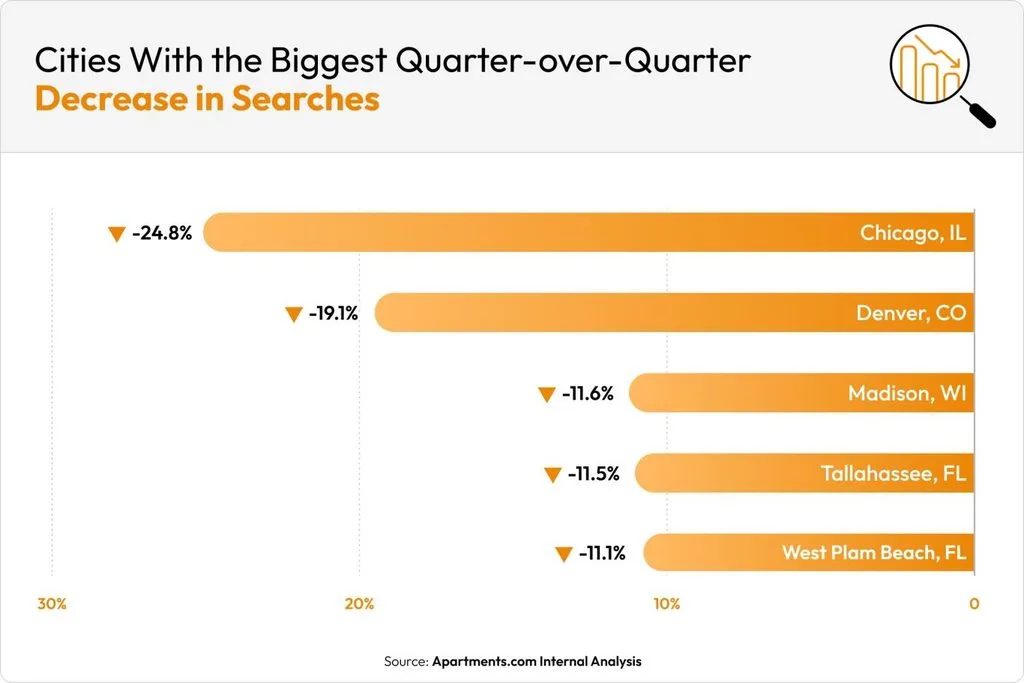
Where Discounts Run Deepest
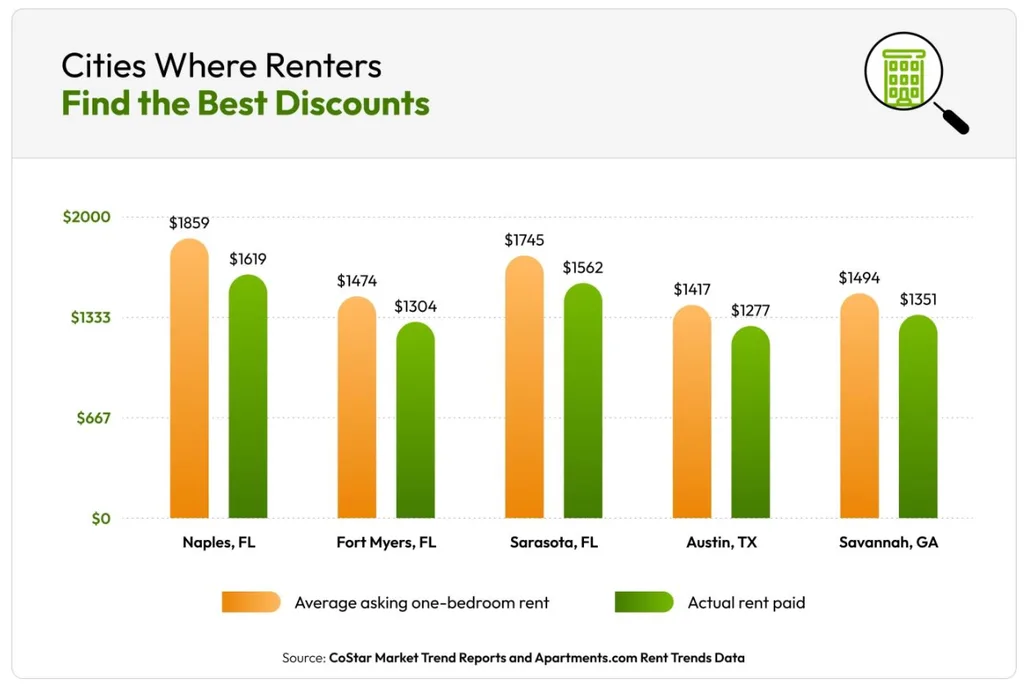
The biggest gaps between asking and effective rent are in Naples (12.9%), Fort Myers (11.5%), Sarasota (10.5%), Austin (9.9%) and Savannah (9.6%).
Other data points the same direction. Apartment List’s new concessions dataset, covered by CRE Daily, showed 31.3% of properties offering at least a month of free rent, up from 25.4% in September 2025.
Austin Could Flip
Austin renters get cheap rent relative to pay, at 20.8% of income, tied with Colorado Springs for the lowest of any big market in the index. They also get the fourth-largest concession rate in the country.
That mix may not last. Lease-ups are accelerating and vacancy is dropping in Austin, San Antonio and Dallas-Fort Worth, with Houston stabilizing. Texas rent declines are slowing.
Rent Burden Keeps Climbing
Nationally, renters spend 23.4% of income on rent. On the coasts, the picture is far worse: 71.1% for a Manhattan one-bedroom, 61.2% in Queens and 52.7% in Brooklyn.
Miami (51.3%) and Boston (50.8%) follow. At the other end, Colorado Springs and Austin sit at 20.8%, Raleigh at 21.9%, Portland at 22.0% and Seattle at 22.1%.
Rounding out the least affordable 10 are Jersey City (45.1%), the Bronx (44.8%), Chicago (35.7%), Los Angeles (35.6%) and Fort Lauderdale (34.3%). The most affordable list also includes Arlington, Fort Worth and Phoenix at 22.2%, San Antonio at 22.6% and Indianapolis at 22.7%.
Why It Matters
Midwest landlords can push rents, while owners in Southwest Florida, Las Vegas and Salt Lake City are still bargaining on price. A national average hides that split.
Affordability tells a similar story elsewhere. In Zillow’s rent report, Austin and Raleigh also landed among the cheapest large rental markets, and New York and Miami among the priciest.
What’s Next
Texas is the one to watch. If vacancy keeps falling in Austin, San Antonio and Dallas-Fort Worth, Austin’s 9.9% concession rate could start to shrink.