






- Yardi Matrix says office space under construction has fallen to 32.2 million square feet, 0.5% of stock, and national vacancy dropped 80 basis points year over year to 17.8% in September.
- Class A listing rates rose 3.1% to $40.62 per square foot and Class C gained 3.2%, while Class B slipped 1.8%, as tenants chase either premium space or the cheapest option.
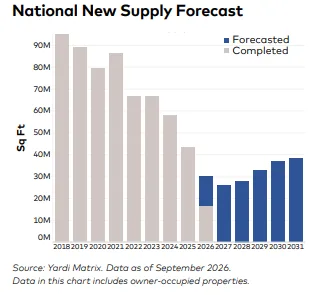
- Completions should bottom near 26 million square feet in 2027, but a 104,000-job drop in office-using sectors means metros with big pipelines, like San Diego, still face leasing pressure.
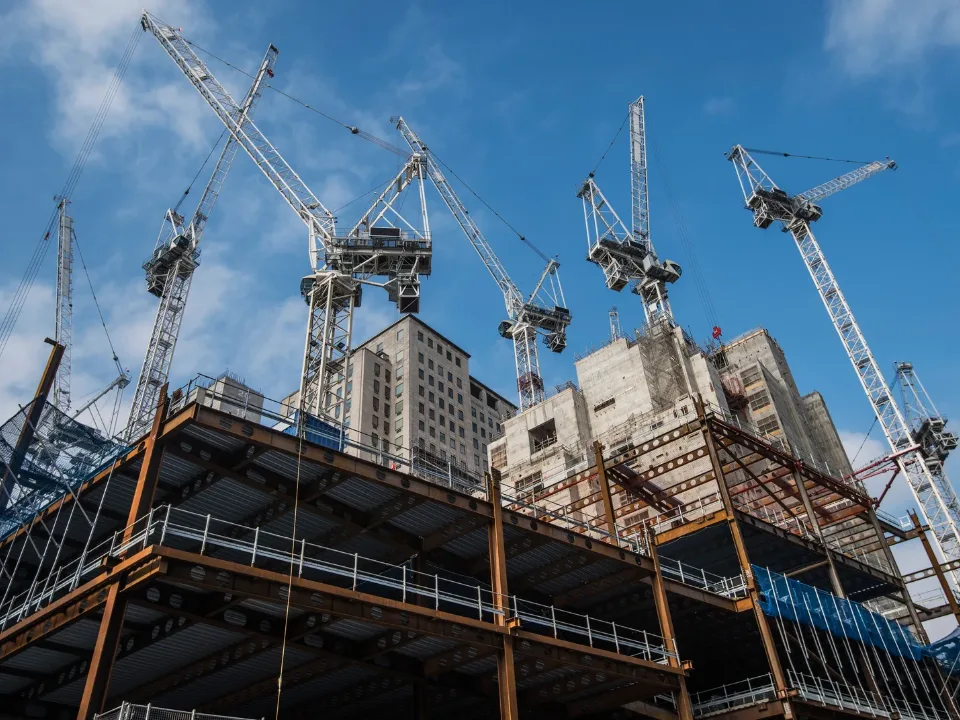
A shrinking construction pipeline is propping up U.S. office fundamentals even as demand weakens, according to Yardi Matrix’s October 2026 national report.
Office space under construction now totals 32.2 million square feet, just 0.5% of stock. National vacancy stood at 17.8% in September, 80 basis points lower than a year ago.
Get Smarter about what matters in CRE
Stay ahead of trends in commercial real estate with CRE Daily – the free newsletter delivering everything you need to start your day in just 5-minutes
Vacancy Down, Jobs Down
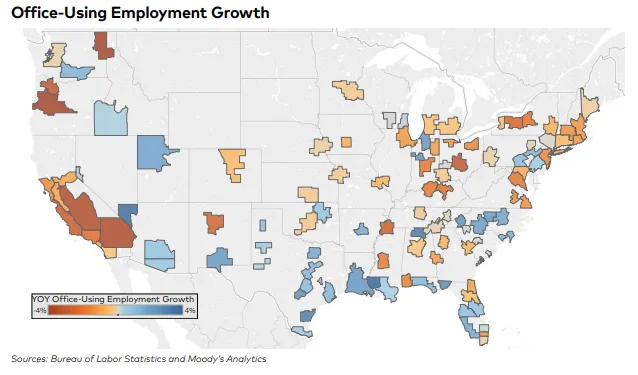
The odd part is that jobs are heading the wrong way. Office-using sectors cut 26,000 positions in September, led by information (10,000), professional and business services (9,000) and financial activities (7,000), per the Bureau of Labor Statistics.
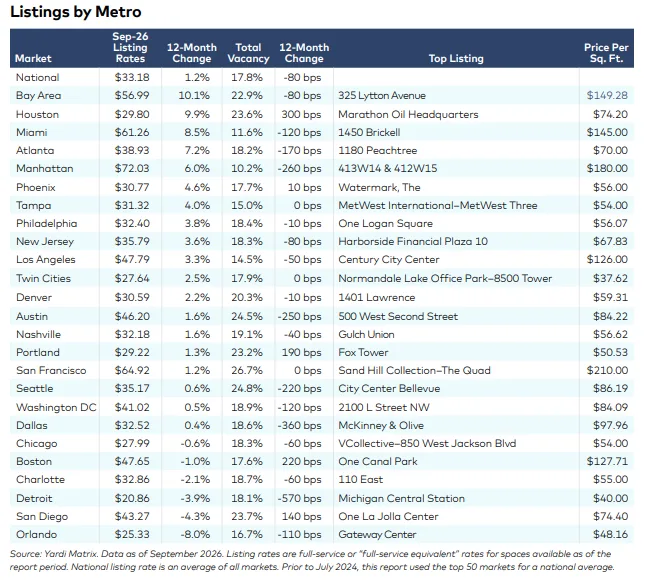
Over 12 months, those sectors shed 104,000 jobs, a 0.3% decline, while total nonfarm employment grew 0.3%. Still, the average listing rate rose 1.2% to $33.18 per square foot.
A Flight to Quality
Class A listing rates climbed 3.1% to $40.62 per square foot. Class C rose 3.2% to $19.63, while Class B fell 1.8% to $27.07.
Yardi reads that as demand splitting into two camps: tenants who want amenity-heavy space that pulls people into the office, and those who want the cheapest space available. JLL’s third-quarter report, which we covered Oct. 14, showed the same split at the top end, with 9.6 million square feet leaving inventory against 3.5 million delivered and the top tranche of trophy rents up 18%.
Utilization Still Lags
Kastle’s Back to Work Barometer puts physical occupancy at only 55%. Yardi says that leaves plenty of room for use to rise among hybrid workers, though it would take a firmer job market to turn that into leasing.
A Pipeline Near Its Floor
Yardi expects completions to bottom around 26 million square feet in 2027. The ratio of space under construction to planned projects sits at 0.4, a sign developers are slow to move deals out of the planning stage.
Costs may push that lower. Higher rates, tariffs and energy constraints make new buildings pricier and harder to justify. Most of what is still being built is Class A, which lines up supply with the segment where rents are rising.
Manhattan Keeps Building
Manhattan has the largest pipeline of any metro, at 3.6 million square feet underway, plus another 11.1 million in planning. Nearly 19 million square feet arrived over the past five years, and about 14 million more is expected by 2030.
Demand backs it up. Class A vacancy fell 345 basis points to 8.0%, and listing rates rose 11.5%. Related’s 625 Madison Avenue tower started construction in July with a 2029 target, and owner-occupied projects like 2 World Trade Center and JPMorgan’s new headquarters show the pull of trophy space.
San Diego Digests a Glut
San Diego is the cautionary tale. Listing rates fell 4.3% to $43.27 per square foot, and vacancy hit a record 23.7%, up 140 basis points.
San Diego delivered close to 3 million square feet in 2024, equal to 2.7% of inventory and the highest delivery rate in the country that year. Deliveries should drop sharply through the end of the decade, which Yardi says will eventually stop the slide in rents.
Houston Pricing Finds a Floor
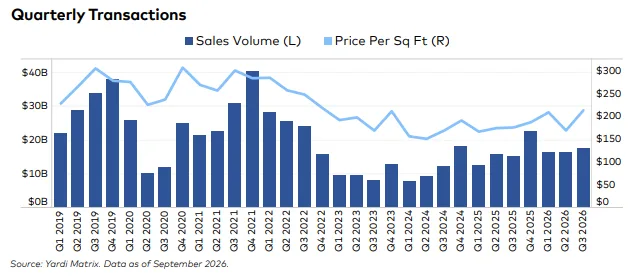
Nationally, Yardi has logged 2,272 office sales this year at an average $197 per square foot, for $50.5 billion of volume. Houston may be bottoming: pricing rose to $149 per square foot, though that is still 33.0% under 2019.
Williams Cos. paid $300 million in July for the 1.5 million-square-foot tower at 2800 Post Oak Blvd. from Invesco Real Estate. That is 27.2% below the $412 million price in 2013. It follows Newmark’s third-quarter data, covered Oct. 20, showing Houston office vacancy at 25.6% and nine-month leasing at its lowest since 2009.
Why It Matters
Supply, not demand, is doing the heavy lifting. Metros with strong job growth and little building could see vacancy keep falling, while those with large pipelines face leasing pressure as space opens.
Yardi warns that a prolonged drop in office employment would eventually weigh even on markets with modest pipelines. Dallas shows the other side: office employment is up 1.7% year over year, and Morgan Stanley’s expansion there is expected to add over 3,000 positions across ten years.
What’s Next
Watch the 2027 completions floor and whether the under-construction-to-planned ratio slips from 0.4 as costs climb. The employment trend will decide whether the supply cushion turns into real absorption.