







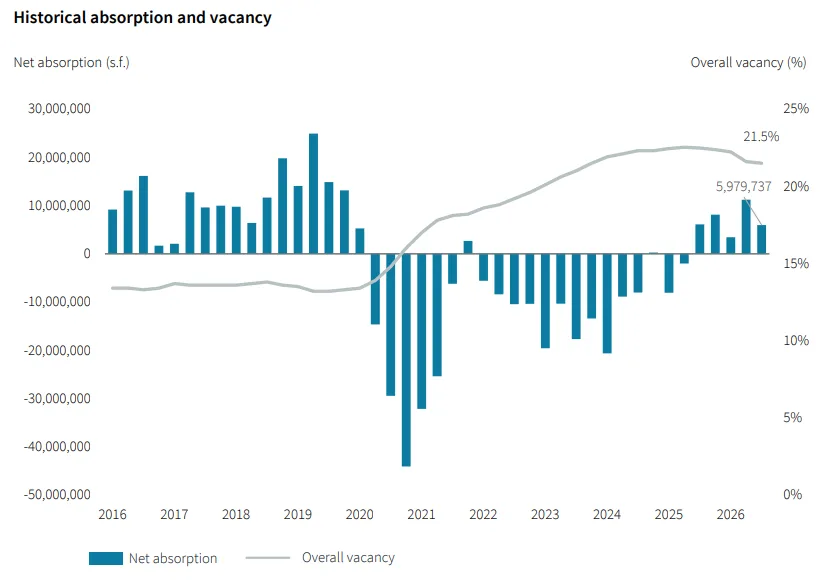
- JLL’s Q3 report shows 6.0M SF of U.S. office net absorption, the fifth straight positive quarter, with new leases averaging a 13% larger footprint.
- Just 3.5M SF was delivered while 9.6M SF left inventory, now down over 45M SF since late 2023, and the top rent tranche posted 18% growth.
- JLL expects a 3+ year stretch of shrinking inventory and compressed high-end availability, and September’s rate hike could stifle new construction, extending the squeeze.
A scarcity problem is emerging in U.S. office as demand recovers faster than new supply arrives, according to CNBC’s Property Play newsletter and JLL’s Q3 2026 Office Market Dynamics report.
Occupiers added 6.0M SF of net absorption in the third quarter, the fifth straight quarter in the black, bringing the year-to-date total to 21M SF.
Get Smarter about what matters in CRE
Stay ahead of trends in commercial real estate with CRE Daily – the free newsletter delivering everything you need to start your day in just 5-minutes
Demand Is Back, and Growing
Tenants are no longer shrinking. Signed leases over the past 12 months averaged a footprint 13% larger than before, a reversal from 2024, when companies were still downsizing meaningfully. Leasing volume is up 6.4% over the year, and all four of the latest quarters outpaced anything seen since 2019.
JLL counts 19 markets that have already topped 2019 leasing, with nine more above 90% of that level. Technology hubs are leading occupancy gains, including San Francisco at 3.3% of inventory year to date, and the Mid-Peninsula and Austin at 1.6% each. New York leads in square footage with nearly 5M SF of gains through three quarters.
Supply Keeps Shrinking
Developers delivered just 3.5M SF in Q3, matching Q2’s near-record low. Meanwhile, 9.6M SF left the market through conversions or redevelopments.
National inventory now sits more than 45M SF below its late-2023 peak, with roughly 23M SF under construction. JLL calls the dynamic a flight to scarcity, in line with the post-pandemic high in leasing reported earlier this year. Direct vacancy is 19.6% and total vacancy is 21.5% on 4.7B SF of inventory.
Rents Follow the Shortage
On a first-generation trophy basis, effective rents are rising at better than 20% a year. Older, second-generation buildings are gaining over 10% as they pick up spillover demand the thinning pipeline cannot serve.
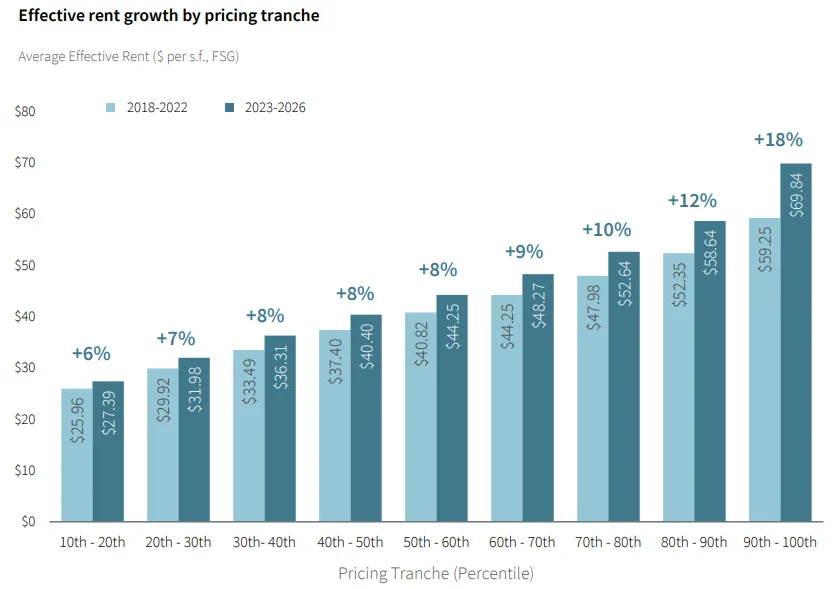
The gains are top-heavy. In JLL’s ranking of buildings into 10 pricing tranches, effective rents in the highest tranche rose 18% between 2018-2022 and 2023-2026 averages, versus 6% in the lowest.
Asking rents understate the shift. They rose 60 basis points quarter over quarter to $40.51 nationally, and trophy and Class A space averages $46.06. JLL says asking-rent growth is accelerating at a pace not seen since 2019.
A Recovery in Three Speeds
JLL sorts metros by recovery stage. The front-runners (Dallas, Atlanta, Charlotte, South Florida, New York and the Bay Area) are leasing at 94% of their 2019 volume, and occupancy gains equal 1.3% of inventory over the past year.
Mid-stage metros such as Austin, Boston, Houston and Seattle sit at 85%. Laggards, among them Chicago, Denver, Los Angeles and Washington, DC, are at 66% and have posted negative absorption over 12 months.
Why It Matters
A supply-constrained market shifts leverage toward landlords with quality space, and it supports pricing for premium tenants competing for few options. Walker & Dunlop CEO Willy Walker told CNBC that buyers who purchased 18 to 24 months ago in San Francisco or New York have done very well.
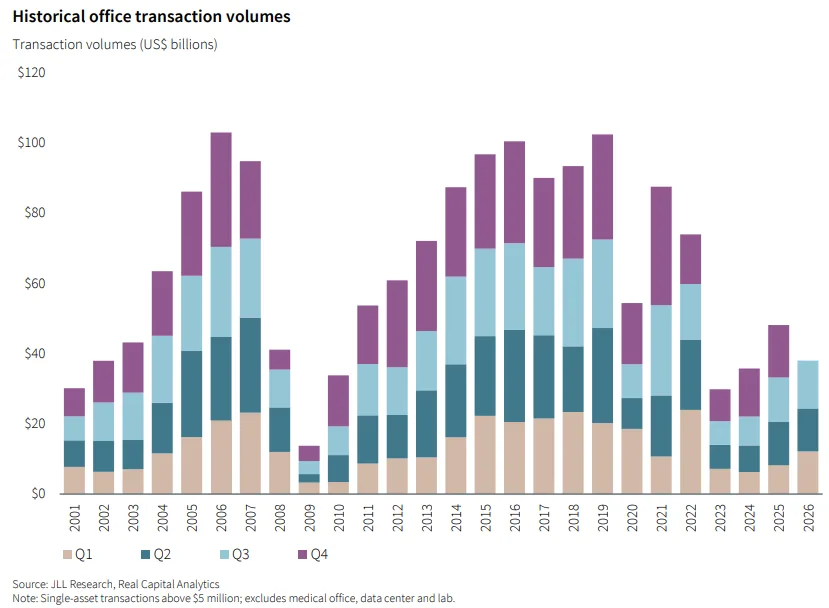
Capital markets are improving too, but more slowly. Office investment hit $13.6B in Q3, up 8% quarter over quarter and 13% year over year, though growth has slowed from last year’s roughly 30% annual pace.
What’s Next
Walker said now is the ideal time to start projects delivering in two to three years, yet equity is not flowing to them, and he put office construction near 9% of a typical year. JLL expects a 3+ year horizon in which inventory edges lower and high-end availability stays extremely tight.
September’s rate hike adds a wrinkle. The 10-year Treasury surged 85 basis points during the quarter, and JLL says higher rates push out any supply relief because they choke off new development, even as select trophy projects with rent premiums and strong preleasing may still proceed.