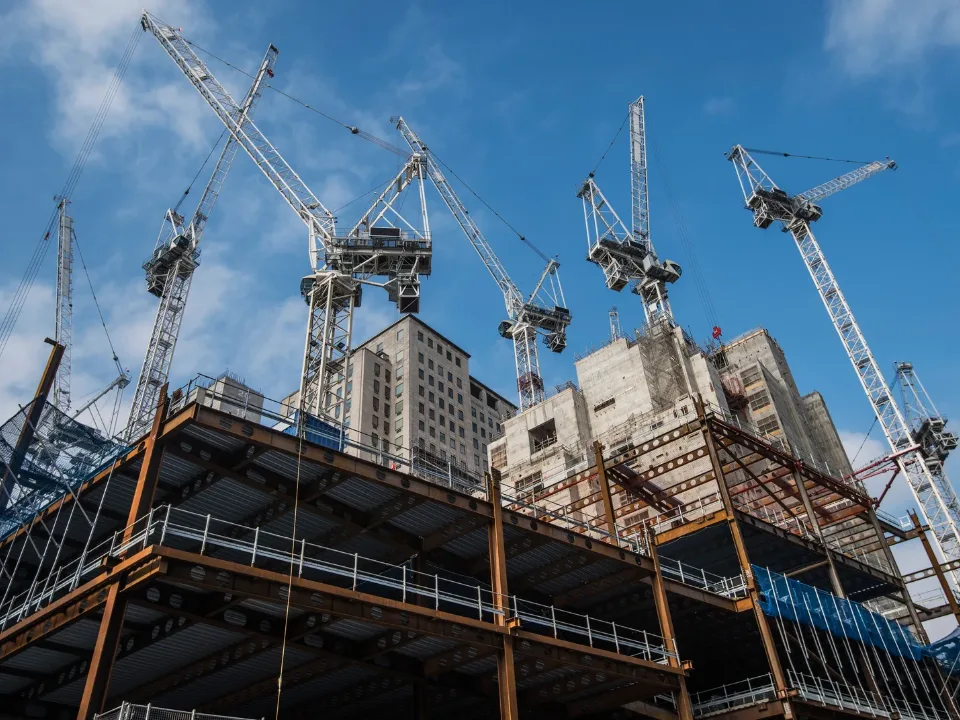








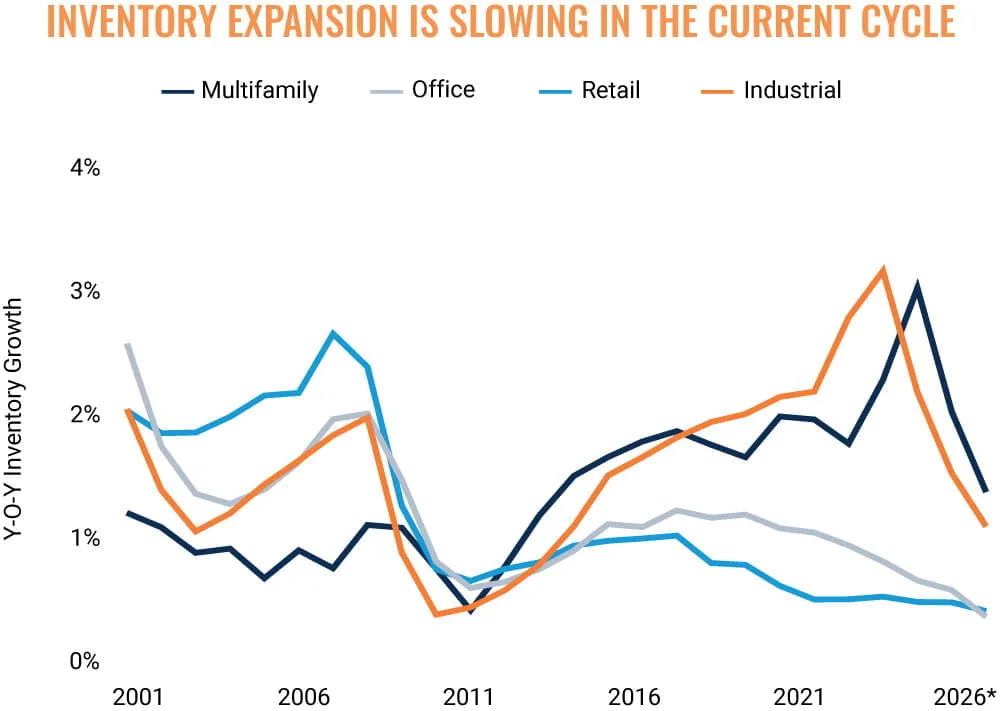
- Marcus & Millichap says apartment units under construction are down 50% from their 2023 peak and industrial space is down 60% from 2022, a pullback that could stretch the current rent growth cycle.
- Higher interest rates, tariff-driven material costs and tight labor are making new projects hard to justify, and builders may wait until rents rise enough to cover those costs, delaying the next cycle by years.
- A thinner pipeline means less competing supply during the recovery, which puts more weight on market selection and could make moderate-demand markets more attractive to investors.
A sharp construction pullback could give commercial property owners a longer stretch of rent growth, according to Marcus & Millichap’s October 2026 research brief.
The apartment pipeline has shrunk 50% since its 2023 peak, and industrial space underway is off 60% from its 2022 high, GlobeSt reports, citing John Chang, the firm’s chief intelligence and analytics officer.
Get Smarter about what matters in CRE
Stay ahead of trends in commercial real estate with CRE Daily – the free newsletter delivering everything you need to start your day in just 5-minutes
Supply Decides How Long It Lasts
Demand gets the attention, but supply sets the length of a good run. Construction lags the market, which produces repeating cycles of too much space and then too little.
When supply tightens, vacancy falls and rents climb. That eventually pulls in new development, which can reverse the trend.
Why Builders Are Stuck
Three forces are lining up against new projects. Higher rates have made construction loans pricier, and tariffs and shipping expenses are keeping materials expensive.
Labor is the third squeeze, with immigration policy and AI and data center building competing for workers. Our earlier look at JLL’s outlook for rising construction costs points the same way.
Chang said builders have little reason to break ground until rents rise enough to cover those costs. Marcus & Millichap says that could push the next development cycle back by several years.
By the Numbers
Self-storage builders have cut spending 32% from the 2023 high, and Marcus & Millichap sees comparable drops in seniors housing and medical office.
None of those three measures has bottomed yet.
Not Every Sector Looks the Same
Nationally, apartments and industrial still carry some surplus space. Chang cautioned that oversupply varies a lot from market to market.
Office is a different story: the pandemic left a glut that may take years to fill. Retail could be heading toward a shortage after a decade of adjusting to e-commerce, and pricey construction probably pushes back any new wave of stores.
Statistics; CoStar Group, Inc.; Federal Reserve; NIC Map® Data and Analysis Service (www.nicmap.
org); RealPage, Inc.; U.S. Census Bureau.
Why It Matters
A thinner pipeline gives existing owners breathing room, since fewer new buildings will chase the same tenants. Chang expects many markets and asset types to enjoy falling vacancy and rising rents for longer than they historically have.
It also changes how investors pick markets. Job growth and population gains still count, but with little new supply coming, even modest demand could absorb vacant space and lift rents. Demand is already showing up in places, as JLL’s tally of industrial leasing at its strongest pace since 2022 suggests.
What’s Next
Marcus & Millichap’s advice: line up demand drivers against pipelines that are shrinking and the hurdles to building. Policy, land supply and pricing, and water and power infrastructure can also limit what gets built, and point to markets others miss.
The signal to watch is rents. Builders probably won’t come back in force until rents justify the cost of building.