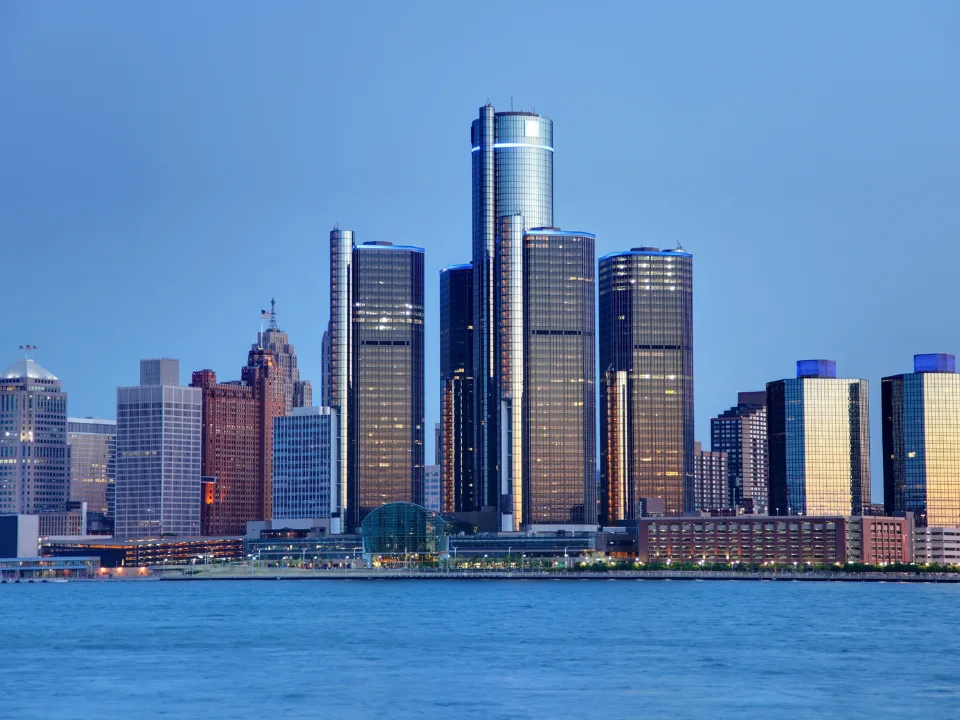







- Dan Gilbert pledged $1 billion to form a 501(c)(4) nonprofit to redevelop the Renaissance Center and East Riverfront, with no profit to him and no repayment of the contribution.
- The 35-acre district, now mostly parking lots, is slated for waterfront amenities, affordable housing, space for local small businesses and 18 acres of public space.
- After completion, revenue is expected to cover operations, debt, reserves and reinvestment, with any surplus going back to the community, a model that blends philanthropy with income-producing real estate.
Dan Gilbert is putting up $1 billion for a new nonprofit that will remake Detroit’s Renaissance Center and East Riverfront, Commercial Property Executive reports.
The Rocket Cos. and Bedrock chairman will take no profit, and the money will not be paid back.
Get Smarter about what matters in CRE
Stay ahead of trends in commercial real estate with CRE Daily – the free newsletter delivering everything you need to start your day in just 5-minutes
How the Nonprofit Works
The vehicle is a social welfare nonprofit under section 501(c)(4). Its board includes Wendell Anthony, who leads the NAACP’s Detroit branch, and Bill Emerson, the former Rocket Cos. CEO.
Bedrock’s announcement calls the gift the biggest ever to a nonprofit redevelopment effort in an American city.
The Site Plan
The Renaissance Center and the riverfront around it span 35 acres, mostly parking lots today.
The vision adds waterfront amenities, affordable housing, storefronts for small local companies and 18 acres of public space.
Zoom Out
The gift follows Gilbert’s $500 million, 10-year pledge from 2021 for neighborhoods, housing stability and public spaces. Bedrock handed over the office portion of the 1.5 million-square-foot Hudson’s Detroit in October 2025.
Bedrock CEO Jared Fleisher laid out the thinking behind this site on the No Cap podcast in August. He called the 5.5-million-square-foot Renaissance Center the most complicated adaptive reuse project in the country.
Fleisher said GM is contributing $250 million plus property, while Gilbert is putting in more than $1 billion of equity and debt, a deal he said no one would do on business terms alone. He also said the riverfront work leans on Michigan’s transformational brownfield financing tool, and that a standoff with state lawmakers was holding up that funding.
The money question goes back to our December 2024 look at GM’s redevelopment. That $1.6 billion plan would demolish two of the five towers, keep the 73-story tower, and add housing, a hotel and public space, but its $350 million public subsidy request set off a debate over taxpayer support for private projects.
Gilbert’s pledge is a donation with no repayment and no profit to him. The announcement does not say how the nonprofit fits with the GM partnership or the state financing.
Why It Matters
The setup is unusual. A donor funds the build, and the finished properties are expected to throw off enough income for operations, debt service and reserves.
Any leftover cash goes back into the community instead of to owners, which sets the project apart from a typical mixed-use deal.
What’s Next
Watch for design plans, a timeline and financing details, and for how the effort fits alongside other downtown projects such as the Ford and Newlab tech incubator at the Book Depository.