






- Miami asking rents rose 0.1% to $2,545 in the three months through August and sit 0.7% higher than a year ago, but a 0.3% decline is forecast for year-end.
- Builders started 7,522 apartments across 32 projects through August, down 34.4% from last year, even as 35,921 units remain under construction and 6,784 have been delivered.
- Sales hit the slowest post-pandemic pace at $2.2B through August, down 8.4%, and metro jobs slipped 0.4% through June even as population grew 1.9% in 2024.
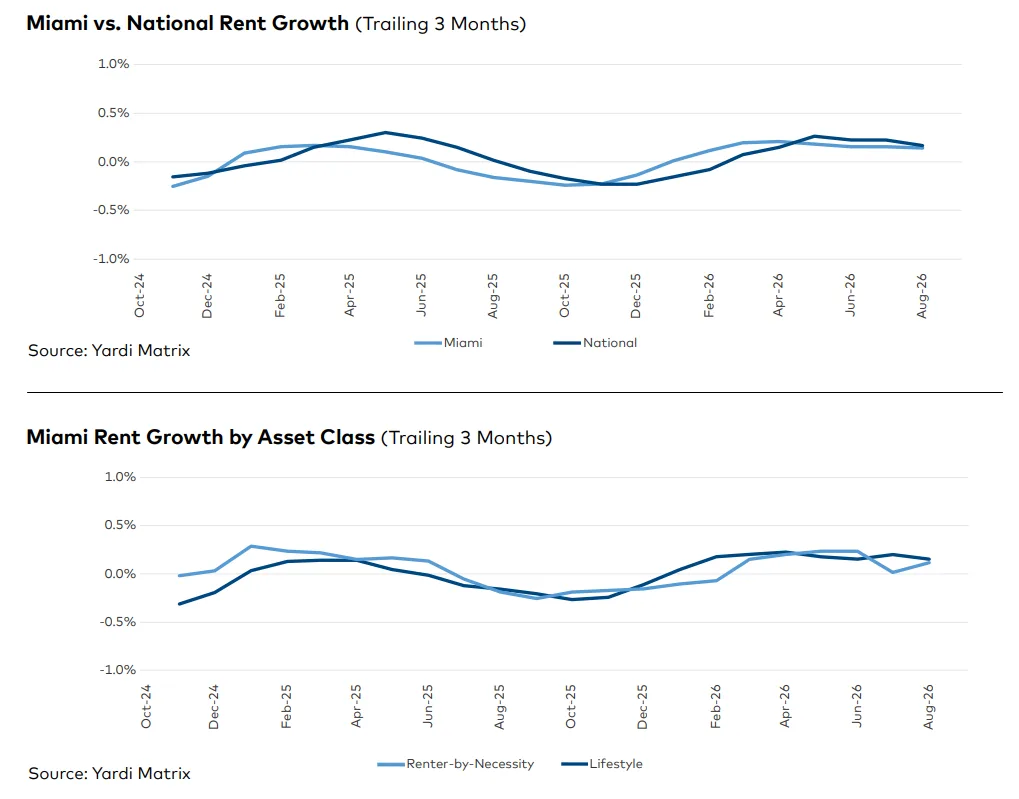
Miami multifamily rents edged up 0.1% to $2,545 over the latest three months, Yardi Matrix reports, with the data running through August.
The U.S. average climbed a bit faster, 0.2% to $1,773, and Yardi expects Miami to finish 2026 with rents down 0.3%. Against a year ago, Miami is still up 0.7%, good for the upper half of the 30 metros in the Yardi database.
Get Smarter about what matters in CRE
Stay ahead of trends in commercial real estate with CRE Daily – the free newsletter delivering everything you need to start your day in just 5-minutes
Where Rents Stand
Upscale Lifestyle units average $2,802 after a 0.2% rise, a gain Yardi has logged every month since February. Workforce-oriented renter-by-necessity units average $1,978, up 0.1%.
Stabilized occupancy was 95.2% in July, 20 basis points lower than a year earlier. The Lifestyle segment matched that figure and dropped by the same amount, while renter-by-necessity occupancy fell 30 basis points to 95.3%.
Rents are highest in Coral Gables ($4,055, down 0.3%), West Palm Beach-Central ($3,853, up 3.1%) and Miami-Brickell ($3,570, down 3.3%). In all, 45 submarkets posted annual increases.
Supply Is Still Heavy
New supply this year totals 6,784 apartments through August, equal to 1.7% of existing stock and 40 basis points ahead of the national pace. Nearly all of it, bar six properties, was Lifestyle product.
Annual deliveries topped out at 20,923 units in 2024 and came to 16,645 last year. Groundbreakings are the clearest sign of a slowdown: 7,522 units in 32 projects so far, versus 11,465 units in 43 projects over the same stretch of 2025, a 34.4% drop.
CRE Daily’s report on the Sun Belt recovery described the same shift, with starts collapsing and deliveries falling, though unevenly from metro to metro.
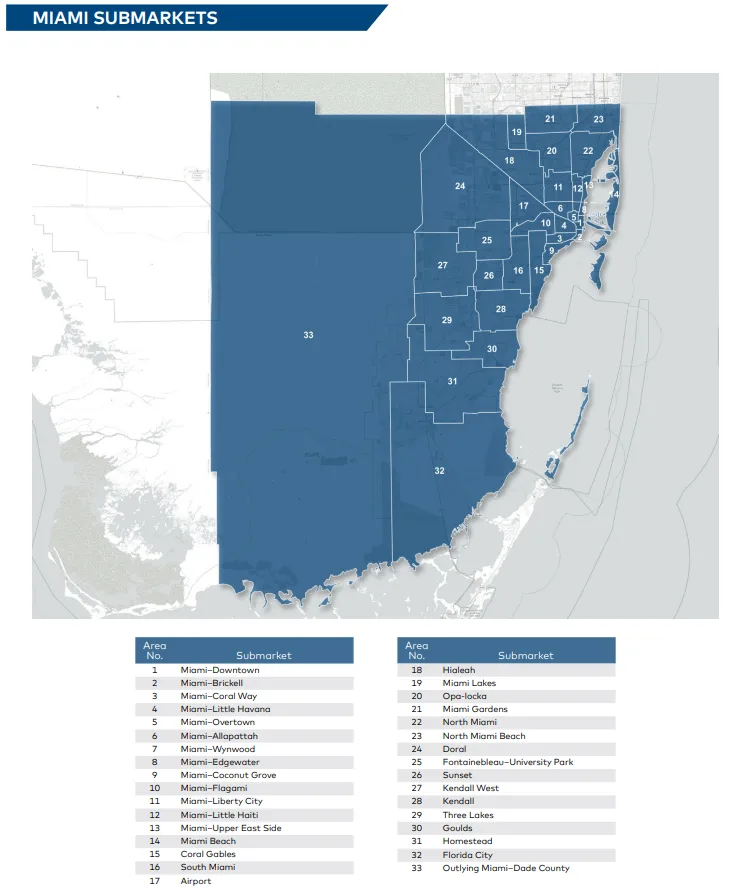
The pipeline is still deep. Yardi counts 35,921 units being built, plus about 313,000 more in planning or prospective stages. The busiest submarkets are Fort Lauderdale-Central (3,312 units), Miami-Edgewater (2,136) and Hialeah (1,880).
The largest project named in the report is Melo Development’s Downtown 6th, a 54-story, 824-unit tower that broke ground in March 2025 and targets a July 2027 opening.
Deals Slow Down
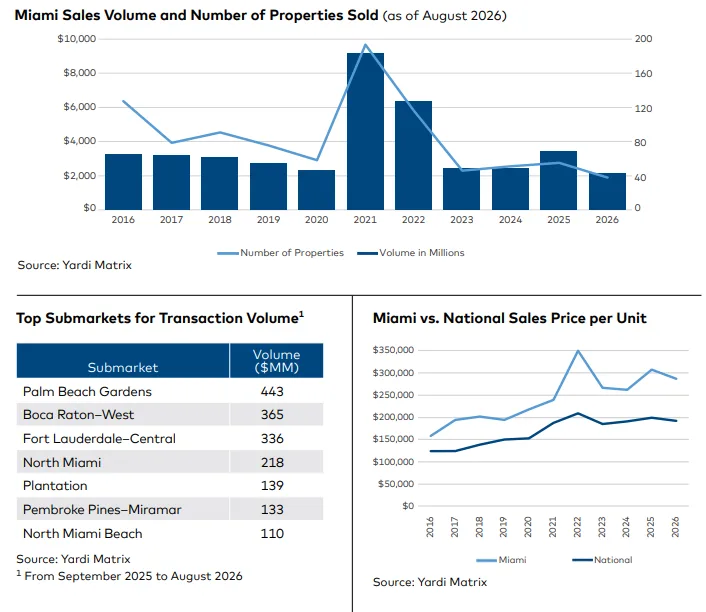
Buyers spent $2.2 billion on Miami-area apartments through August, 8.4% less than a year earlier and the weakest stretch since the pandemic. The market’s 2021 high was $9.2 billion across 194 deals.
Of the 41 properties that changed hands, 22 were Lifestyle. Pricing averaged $287,380 a unit, a premium to the $192,668 national figure but a step down from the $308,046 South Florida posted in 2025.
Starwood Capital Group was the most active named buyer, picking up Magnolia Landing in Naranja ($34 million), Lafayette Square ($30 million) and Emerald Terrace ($25 million). Harbor Group International paid $109 million, or $215,842 a unit, for Emerald Palms in Miami.
Looking at the past 12 months, West Palm Beach-Boca Raton drew the most capital in South Florida at $1.2 billion, ahead of Fort Lauderdale and Miami at $1.1 billion apiece.
Jobs Slip, People Arrive
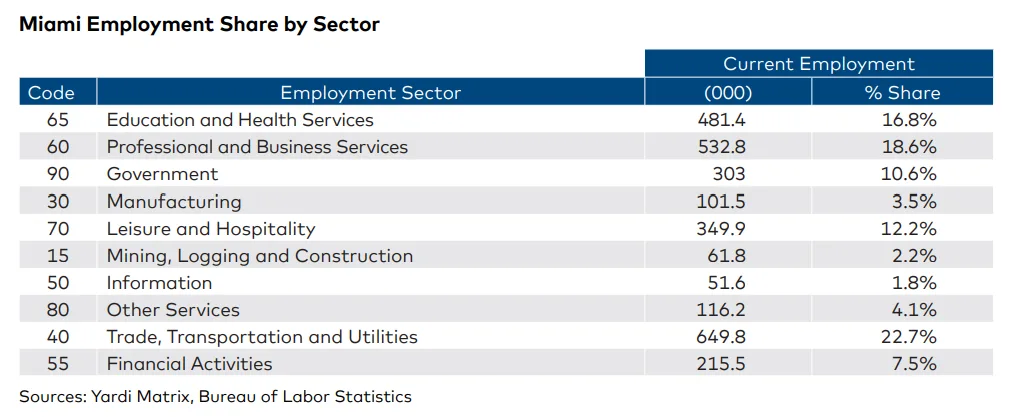
Employment across South Florida slid 0.4% through June, while the national figure held flat. Education and health services added 11,600 jobs, professional and business services 3,700 and government 1,100. Seven other sectors lost ground.
Financial activities took the biggest hit, down 5,600 jobs. Joblessness was 3.7% in July, below both the U.S. rate (by 40 basis points) and Florida’s 4.6%.
People keep arriving. The metro gained 123,471 residents in 2024, a 1.9% increase that brought it to 6,457,988, versus roughly 1.0% nationally.
Why It Matters
Miami isn’t short on renters. It is short on pricing power. In Zillow data that CRE Daily covered, renter demand in the metro jumped 48.9% while rents rose only 1.8%.
Yardi’s numbers tell the same story: units are filling at 95.2%, but a steady stream of deliveries limits how much owners can charge.
Capital is more cautious. Sales volume is down 8.4%, and per-unit pricing is below last year’s level.
What’s Next
Yardi’s forecast calls for a 0.3% drop in Miami rents by December. Easing starts should help over time, though Downtown 6th’s 824 units are scheduled to open in July 2027.
In the first half, Miami delivered 6,210 units, 20.8% fewer than a year earlier, which ranked seventh nationally. Starts in that period fell 41.9% to 4,813 units.
Getting around should also improve: new ramp layouts opened in September on the $1 billion GGI interchange rebuild in northern Miami-Dade, and the project runs through fall 2031.