







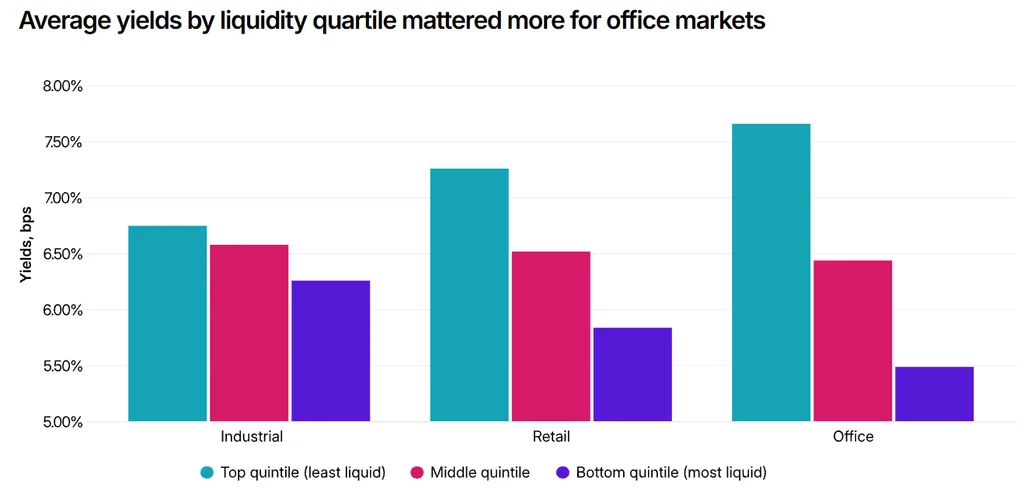
- MSCI research shows the transaction-yield gap between the most and least liquid office markets is much wider than in industrial as of Q2 2026.
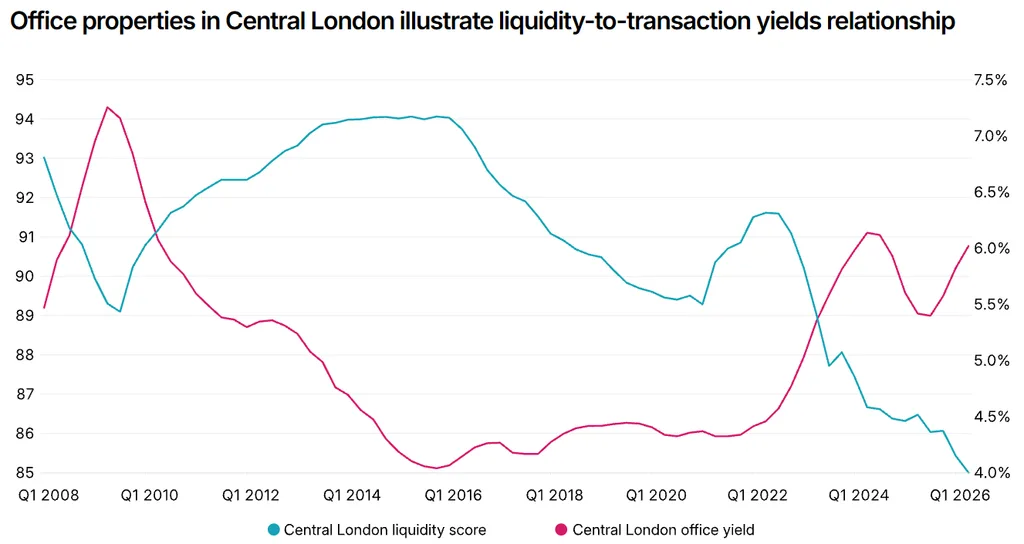
- Central London office liquidity is at its lowest on record and yields have moved out about 60 basis points in 12 months, while Seoul yields compressed roughly 30 basis points.
- With no tailwind from falling rates, MSCI says entry pricing and market selection matter more, and whether a market’s liquidity is rising or falling is a useful extra signal.
Buyers want a much bigger liquidity premium to own office than industrial, according to new MSCI research from Tom Leahy, executive director of MSCI Research & Development.
In Q2 2026 data, the transaction-yield spread between top and bottom of the office liquidity ranking dwarfs the industrial one.
Get Smarter about what matters in CRE
Stay ahead of trends in commercial real estate with CRE Daily – the free newsletter delivering everything you need to start your day in just 5-minutes
Why Offices Price Differently
MSCI notes that warehouses look alike, whereas an office’s results depend heavily on its quality, exact location, specs and who wants to lease it. Tenants have also refocused on the best buildings in the best locations, which raises the penalty for assets that miss on either.
That makes a less-liquid office market riskier than a less-liquid industrial one, so buyers ask for more yield to go there.
Industrial Draws a Crowd
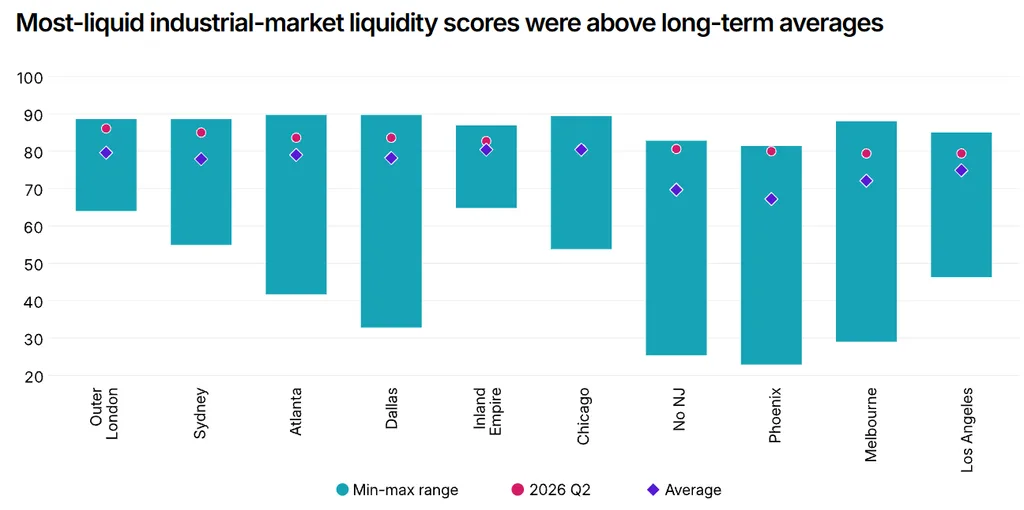
Institutional capital has moved into industrial and transaction volumes remain relatively high. More buyers competing for assets means investors will take a smaller yield bump for venturing into thinner markets.
Outer London, Sydney, Atlanta, Dallas and the Inland Empire rank highest on industrial liquidity, and each sits above its own historical norm.
Office Liquidity Lags
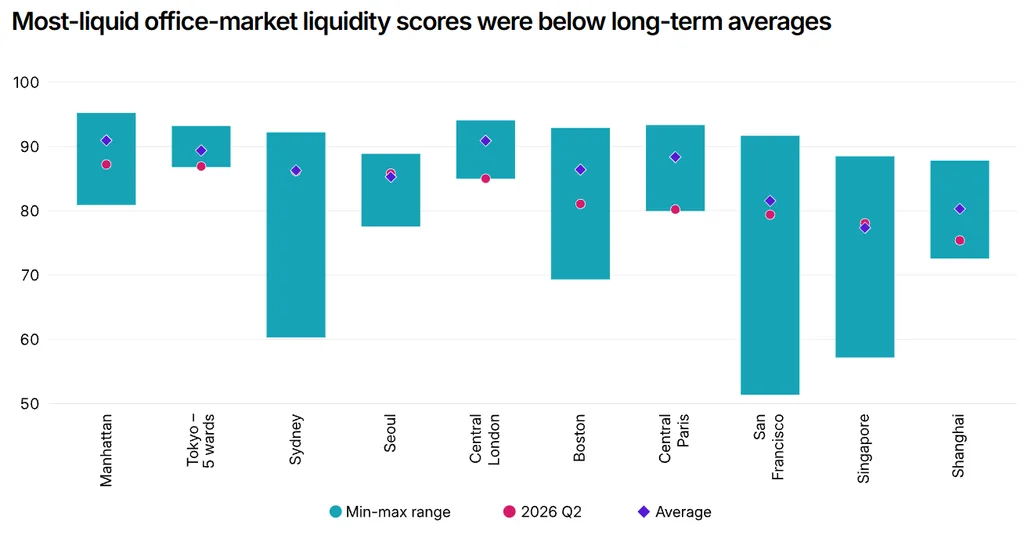
Office is the mirror image. The most liquid markets are Manhattan, Central London, Sydney, Seoul and central Tokyo, and every one but Seoul trades under its historical liquidity norm.
Relative liquidity matters here: markets running well above trend have faced stiffer competition for assets, while those below it have seen pricing pressured. Central London office liquidity is at the lowest level MSCI has recorded, and average transaction yields there moved out roughly 60 basis points over 12 months.
Seoul Shows the Flip Side
Seoul’s office liquidity topped its recent average in Q2, and yields there tightened about 30 basis points over the year to June 2026. But a jump in government-bond yields has pushed the gap between office yields and bonds negative.
MSCI says that setup has historically come before a correction, a reminder that hot liquidity can overreach.
Why It Matters
Liquidity is becoming a sharper pricing signal. MSCI says the link between liquidity and pricing has strengthened as the recovery runs on a smaller pool of capital than in the last cycle. Closed-end funds raised just $81.7 billion in the first half, a third-lowest total in a decade, per With Intelligence.
It also fits the discounting in distressed downtowns. Nearly 35% of the square footage sold in U.S. central business districts since 2024 was distressed, according to Yardi Matrix.
What’s Next
Without steadily falling rates to lift values, MSCI says asset selection and entry price carry more weight. Investors should track whether a market’s liquidity is strengthening or weakening, not just how liquid it is today.