






- Hubble reports U.S. coworking inventory grew by a net 2M SF (1.2%) in Q3 to 168.4M SF, lifting coworking’s share of total office stock to 2.5% from 2.3% in June.
- National asking rents for traditional office fell 1.5% to $33.18 per SF and vacancy held at 17.8%, with Manhattan at 10.2% and Brooklyn at 10.3% the tightest markets.
- Manhattan is the priciest coworking market at $891 per desk monthly versus a $651 national average, and the Bay Area and Greater Los Angeles led square-foot growth.
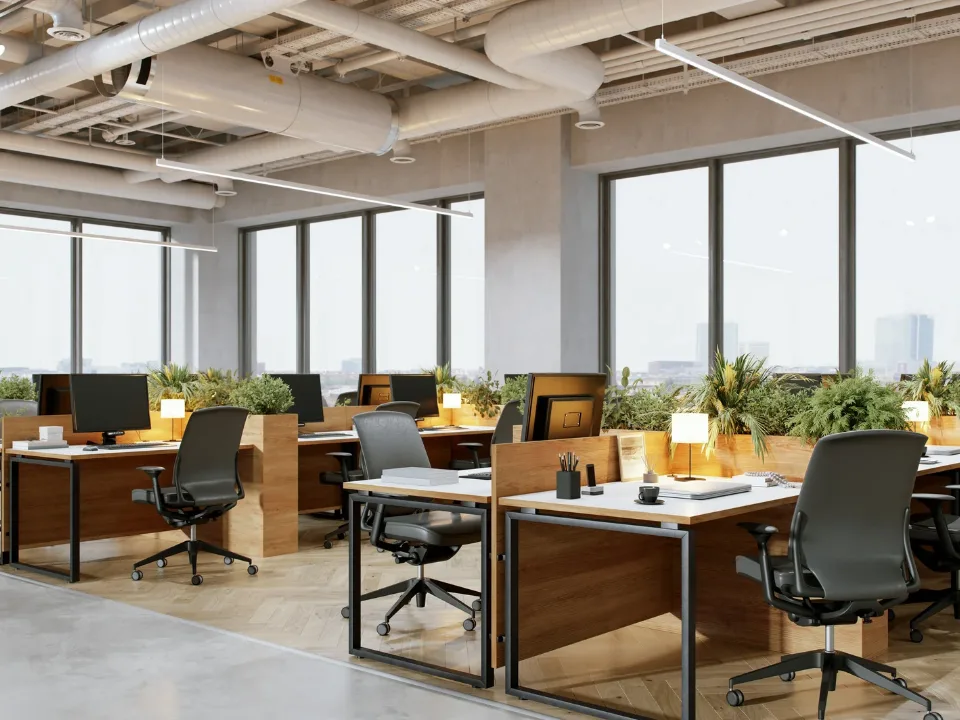
Flexible office space keeps growing while office vacancy holds steady, according to Hubble’s Q3 2026 national office report.
U.S. coworking inventory added a net 2 million SF, or 1.2%, to reach 168.4 million SF. That lifted its share of total office stock to 2.5%, from 2.3% in June.
Get Smarter about what matters in CRE
Stay ahead of trends in commercial real estate with CRE Daily – the free newsletter delivering everything you need to start your day in just 5-minutes
California Drives Growth
The San Francisco Bay Area added about 248,000 SF (3.4%) and 25 locations, bringing inventory to 7.5 million SF. Greater Los Angeles grew 207,000 SF (2.0%) to 10.8 million SF, behind only Manhattan.
Dallas-Fort Worth added about 86,000 SF, Boston 80,000 SF and Chicago 41,000 SF. Washington, D.C., lost 438,000 SF, the biggest pullback, and Manhattan shed 317,000 SF.
The location count climbed 228 to 9,612, up 2.4%, which suggests new openings skew smaller.
What Desks Cost
The national average private-office asking price was $651 per desk per month. Manhattan is the most expensive at $891, about 37% above average. Boston costs $695, Brooklyn $718 and Austin $740.
Cheapest are Philadelphia at $414 and Houston at $434, then Chicago at $449 and Washington, D.C. at $485. Prices fall with size, from $688 for one to five desks to $597 for 20 or more.
Traditional Rents Slip
Asking rents for traditional office space averaged $33.18 per SF nationally, down 1.5% from Q2, with nine of 14 markets declining. Philadelphia (up 1.9% to $32.40), the Bay Area (up 1.3%) and Washington, D.C. (up 1.0%) bucked the trend.
Dallas-Fort Worth had the steepest drop, down 2.1%. San Francisco proper remains pricey at $64.92 per SF, and Manhattan asks over twice the national rate.
Vacancy Holds While Markets Diverge
National vacancy held at 17.8%, after five straight quarterly declines from a 19.9% peak in the first quarter of 2025. Manhattan fell 60 basis points to 10.2%, and Brooklyn dropped more than 4 points to 10.3%.
Dallas-Fort Worth (down 50 basis points to 18.6%) and Washington, D.C. (down 40 to 18.9%) tightened. New Jersey rose 90 basis points to 18.3%, the wider Bay Area crept to 22.9% and Houston rose 30 basis points to 23.6%.
Houston’s reading differs from the Newmark figure of 25.6% we reported, a reminder that vacancy depends on the data provider.
Why It Matters
Hubble says owners are offloading weak buildings by decommissioning, demolishing or converting them to multifamily. That helps vacancy while premium space draws demand, the same flight-to-quality theme in Yardi Matrix’s pipeline report.
As older stock leaves the market, flex operators take a larger share of what remains.
What’s Next
Watch whether Washington, D.C.’s coworking losses reverse. Hubble says the lost space may come back in another format, so the pullback could prove short-lived.