







- US private-label CMBS issuance reached $76.2B through July 2026, led by single-asset, single-borrower transactions.
- Office properties made up 22.7% of issuance, while data centers appeared only in single-borrower deals, not conduit deals.
- Multifamily carried the thinnest debt yield and highest LTV, signaling refinance risk if market conditions tighten.
Concentration Shifts, Data Centers Emerge
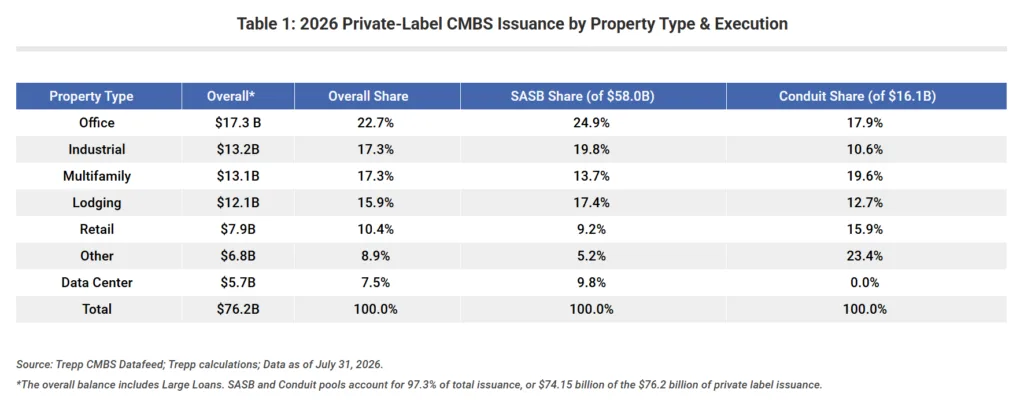
Trepp data show domestic private-label CMBS issuance reached $76.2B through July 2026. Heavyweight single-asset, single-borrower (SASB) deals drove market momentum, accounting for $58B of total issuance. Traditional conduit deals contributed another $16.1B.
Office represented the largest property type by balance, while industrial, multifamily, and lodging also played significant roles. Data centers emerged as a major category, accounting for 9.8% of SASB issuance. However, they remained absent from conduit deals. Their growing share reflects rising AI and cloud demand for digital infrastructure.
The channel split also shaped underwriting and property exposure. Conduit deals maintained heavier retail and multifamily concentrations. This divide separates large, institutionally held assets from smaller, more granular collateral pools.
Get Smarter about what matters in CRE
Stay ahead of trends in commercial real estate with CRE Daily – the free newsletter delivering everything you need to start your day in just 5-minutes
The Details
By July 2026, SASB transactions dominated the CMBS market, representing more than 76% of total issuance by loan balance. Office assets accounted for $17.3B, or 22.7% of issuance. Industrial and multifamily each contributed about 17.3%. Data centers reached 9.8% of SASB deals but recorded no conduit issuance.
Multifamily led conduit collateral, accounting for 35.5% of the channel, compared with 22.9% in SASB deals. This gap highlights the sharp differences in sector exposure between channels. Multifamily loans posted an 8.20% debt yield and 68.4% LTV, the thinnest cushion among major property types.
Lodging recorded the highest debt yield at 12.69%. Meanwhile, conduit lenders maintained conservative underwriting, with an average LTV of 58.5%. These metrics show how lenders continue balancing stronger income protection against higher leverage in specific sectors.
Underwriting Gets Tighter, But Leverage Creeps Up
The 2026 vintage shows a clear shift in underwriting compared with recent years. Overall CMBS LTV reached 63.0%, the highest level recorded in recent cycles. That figure rose from a low of 54.0% in 2023, according to Trepp.
At the same time, debt yield improved to 10.36% from 8.77% during the risk-on environment of 2021. However, it remains below the more conservative 2023 level. SASB issuance had already driven CMBS momentum in 2025, setting the stage for its continued dominance in 2026. Conduit deals carry a 13.20% debt yield and 1.89x DSCR. Yet interest-only periods cover more than 93% of conduit loan terms.
SASB deals concentrate risk across large office, industrial, and lodging properties. As a result, performance shifts in these sectors can quickly change the broader market profile. Multifamily carries the lowest DSCR at 1.33x and the highest LTV. These metrics could create refinancing pressure if rates remain elevated or property values soften.
Why It Matters
The US CMBS market increasingly favors SASB deals, particularly across office and data centers. This shift concentrates risk within a relatively small number of large transactions. Single-borrower collateral supplied nearly 77% of CMBS issuance by balance through July, according to Trepp.
Data centers accounted for nearly 10% of SASB issuance and 7.5% of overall issuance. Their growing presence signals a structural shift in securitized debt markets. Digital infrastructure now stands alongside traditional property sectors as an increasingly important source of collateral.
Multifamily presents another risk area, with a 68.4% LTV and the lowest debt yield at 8.20%. The sector also leads conduit exposure, increasing refinancing sensitivity to rates and property values. Conduit lenders maintain conservative leverage, but rising interest-only structures reduce amortization before maturity.
What’s Next
During the second half of 2026, market participants will closely watch multifamily refinancing and demand for large SASB transactions. Office and data center deals will remain particularly important because of their growing concentration within the market.
Interest-only loans now represent most conduit balances, potentially increasing principal repayment risks as maturities approach. Those risks could intensify if interest rates remain elevated. Meanwhile, data centers should remain a key focus as AI and cloud infrastructure demand continues driving investment.
Shifts in fundamentals or investor risk tolerance could increase volatility across channels and property types. Lenders and borrowers now face a transition period shaped by debt maturities, asset values, and financing costs. Those forces will influence deal flow and underwriting standards in the coming quarters.