


Apartment Vacancy Is Falling, But Stabilized Properties Aren’t Feeling the Relief
New apartment supply is soaking up demand and pulling national vacancy lower, but stabilized properties are still fighting for renters.

Nina Dale
August 13, 2026
In partnership with

Good morning. The apartment market looks healthier on paper, but not every owner is feeling the improvement. Newly delivered units are driving absorption while vacancy at stabilized properties continues to climb.
CRE Trivia 🧠
Which massive Chicago wholesale complex did Joseph Kennedy buy from Marshall Field's estate in 1945 for $13 million?
IN PARTNERSHIP WITH ZIFF REAL ESTATE PARTNERS
Access Institutional‑Quality Retail Investments With True Alignment
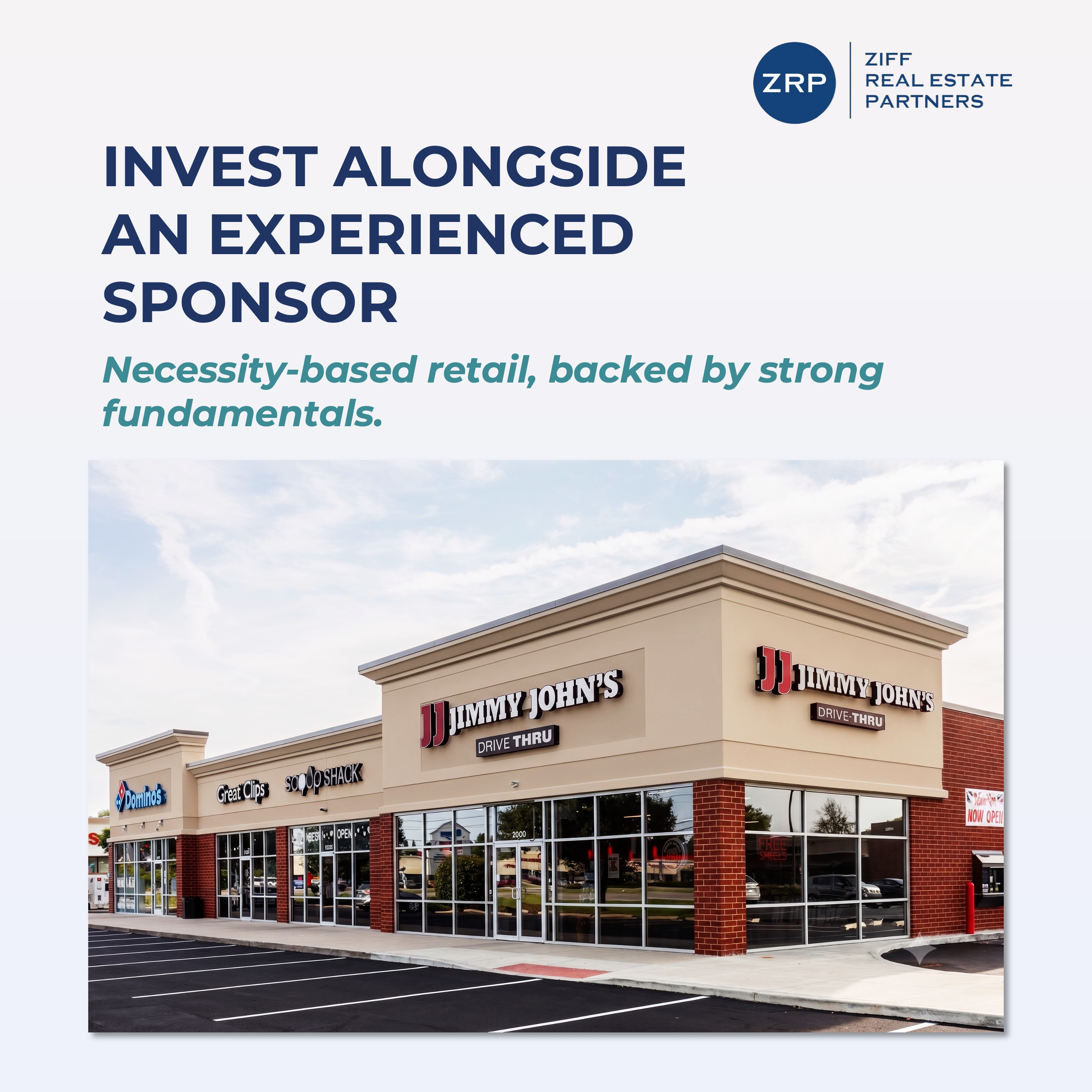
Retail's investment outlook hasn't looked this strong in decades:
-
<0.3% new construction in the inventory pipeline
-
Record low retail vacancy
-
Rent growth well above inflation
-
4% increase in strip center foot traffic from 2019-2025, outpacing other retail formats
Capitalizing on it takes the right sponsor.
Ziff Real Estate Partners has spent 35 years acquiring neighborhood retail below replacement costs in supply-constrained markets, averaging 20%+ annualized returns, and committing 25-50% of the equity in every deal.
ZRP's internal property management team drives execution, and substantial capital commitment as Sponsor ensures alignment with LP investors.
Accredited investors can join ZRP’s list to see future opportunities.
*This is a paid advertisement. Please see the full disclosure at the bottom of the newsletter.
Market Snapshot
|
|
||||
|
|
*Data as of 08/12/2026 market close.
Vacancy Disconnect
Apartment Vacancy Is Falling, But Stabilized Properties Aren’t Feeling the Relief
The U.S. apartment market’s headline vacancy rate is improving, but the gains are being driven largely by newly built properties rather than established communities.
By the numbers: According to CoStar, U.S. apartments absorbed 163,739 units in Q2, comfortably outpacing the 118,047 units delivered. That pushed overall vacancy down 26 bps QoQ and 14 bps annually to 8.15%. Yet stabilized vacancy—which excludes properties still in lease-up—rose 34 bps from a year ago.

New apartments are winning renters: Four- and five-star properties accounted for more than 111,000 units of Q2 absorption, or nearly 68% of the national total. Despite that demand, the segment still carried a hefty 10.2% vacancy rate, reflecting the large amount of recently delivered luxury inventory still being filled.
Luxury tells two stories: Overall vacancy for four- and five-star apartments dropped 138 bps YoY, while vacancy among stabilized properties increased 37 bps. That 175 bps divergence suggests new lease-ups are making the broader market look healthier even as established luxury communities face tougher competition.
Market-by-market: Fifteen of the 50 largest apartment markets saw overall vacancy decline while stabilized vacancy increased. Austin offered the starkest example: vacancy across four- and five-star properties fell 398 bps annually, but stabilized vacancy rose 34 bps. Cincinnati went the other direction, posting the largest overall vacancy increase among major markets—up 161 bps to 9%—followed by Cleveland at 121 bps.
The regional divide: The Northeast and Pacific remained the tightest regions, with average vacancy of 5.1% and 5.7%, respectively. The South stood at 10.8% and the Mountain region at 10.2%. More tellingly, stabilized vacancy increased year over year in every major U.S. region, even where overall vacancy improved.
➥ THE TAKEAWAY
Don’t let the headline rate fool you: Apartment demand is healthy enough to absorb the latest wave of construction, but much of that demand is flowing toward shiny new inventory. For owners of stabilized properties, falling national vacancy doesn’t necessarily mean easier leasing—or stronger pricing power—just yet.
A MESSAGE FROM FLOCK HOMES
What’s Your Exit Strategy?

You’ve spent years building equity. Now, how do you keep more of it?
Join Flock CEO Ari Rubin on August 19 to explore tax-deferred exit strategies, from 1031 exchanges and DSTs to 721 exchanges, passive income options, and long-term estate planning.
*This is a paid advertisement. Please see the full disclosure at the bottom of the newsletter.
✍️ Editor’s Picks
-
For the next eight weeks, Cost Segregation Guys is offering 25% off cost segregation studies. Work with the Nation's top firm that has generated over $1B in depreciation and 10,000+ studies. Get a free analysis today! (sponsored)
-
Community fund: Meta launched a $1B fund to support communities hosting its AI infrastructure as opposition to new data centers grows nationwide and public concerns intensify.
-
AI capital: Apollo, BlackRock, Blackstone, Brookfield, Goldman Sachs and KKR joined Nvidia to deploy at least $500B in capital for AI infrastructure projects as demand for computing power accelerates.
-
Invisible infrastructure: Streamlining capital raise workflows gives investor relations teams better visibility, faster answers, and more time to strengthen investor relationships. (sponsored)
🏘️ MULTIFAMILY
-
Supply reset: Yardi Matrix expects multifamily completions to bottom near 444,000 units in 2027 before gradually recovering as affordable housing takes a larger share of new supply.
-
H&R breakup: GO Residential and partners agreed to acquire H&R REIT assets in a $4.8B deal, expanding GO’s portfolio fourfold while Blackstone takes Canadian industrial properties.
-
Affordability gap: Housing affordability is improving as mortgage rates ease, but typical households still need $22,197 more in annual income to afford a median-priced home.
🏭 Industrial
-
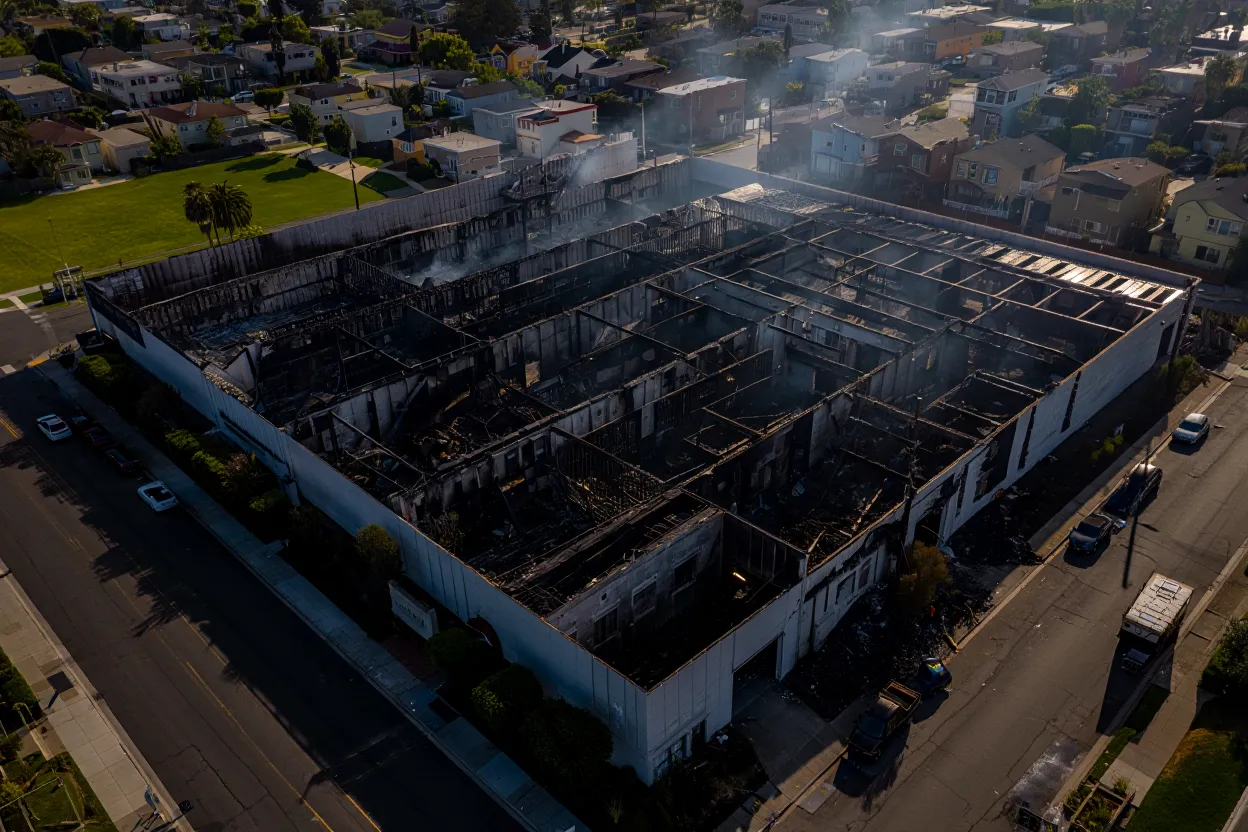
Warehouse scrutiny: A $100M cleanup after a Lineage warehouse fire is prompting Los Angeles to reconsider large industrial facilities near residential areas.
-
Data pivot: BREIT exited self-storage with an $852M sale while investing $3.3B in QTS data centers, lifting the sector to 27% of its portfolio as its strategy shifts toward AI infrastructure.
-
Industrial footing: Industrial fundamentals are stabilizing as slowing development holds vacancy at 7.8%, despite trade uncertainty, rising costs and muted rent growth.
-
Matador lease: TensorWave signed a 15-year lease at Fermi’s Texas data center campus, generating more than $6.5B in projected revenue and boosting Fermi’s stock 21%.
🏬 RETAIL
-
Leasing momentum: Simon Property Group raised its 2026 outlook as strong leasing, rising tenant sales and a $4B-plus development pipeline fuel continued growth across its retail portfolio.
-
Human insight: Retailers are using AI to sharpen site selection while relying on human insight to assess customer behavior, brand fit and the real-world experience that data alone cannot capture.
-
Consumer resilience: Consumer spending growth eased in July, but healthy household savings, improving labor conditions, and stronger spending on experiences continue to support overall demand.
-
Tampa momentum: Tampa’s retail investment volume reached $1.6 billion over the past year, up 15% year over year as smaller and single-tenant deals drive activity above pre-pandemic levels.
🏢 OFFICE
-
CMBS surge: U.S. CMBS issuance reached $76.2B through July, led by office deals, while data centers emerged as a distinct SASB category and multifamily showed the thinnest underwriting cushion.
-
Boston fallout: A Deutsche Finance fund plans to file for insolvency after its vacant Boston life sciences property failed to sell or refinance, potentially wiping out the fund’s entire investment.
-
Office mandate: TikTok is moving to a five-day office requirement as part of a broader restructuring, adding to the growing push among major tech companies for more in-person work.
🏨 HOSPITALITY
-
Oceanfront redevelopment: El-Ad National Properties paid $60M for Fort Lauderdale’s Sea Club Resort, with the 1.2-acre oceanfront site likely headed for redevelopment into a 541-unit project.
-
Japanese expansion: APA Group acquired the 105-room Kimpton La Peer West Hollywood for $63M as the Japanese hotel operator targets 10,000 U.S. rooms by 2030.
-
Steady outlook: U.S. hotels are heading toward a stable 2027 with low, slow growth as limited supply, steady travel demand and stronger leisure-driven transient business support the market.
📈 CHART OF THE DAY

Source: Colliers
State economic performance is reshaping CRE investment, with high-growth markets like North Carolina and Texas attracting capital while affordability, trade exposure and structural weaknesses increasingly separate winners from laggards.
The Merchandise Mart. At 4.2M SF it was then the world's largest building; the Kennedy family sold it to Vornado in 1998 for approximately $625M.
More from CRE Daily
-
📬 Newsletters: Stay ahead of the market with local insights from CRE Daily Texas and CRE Daily New York.
-
🎙️Podcast: No Cap by CRE Daily delivers an unfiltered look at the biggest trends—and the money game behind them.
-
🗓️ CRE Events Calendar: The largest searchable calendar of commercial real estate events—filter by city or sector.
-
📊 Market Reports: A centralized hub for brokerage research and market intelligence, all in one place.
-
📈 Fear & Greed Index: A fully interactive sentiment tracker on the pulse of CRE built in partnership with John Burns Research & Consulting.

You currently have 0 referrals, only 1 away from receiving Multifamily Stress Test Model.
What did you think of today's newsletter? |