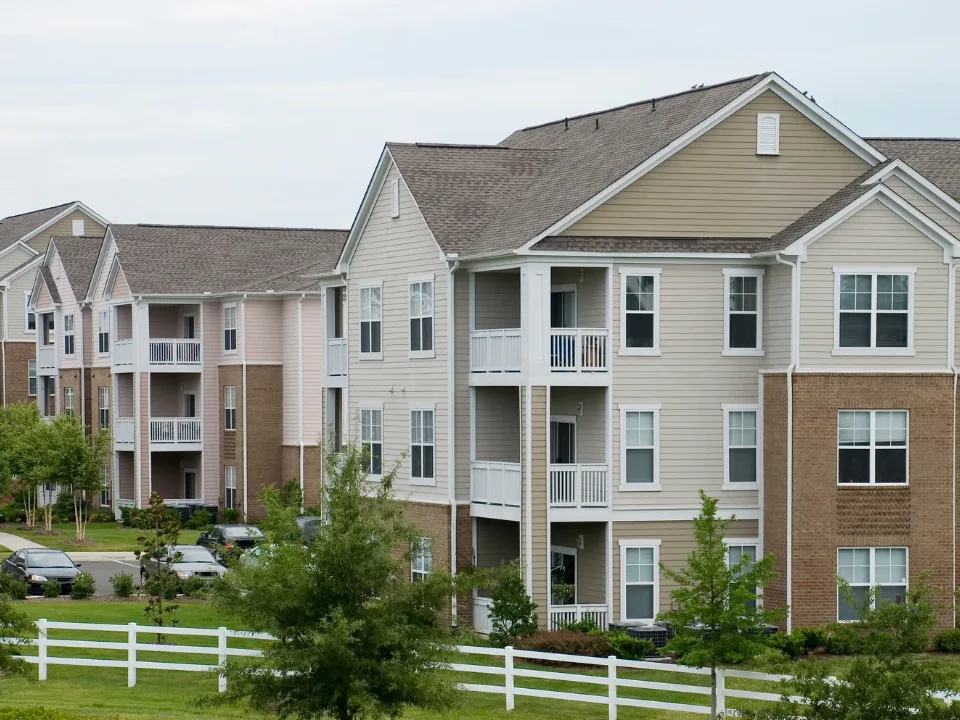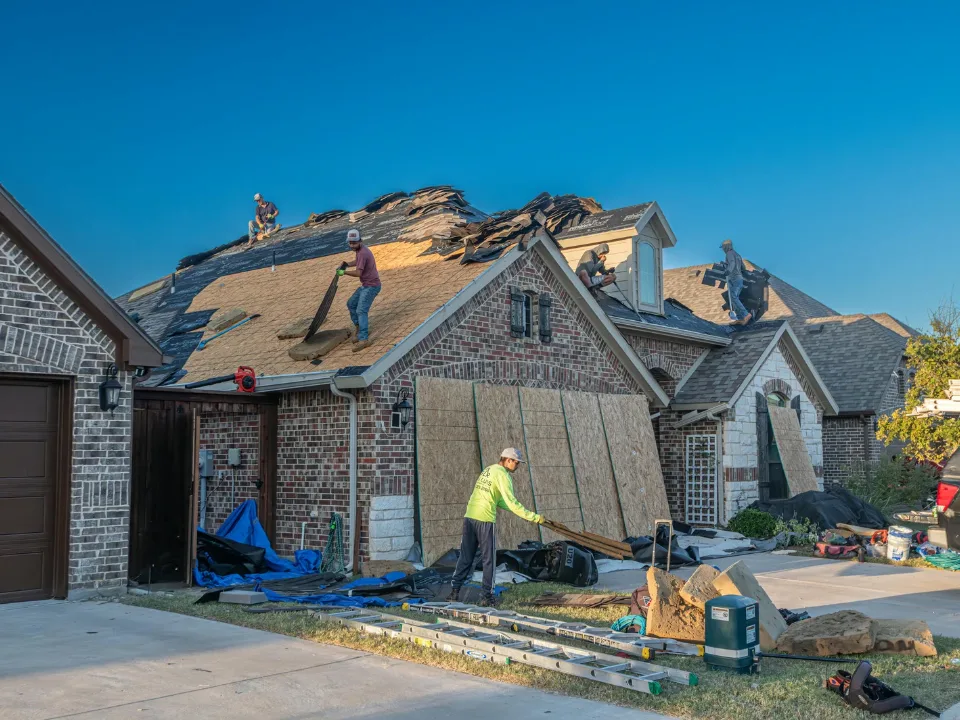








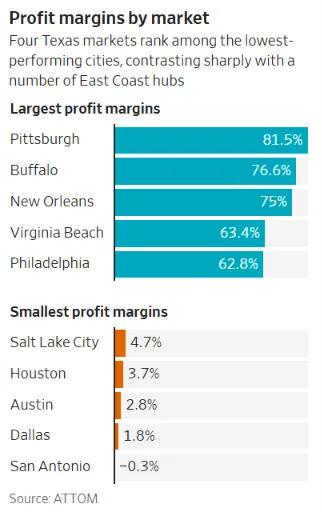
- Four of the five least profitable U.S. metros for home flipping are in Texas, and San Antonio’s median flip posted a 0.3% loss in the second quarter, per ATTOM.
- ATTOM’s margin leaves out rehab and carrying costs that veteran flippers put at 20% to 33% of after-repair value, so a typical rehabbed flip in these metros loses money.
- Flippers are shifting to older homes, full remodels and urban infill away from builder-heavy suburbs, while Pittsburgh’s 81.5% median margin shows where cheap stock still pays.
Four of the five least profitable U.S. metros for home flipping are in Texas, according to a Wall Street Journal report built on ATTOM data.
San Antonio sits at the bottom, where the typical second-quarter flip lost 0.3%. Nationally, the median margin was 21.6%, its weakest showing since the last housing bust, in 2007 and 2008.
Get Smarter about what matters in CRE
Stay ahead of trends in commercial real estate with CRE Daily – the free newsletter delivering everything you need to start your day in just 5-minutes
What’s Squeezing Flippers
Higher mortgage rates, steep property taxes and a glut of Covid-era construction have all worked against San Antonio flippers. The other four bottom-five metros are Dallas, Austin, Houston and Salt Lake City.
The ATTOM math is actually generous. It compares only purchase and sale prices, leaving out rehab and carrying costs that veteran flippers estimate at 20% to 33% of after-repair value. Flips that needed more than a year to sell aren’t counted at all.
For a typical rehabbed flip in these metros, that adds up to a loss.
How San Antonio Flippers Adapt
Javier Maldonado, who has flipped about 30 homes in seven years, told the Journal that hitting his targets has become much harder. He buys homes worth $250K to $350K after repairs and wants at least $30K of profit.
Danny Johnson, a flipper since 2000, expects 10 to 15 deals this year, down from 20. He favors homes 20 to 40 years old, does full remodels and targets about a 20% margin and a sale inside two months.
Location Is Everything
Johnson is steering clear of the Canyon Lake and Lake Medina areas, where owners rushed to list after summer rains refilled drought-stricken reservoirs. He also skips New Braunfels and the far west side of San Antonio, where builders are discounting homes and offering cheap seller financing.
Closer to downtown, his flips draw multiple offers. Kristen Smith, an agent with Serhant, said MLS data shows new builds grew from 25% of San Antonio sales in 2021 to 40% now, but far fewer compete inside the 1604 loop.
Pittsburgh Shows the Upside
The Pittsburgh area posted an 81.5% median margin in Q2, the best among metros above 1M people. Agent Tarasa Hurley of River Point Realty credits cheaper homes, a diversified job market, older but sturdy housing and affordable skilled labor. Zillow puts the area’s median sales price at $234K versus $366K nationally.
A Bronx couple, Maireny Diaz and Jhony Rosado, bought one Pittsburgh-area house for $51K, spent about $50K on rehab and sold it for $130K. They used hard-money fix-and-flip loans with six-month interest-only terms, so a slow sale on their second deal would eat into profit. Their backup plan is to rent the house and refinance.
Why It Matters
Texas housing supply is straining the market well beyond flippers. The Real Deal reported that Ashcroft Capital could lose nearly 1,700 Sun Belt units to foreclosure over a $365.6M loan, including a Mesquite, Texas, property.
Builder discounts and seller financing are also pulling buyers away from resale stock, which squeezes anyone who relies on reselling quickly.
What’s Next
Watch whether builder concessions keep shifting demand toward new construction. A wider read comes from the housing index we covered, where the Journal found the Midwest and Northeast attracting buyers with affordable prices and tight inventory while the South and West looked more balanced.