



- Data center developers are giving Southern California another look as power shortages and local opposition create new barriers in Nevada, Utah, and Arizona.
- Vernon, a favored Los Angeles-area market with its own utility, is approaching capacity and needs infrastructure expansion before taking more projects.
- Local policy remains fragmented, with some communities courting data centers for economic development while others pursue temporary or permanent bans.
Bisnow reports that data center developers are returning to Southern California despite its high costs and regulatory barriers. JLL said resistance to data centers elsewhere is changing the relative appeal of the state. California has traditionally ranked behind lower-cost Western markets because of expensive power, land, and a more difficult approval process. Now, limited power capacity and community opposition in Nevada, Utah, and Arizona are pushing some developers back toward California.
Get Smarter about what matters in CRE
Stay ahead of trends in commercial real estate with CRE Daily – the free newsletter delivering everything you need to start your day in just 5-minutes
Demand Is Outweighing the Cost Penalty
JLL Senior Managing Director Darren Eades said pricing has become less important for groups that need capacity quickly. Developers are tying up land and beginning entitlement and development work. He also said a couple of groups are preparing to announce their first significant Southern California deployments, although he did not identify them.
That shift does not remove California’s barriers. Instead, it changes the comparison set. Markets that once offered cheaper power and simpler development are becoming harder to access when grid capacity is unavailable or communities resist new projects.
The Details
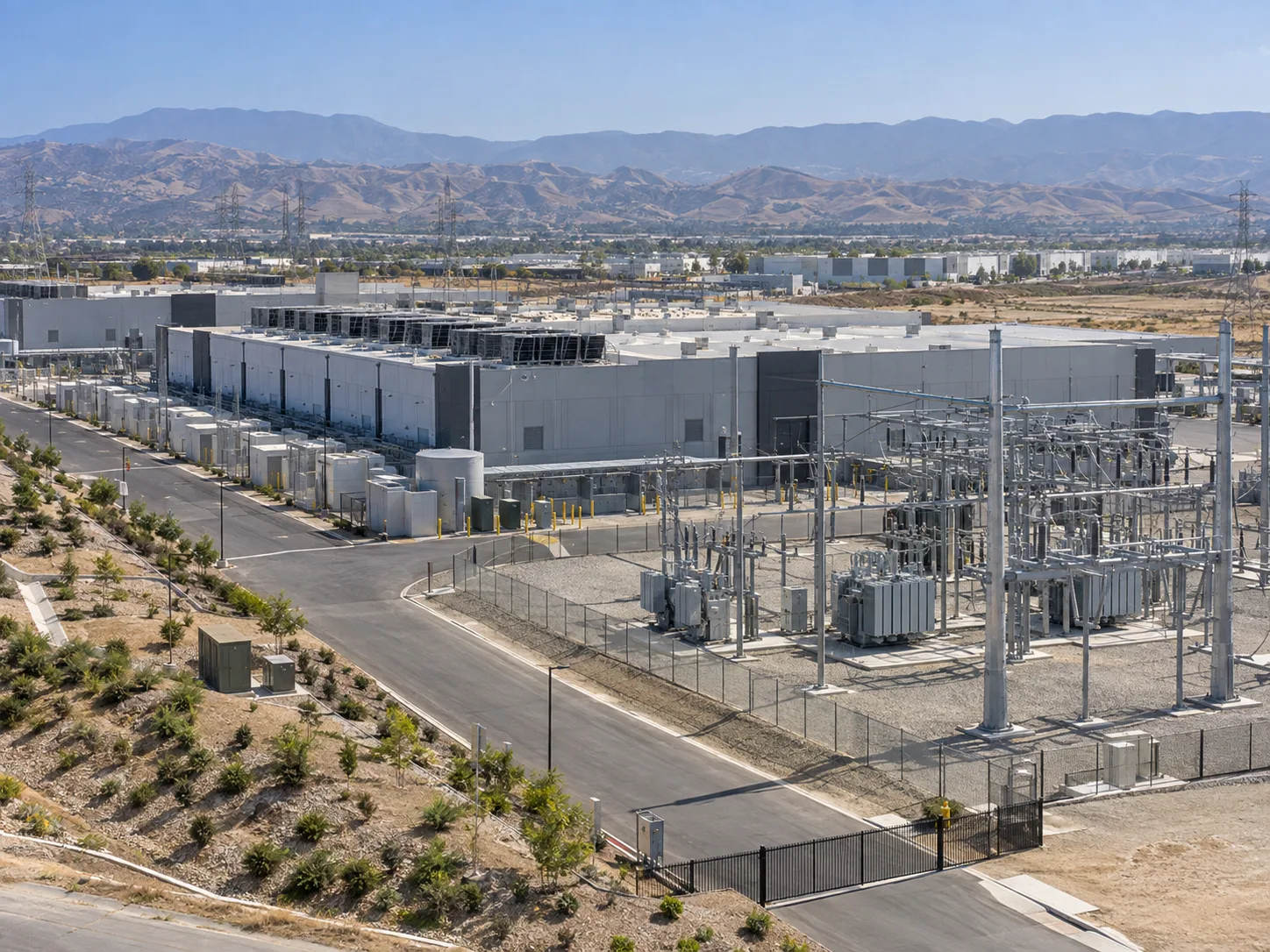
Vernon has been one of Southern California’s most attractive data center locations. The small industrial city sits southeast of Los Angeles, has relatively few residents, and operates its own power utility. Those characteristics reduced the community opposition seen in more residential areas.
JLL said recently announced projects will push Vernon toward capacity. The city is working to expand infrastructure so it can support additional development. Until that happens, developers may need to widen their search across Southern California. That could direct proposals toward cities with available industrial land, power access, and a stronger interest in new tax or economic activity.
Local Policy Splits the Market
JLL said several emerging Southern California markets are gaining support for data center projects because local leaders see them as economic development opportunities. Eades declined to identify those cities, saying some may not want additional attention.
Other communities are moving in the opposite direction. Bisnow reported that Perris was scheduled to consider a data center ban on September 16. Riverside was also expected to consider a ban during September. Indio and Desert Hot Springs adopted temporary restrictions, while Coachella approved a permanent ban in late August. Monterey Park had already prohibited the property type citywide.
The local divide echoes data center policy fights in other US markets. Utilities, land use, and public acceptance can determine whether projects advance.
The Inland Empire and High Desert previously absorbed large warehouse pipelines despite periods of local resistance. Bisnow noted that developers often emphasized jobs and economic benefits to win support for logistics projects. Similar arguments around data centers are producing more mixed results, reinforcing how differently communities now evaluate power-intensive digital infrastructure.
Why It Matters
Southern California is becoming more competitive partly because competing markets have become harder, not because the state’s underlying cost structure has changed. That creates a fallback-market dynamic for developers that must secure capacity even when land and power are expensive.
The next phase will depend on where infrastructure and local policy line up. Vernon needs additional utility capacity, while other cities are deciding whether data centers fit their economic-development plans. For developers, the region offers demand and a deep technology economy, but site selection increasingly requires a city-by-city review of power, approvals, and community support.
What’s Next
JLL expects more Southern California cities to receive proposals as developers search beyond Vernon. Some projects are already far enough along that new deployments could be announced soon.
At the same time, local bans and moratoriums could narrow the available map. The region’s renewed appeal therefore does not mean development will spread evenly. Markets with usable power, industrial sites, and supportive local policy are likely to attract the most immediate attention from developers trying to meet capacity demand.