



- US data center capacity totals roughly 69 gigawatts, with another 43 gigawatts under construction.
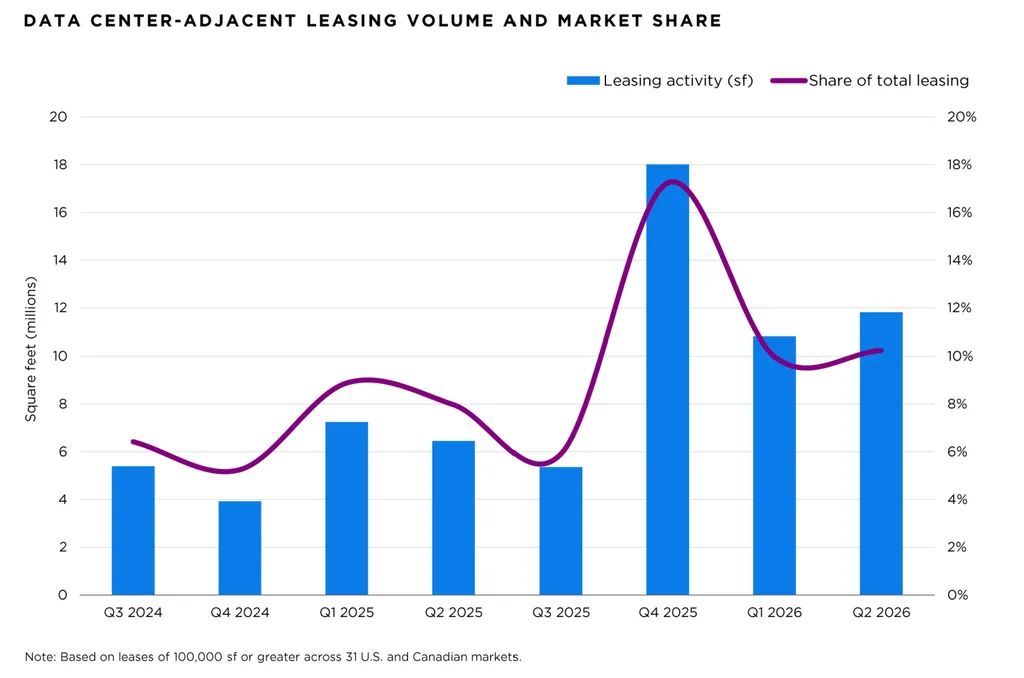
- Data-center-adjacent users accounted for 69M SF of large-block leasing from Q3 2024 through Q2 2026.
- Power-related users represented 47% of tracked warehouse activity, followed by equipment at 30% and cooling at 17%.
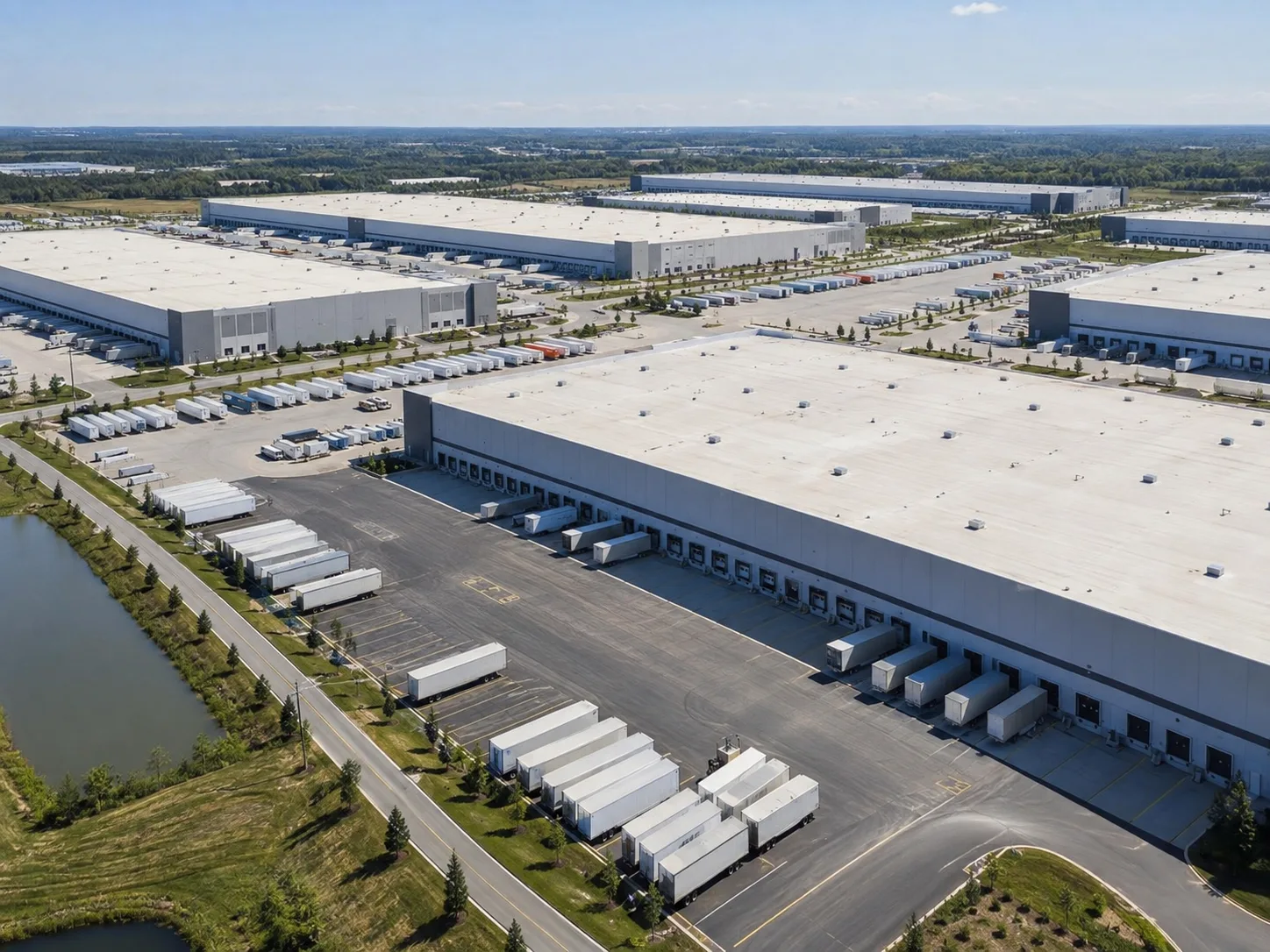
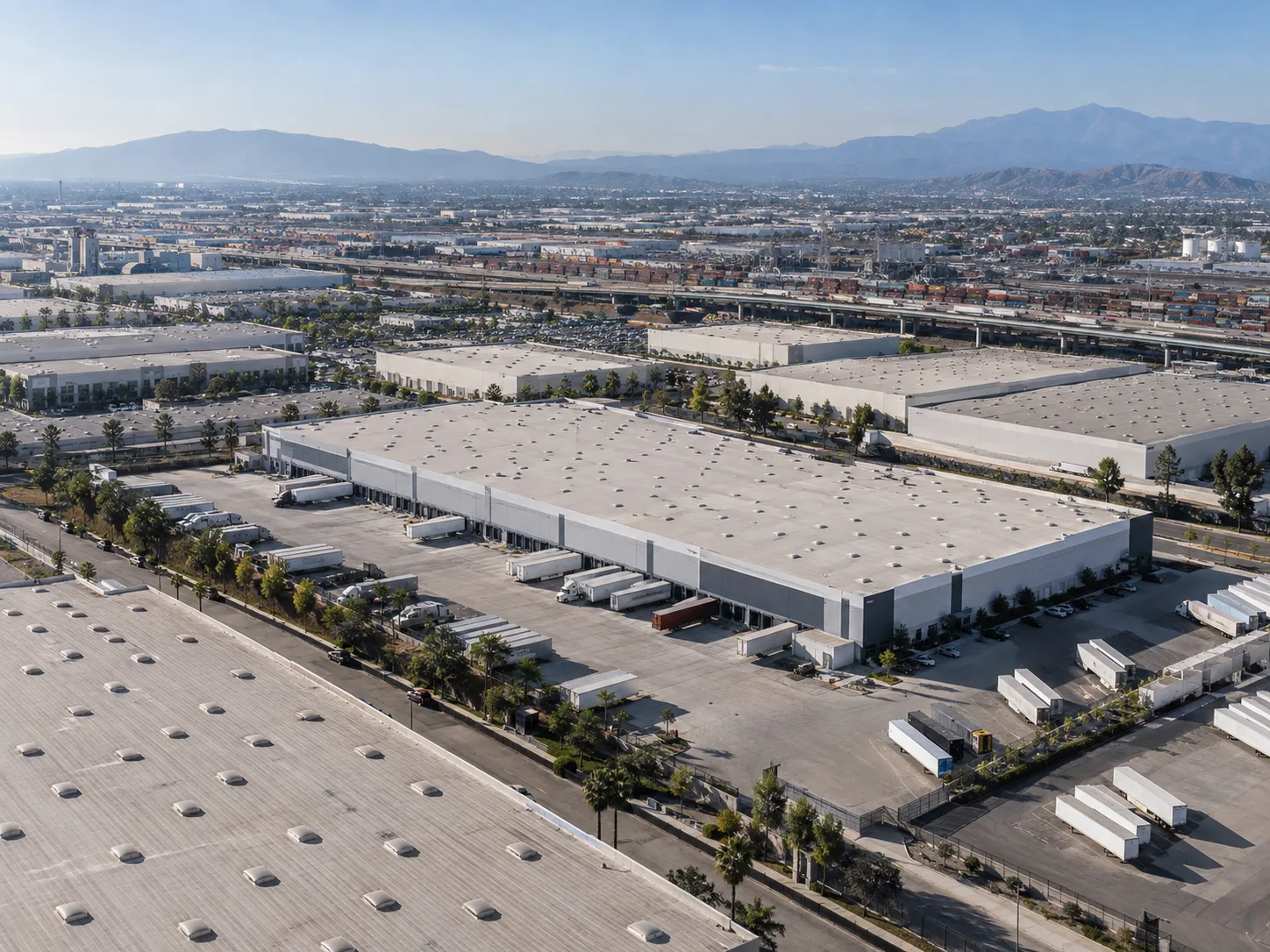
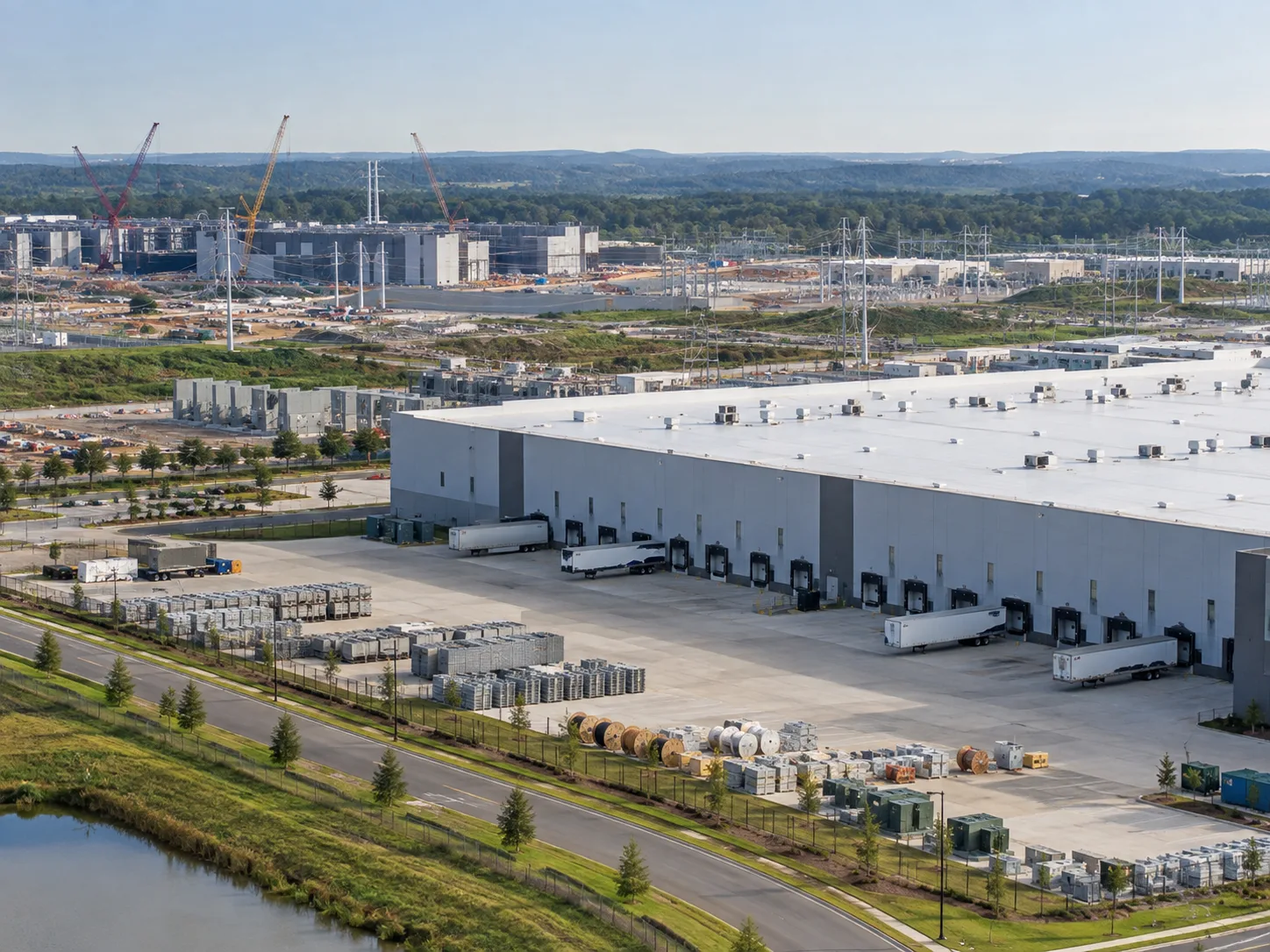
The US data center build-out is creating a new layer of demand in the industrial market. Suppliers, contractors, and service firms are leasing warehouse space around major projects. Savills’ analysis of data center-adjacent industrial demand puts existing US data center capacity at roughly 69 gigawatts. Another 43 gigawatts is under construction. The expansion is also increasing competition for land, power, construction materials, and labor.
Get Smarter about what matters in CRE
Stay ahead of trends in commercial real estate with CRE Daily – the free newsletter delivering everything you need to start your day in just 5-minutes
The Details
Savills tracked 69M SF of data-center-adjacent large-block leasing from Q3 2024 through Q2 2026. In the first half of 2026, this activity represented 10.1% of total leasing volume. The demand is emerging as the broader industrial market enters another expansion cycle. US industrial leasing activity rose 27.1% year over year during the first half of 2026.
The growth followed a sharp increase in data center construction spending. US spending exceeded a $75B annualized pace in July 2026, nearly 60% higher than a year earlier. Savills also estimates roughly 69 GW of US capacity, with another 43 GW under construction.
Data-center-adjacent leasing has also moved beyond niche status. Users leased 9.3M SF during the second half of 2024, or 5.9% of large-block activity. Volume later peaked at 17.9M SF in Q4 2025, representing 17.2% of leasing. The share remained near 10% in both quarters of early 2026.
Source: Savills
Power and Equipment Users Lead
Companies tied to the physical systems that build and operate data centers account for most of the warehouse demand. Power-related users represented 47% of Savills’ tracked leasing over the past eight quarters. Equipment suppliers accounted for 30%, cooling users for 17%, and construction firms for 6%.
That mix aligns with capital spending priorities. McKinsey estimates global data center investment could reach $6.7T through 2030. Power and cooling could represent 47% to 58% of non-IT equipment spending.
Recent leasing shows how those categories translate into warehouse demand. AWS leased 1.2M SF in Phoenix for high-pile equipment storage. Fluidstack took another 1.15M SF there for ancillary equipment and services. Power-related tenants included LG Energy Solution, Canadian Solar, Maverick Power, and Electric Research & Manufacturing Cooperative.
Industrial Users Expand Into the Sector
The tenant pool includes data center specialists, industrial users expanding into the sector, and 3PLs. GEODIS is one example. The logistics provider now offers specialized warehousing, freight forwarding, last-mile delivery, and high-value equipment handling for data center customers. Those services show how the build-out creates demand beyond the data center buildings themselves.
Traditional technology and manufacturing users are also taking larger industrial footprints. Google leased nearly 730K SF in Charlotte for regional data center logistics. Sanmina took more than 537K SF in Houston for server and hardware manufacturing. QTS Procurement leased 563K SF in Atlanta to source equipment and materials.
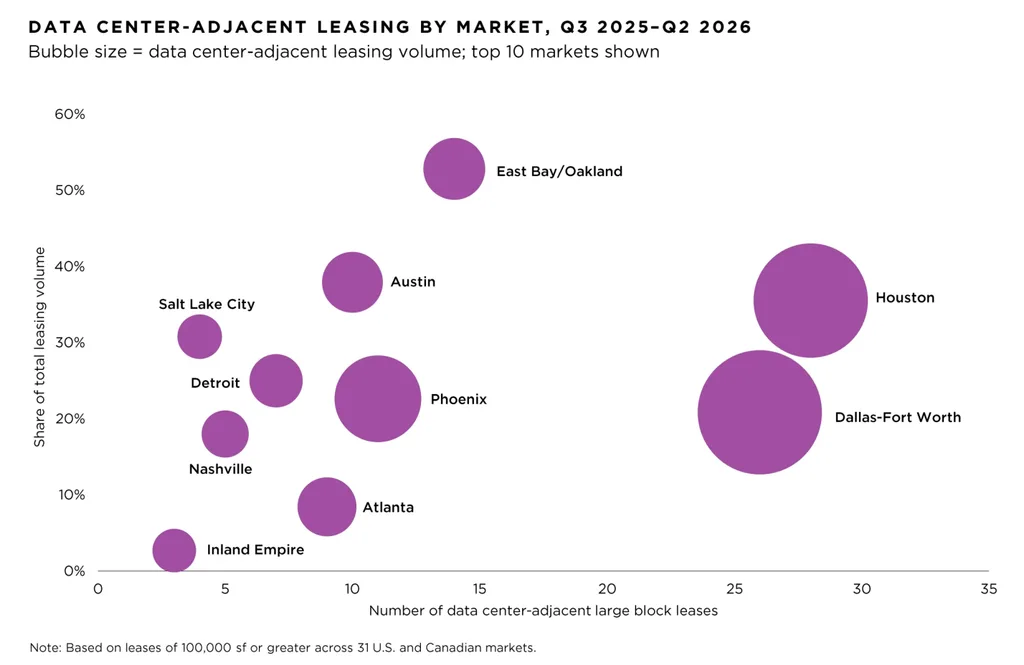
Demand is also clustering around major data center markets. Dallas-Fort Worth recorded 10.3M SF of adjacent leasing across eight quarters, while Houston reached 8.8M SF. Smaller markets show an even larger share effect. Data-center-adjacent users represented 52.8% of tracked East Bay/Oakland leasing, 37.9% in Austin, and 30.8% in Salt Lake City.
Source: Savills
Why It Matters
The expansion is broadening the tenant base for industrial owners near major data center markets. Warehouse demand now includes storage and handling for power systems, cooling equipment, construction materials, servers, and other specialized components. The opportunity extends beyond purpose-built data center properties into conventional logistics and manufacturing space.
That crossover supports data center-driven industrial leasing while the construction cycle remains active. It also links two real estate sectors that compete for land, power, construction materials, and labor. In some markets, that connection already represents a meaningful share of industrial leasing.
What’s Next
The durability of this demand is still uncertain. Savills frames the central question around what happens when the current construction cycle matures. Warehouse needs could remain a lasting industrial demand source or fade as build activity slows.
Savills expects some industrial spillover to outlast the current construction cycle. However, future scale will depend on how much planned data center capacity actually gets delivered. Power constraints, interconnection reviews, and other development hurdles could limit growth in key markets. Texas carries particular uncertainty despite leading current leasing volume.