







- Median single-family renter income hit $64,000 in 2024 versus $103,400 for owners, and the renter-to-owner ratio rose to 61.9% from 53.3% in 2005.
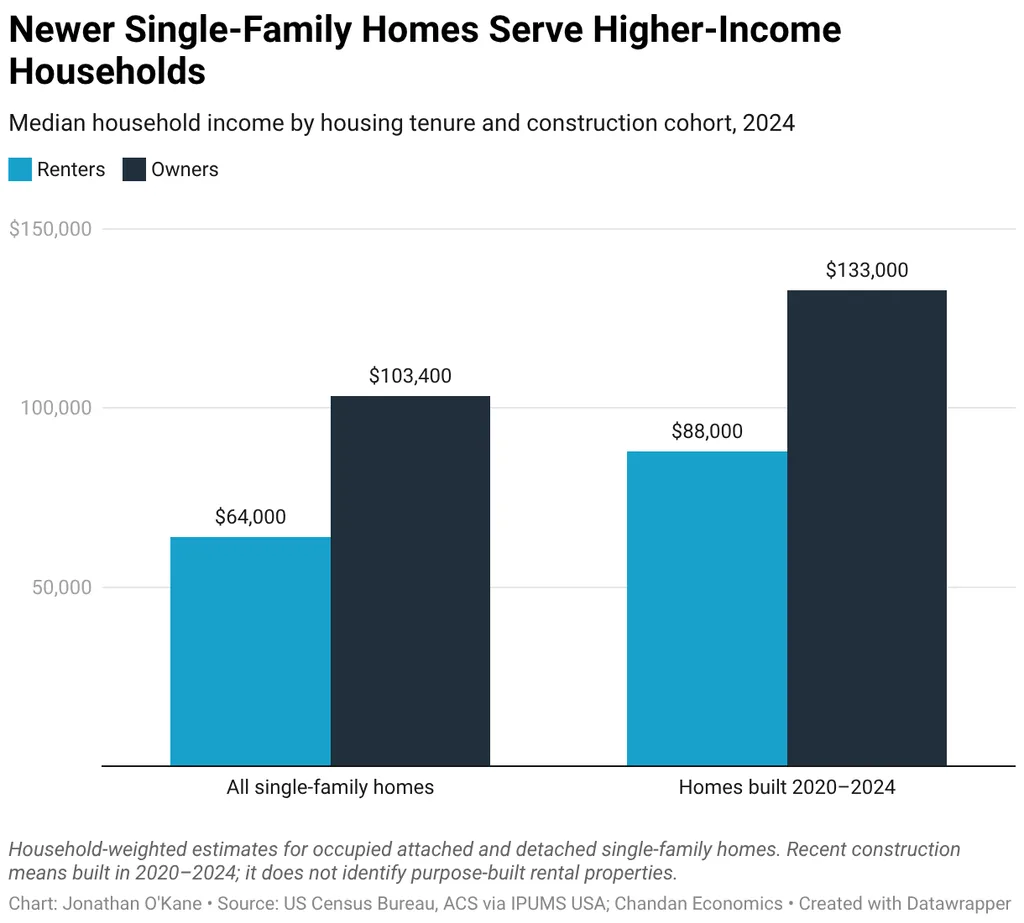
- Households in single-family rentals built from 2020 to 2024 have a median income of $88,000, 37.5% above the broader single-family rental median of $64,000.
- Higher renter incomes do not equal buying power, as owning the median home took 43.9% of median income in August 2026 and a 30% share would require about $126,800.
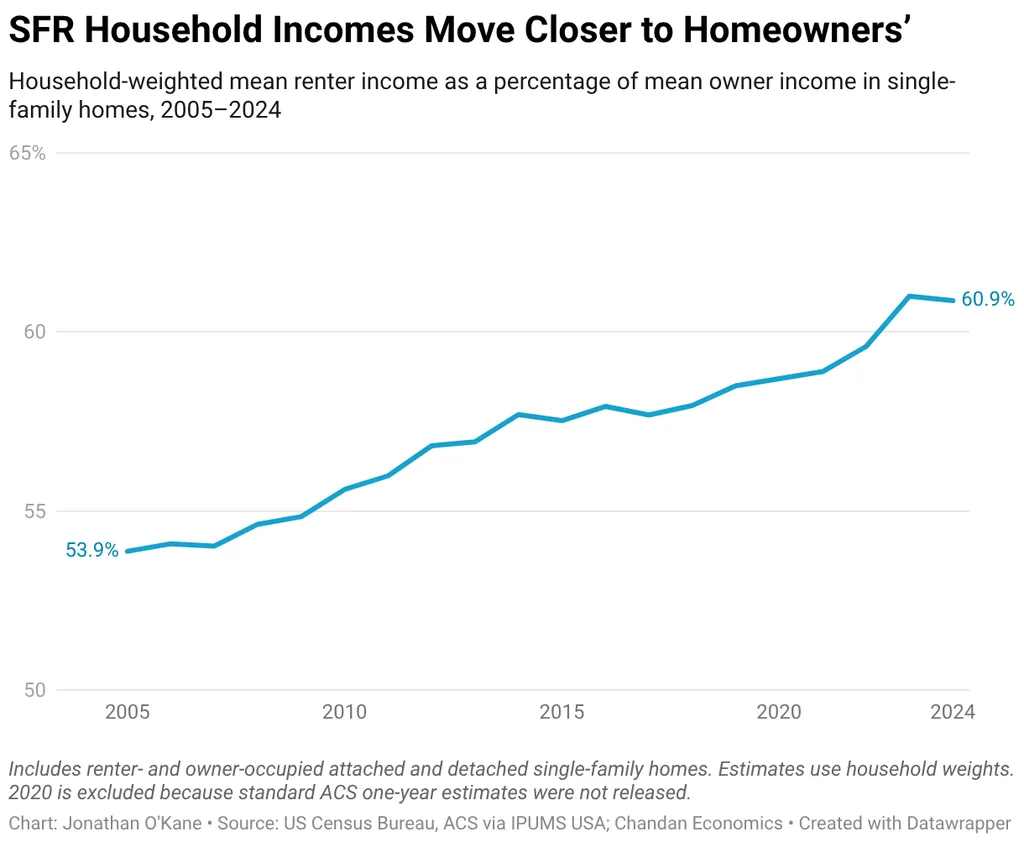
Single-family renters now earn 60.9% of what single-family owners earn, up from 53.9% in 2005, according to a Chandan Economics analysis of American Community Survey data.
The firm asks whether single-family rentals now serve households that once would have bought.
Get Smarter about what matters in CRE
Stay ahead of trends in commercial real estate with CRE Daily – the free newsletter delivering everything you need to start your day in just 5-minutes
Renters Gain Ground
In 2024, average renter household income was about $83,900 versus $137,800 for owners. Median incomes were $64,000 and $103,400.
After inflation, median renter income rose 24.5% from 2005 to 2024. Owners’ rose 7.3%.
The dollar gap narrowed only modestly, from about $57,000 to $54,000 in 2024 dollars. Much of the convergence also predates the pandemic.
Newer Rentals Draw Higher Earners
Households in single-family rentals built from 2020 to 2024 had a median income of $88,000 in 2024. Average income there topped $106,000.
Newly built owner-occupied homes follow suit, with a median of $133,000. The data cannot separate purpose-built rentals from homes built for sale, a distinction that matters for investors weighing single-family rental yields.
Who Moves In
Recent movers show a similar gap. Renters who moved in within 12 months had a median income of $69,000, versus $112,000 for new owners, or 61.6%.
Part of the narrowing reflects who rents. Controlling for age, household size, schooling and region still shows convergence, but a smaller one. The survey cannot say whether renters wanted or could qualify to buy.
The Ownership Hurdle
Buying remains a stretch. Per the Atlanta Fed’s homeownership affordability tracker, carrying the typical existing home took 43.9% of median household income in August 2026.
Keeping costs at its 30% benchmark would take about $126,800 in income, versus an actual median of $86,700. A 10% down payment is roughly $40,600.
Credit matters too. New York Fed research shows the average first-time mortgage borrower’s credit score rose from 670 in 2000 to 734 in 2024.
Why It Matters
For landlords, the numbers support demand from households with real earning power. Rent collection is a related signal: on-time payment reached 83.1% for independent single-family landlords in October, per Chandan Economics and RentRedi data.
The authors add that renting lets some households live in the kind of home they want while they save toward buying.
What’s Next
The analysis cannot say how many renters would have become owners under different conditions. Down payments, credit and financing costs remain separate hurdles that income gains alone will not clear.