







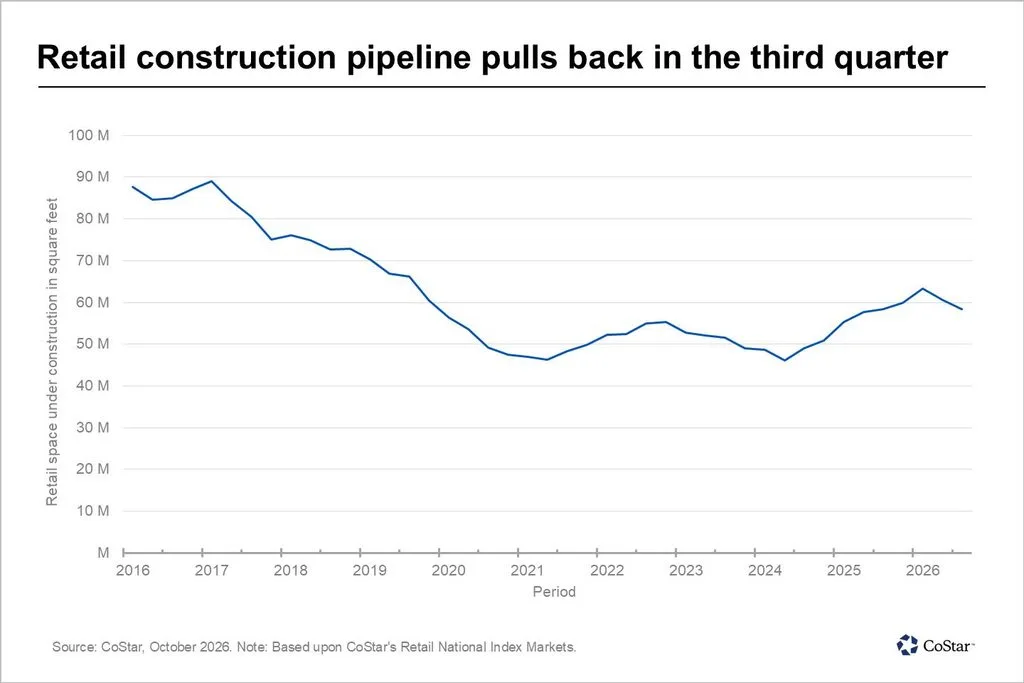
- CoStar says 58.3M SF of retail was under construction in Q3, down from 60.6M SF in Q2 and 63.3M SF in Q1, roughly 4% under the 10-year average of 60.7M SF.
- New starts totaled about 7.7M SF, down from 10.7M SF in Q2 and the lowest quarterly figure since at least 2016, as elevated land, construction and borrowing costs strain feasibility.
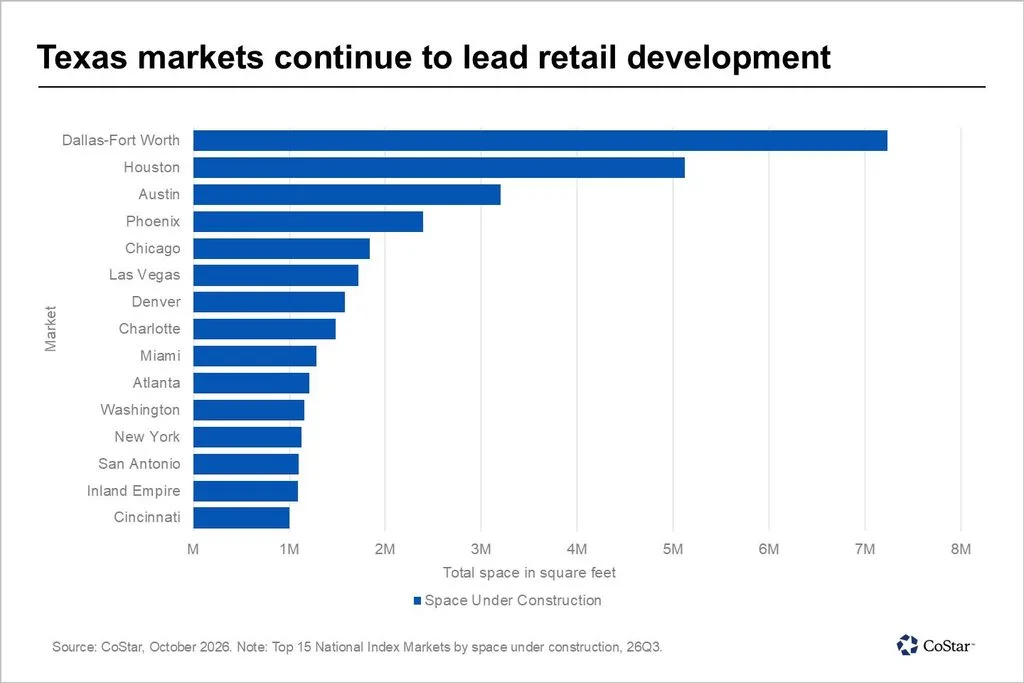
- Dallas-Fort Worth, Houston and Austin hold nearly 27% of the national pipeline, and CoStar expects further shrinkage before any meaningful recovery.
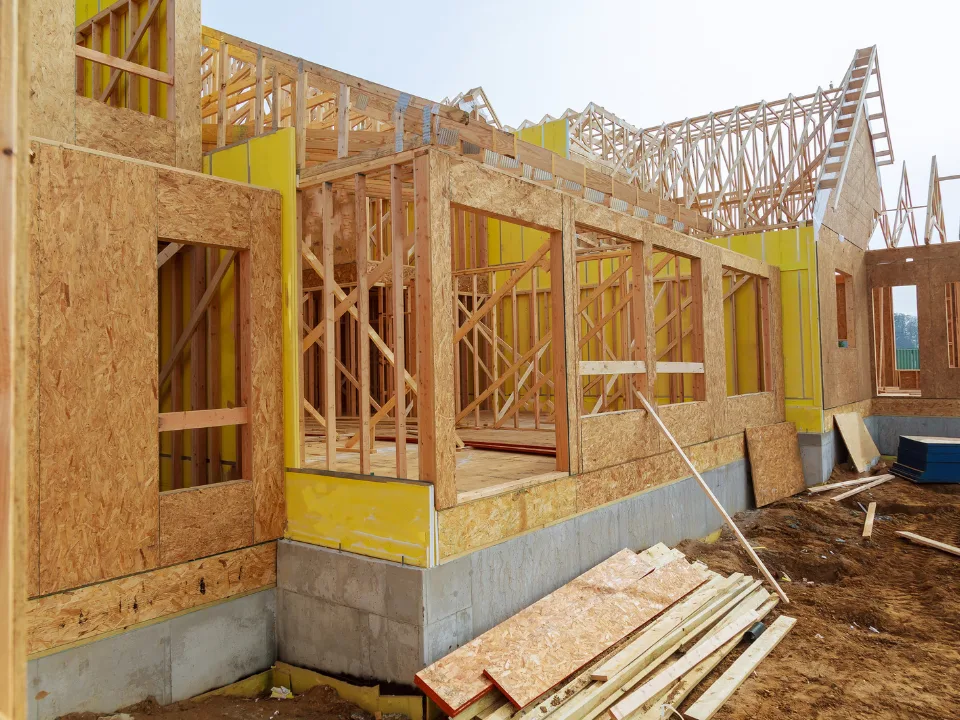
Retail developers are barely starting new projects. CoStar data show retail construction starts dropped to their weakest quarter since 2016 at minimum in the third quarter.
Roughly 7.7 million SF started construction in Q3, versus 10.7 million SF in Q2.
Get Smarter about what matters in CRE
Stay ahead of trends in commercial real estate with CRE Daily – the free newsletter delivering everything you need to start your day in just 5-minutes
Pipeline Keeps Shrinking
Retail space under construction totaled about 58.3 million SF in Q3, versus 60.6 million SF in Q2 and 63.3 million SF in Q1. That matches a year earlier but sits roughly 4% below the decade average of 60.7 million SF.
That is two straight quarterly declines, and CoStar sees no turn yet.
Why Projects Do Not Pencil
Brandon Svec, who leads national retail analytics at CoStar, said the price of land, building and debt now demands rents well beyond what tenants will pay in many formats. Flat asking rents in the quarter did nothing to close that gap.
Svec expects supply to keep thinning before a real recovery begins, citing starts at a decade low and financing costs moving higher.
Texas Leads the Pipeline
Dallas-Fort Worth, Houston and Austin together account for about 15.5 million SF under construction, close to 27% of U.S. supply.
The 15 largest pipelines hold roughly 56% of everything underway. CoStar says little gets built anywhere that lacks the population growth and tenant expansion to back new projects.
Why It Matters
Limited supply supports landlords. We reported in October that record diesel prices were adding to costs while retailers such as Aldi, Burlington and TJ Maxx planned large store expansions. That leaves few new spaces to absorb the demand. CoStar put the pipeline at just over 60 million SF then, so it has since slipped further.
Hines Research makes a similar case, framing the retail recovery as an income and scarcity call after roughly 480 million SF of U.S. retail was demolished since 2000.
What’s Next
Watch whether starts rebound from the 7.7 million SF trough or keep sliding as borrowing costs rise. Rent growth is what would change the math for developers.