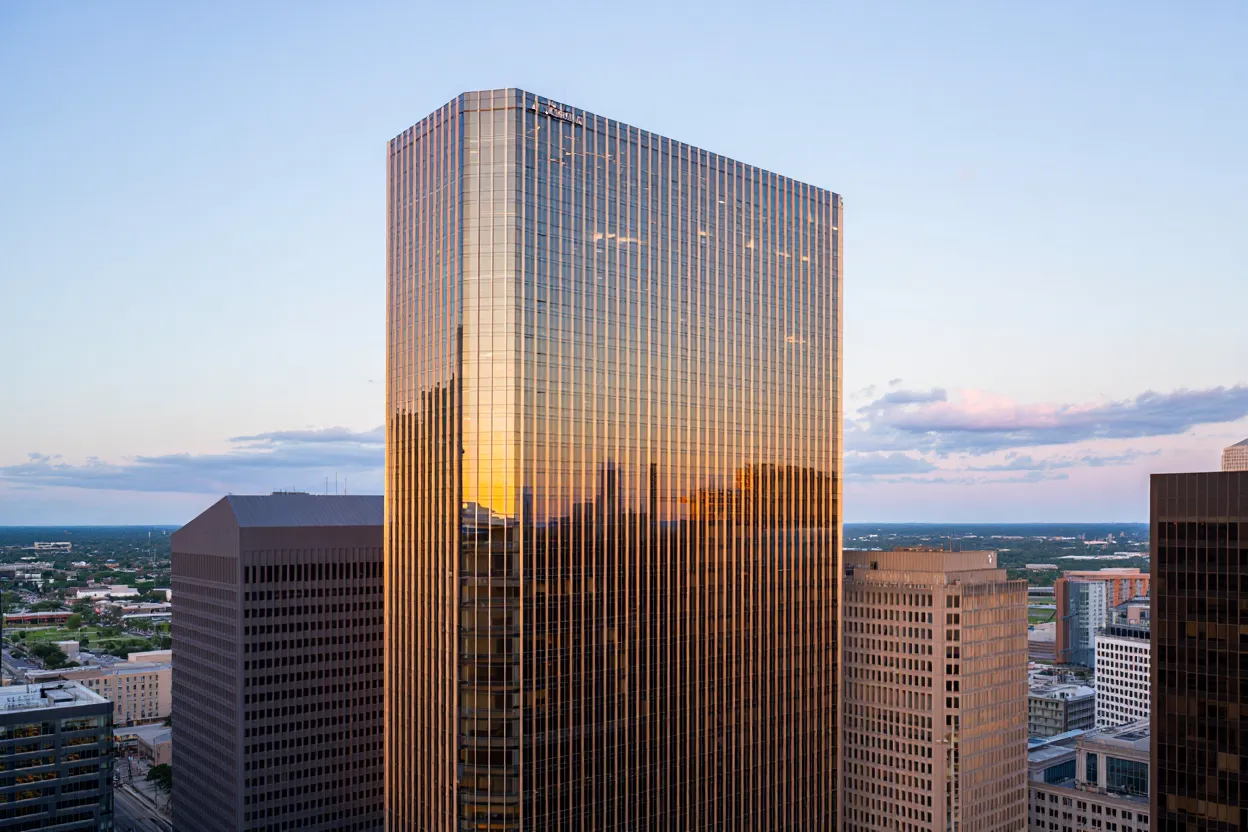




Big Banks Dive Back Into Commercial Real Estate Lending
The biggest lenders are expanding CRE lending again, targeting resilient asset classes while maintaining tighter underwriting.

Nina Dale
July 27, 2026
In partnership with

Good morning. Commercial real estate is making its way back onto banks' growth agenda. The comeback is being driven by stronger fundamentals, not a return to pre-pandemic risk-taking.
🎙️ This Week on No Cap: Jim Corl of Cohen & Steers joins Jack and Alex to explain why public REITs often signal where private real estate is headed. (Thanks to our sponsor, Lennar Investor Marketplace)

CRE Trivia 🧠
Which US city established the nation's first formal urban growth boundary in 1979 to manage suburban sprawl?
IN PARTNERSHIP WITH HINES
What’s next for real estate’s recovery?

Real assets have begun to offer better entry points for investors willing to move. Read Hines' 2026 Midyear Global Investment Outlook for the latest insights on the sectors and regions where these windows may be opening.
Key takeaways:
-
Focus shifts from finding demand, to buying and delivering where supply is most challenged.
-
Capital markets have improved faster than leasing fundamentals.
-
Capacity constraints have been driving the notable opportunities.
-
Investment outcomes are likely to come from execution, not falling interest rates.
-
Conviction could matter more than market timing.
*This is a paid advertisement. Please see the full disclosure at the bottom of the newsletter.
Market Snapshot
|
|
||||
|
|
*Data as of 07/24/2026 market close.
Smarter Lending
Big Banks Dive Back Into Commercial Real Estate Lending
After years of avoiding commercial real estate, major banks are expanding lending again—targeting stronger property sectors while keeping a cautious eye on lingering office risks.
By the numbers: Commercial real estate lending is gaining momentum. CRE mortgage originations surged more than 50% YoY in the first quarter, driven by an 80% increase in bank lending, according to the MBA. Meanwhile, U.S. banks held nearly $3T in CRE loans in June, up 3% from a year earlier, Fed data showed.
Banks are growing loan books: With lending margins under pressure and competition for deposits remaining fierce, banks are turning to CRE to grow earning assets. Several major lenders reported higher CRE balances in the second quarter:
-
Bank of America: CRE loans up more than 8%
-
U.S. Bancorp: Up more than 8%
-
PNC Financial: Up 15%
-
Truist Financial: Up roughly 25%
Focus shifts: Banks aren't returning to every property type. They're focusing on stronger sectors like multifamily, industrial and AI-driven data centers. Citizens Financial, for example, plans to expand data center lending while continuing to reduce its office exposure.
Office remains the caution flag: Office remains the biggest challenge, with high vacancies and lower property values continuing to weigh on the sector. Still, many banks say they've worked through their riskiest loans, delinquencies are improving, and underwriting standards remain tighter than before the pandemic.
Competition returns: As confidence returns, lenders are competing again for quality deals. Even CRE-focused Bank OZK reported stronger competition for real estate debt transactions while maintaining a disciplined lending approach.
➥ THE TAKEAWAY
Back with caution: Banks may be lending more, but they're also lending smarter. The next phase of CRE financing will likely be driven by property fundamentals rather than aggressive risk-taking.
A MESSAGE FROM CRE AI STUDIO
Are You Getting Enough From Claude?

Enrollment is open for the Claude Cohort, CRE AI Studio's 6-week live program.
Learn to put Claude to work on the jobs eating your week: screening OMs, analyzing T12s, building models, automating reports. Starts August 13.
Limited seats available.
*This is a paid advertisement. Please see the full disclosure at the bottom of the newsletter.
✍️ Editor’s Picks
-
Claude now sources CRE deals: Terrakotta's Claude Agent is disrupting the CRE industry as we speak. Brokers can now automate LLC skip-tracing, find motivated sellers, and source off-market deals. (sponsored)
-
Brookfield battery: Brookfield will acquire Aypa Power in a $7B deal, expanding its energy portfolio with 6.5 gigawatts of battery storage projects and a 20+ GW development pipeline.
-
Blackstone growth: Blackstone reported record assets under management and strong earnings growth in 2026, driven by its expanding data center and artificial intelligence investments valued at $185B.
-
Workflow fix: Connected capital-raising systems free investor relations teams from administrative work, improving efficiency and the investor experience. (sponsored)
-
Yield pressure: Rising Treasury yields, elevated oil prices and persistent inflation concerns are creating a tougher financing environment for CRE investors facing higher costs and uncertainty.
🏘️ MULTIFAMILY
-
BWE acquisition: Bayview Asset Management and Springmont Capital will acquire majority ownership of BWE, strengthening the mortgage banking firm’s commercial and multifamily real estate financing platform.
-
Vesta takeover: Former arms dealer Efraim Diveroli took control of Vesta Capital’s apartment portfolio after loan defaults sparked lawsuits, foreclosures and bankruptcy filings.
-
Chicago protections: Chicago’s proposed tenant protections could increase compliance costs and pressure multifamily owners’ NOI through new fees, relocation requirements and regulations.
🏭 Industrial
-
Prologis merger: Prologis is pursuing an $18.7B acquisition of Segro, creating one of the largest industrial REIT mergers and expanding its European logistics footprint.
-
AI spending: Google’s $205B AI infrastructure investment plan rattled Wall Street as investors questioned whether rising data center costs will translate into competitive advantages.
-
Revere warehouse: Stockbridge Capital Group acquired a 17K SF industrial warehouse in Revere from Blackstone’s Link Logistics for $45M.
-
Padel conversions: Empty warehouses and big-box stores are being transformed into padel clubs as the fast-growing sport creates new adaptive reuse opportunities.
🏬 RETAIL
-
Grocery myths: CMBS data shows premium grocers appear riskier due to troubled properties, not tenant weakness, as distressed loans are tied to malls and mixed-use assets.
-
Starbucks revival: Starbucks is seeing stronger customer traffic after store closures, café upgrades and its “Back to Starbucks” strategy boosted performance.
-
Independent retail: Independent retailers are growing fastest in smaller cities and towns by adapting quickly to consumer trends, local demand and in-person shopping preferences.
-
Petsense closures: Tractor Supply will close 75 Petsense stores to cut losses, improve returns and shift investment toward higher-performing retail and pet services.
🏢 OFFICE
-
Office revival: SL Green reported stronger Q2 2026 leasing results as New York City’s office market gained momentum from healthcare, venture capital and Wall Street demand.
-
AI clusters: AI office demand is reshaping CRE markets as tenants concentrate in select submarkets, creating tighter conditions that metro vacancy data fails to capture.
-
AI expansion: Mercor’s 26,000 SF lease at One World Trade Center pushed the trophy tower to 97% occupancy as AI firms expanded their Manhattan office footprint.
🏨 HOSPITALITY
-
Wyndham rebound: Wyndham remains optimistic for 2026 as strong U.S. hotel demand offsets international weakness, with portfolio growth and higher-quality properties supporting results.
-
Stadium transformation: Northwestern’s $875M Ryan Field redevelopment nears completion, delivering a modern 35,000-seat venue designed as a year-round community and athletics destination.
-
Luxury expansion: WorldHotels is growing its global footprint with 40+ hotels in development, adding luxury properties, branded residences and experiential stays across key international markets.
📈 CHART OF THE DAY

Annual U.S. remodeling spending is expected to slow sharply through mid-2027, with year-over-year growth easing to just 0.5% as weaker permitting, softer building product sales, and sluggish home sales weigh on renovation activity.
CRE Trivia (Answer)🧠
Portland, Oregon. Required by Oregon's 1973 Senate Bill 100, the boundary has been adjusted over time and is widely studied as a land-use planning model and debated for its role in driving up housing costs within city limits.
More from CRE Daily
-
📬 Newsletters: Stay ahead of the market with local insights from CRE Daily Texas and CRE Daily New York.
-
🎙️Podcast: No Cap by CRE Daily delivers an unfiltered look at the biggest trends—and the money game behind them.
-
🗓️ CRE Events Calendar: The largest searchable calendar of commercial real estate events—filter by city or sector.
-
📊 Market Reports: A centralized hub for brokerage research and market intelligence, all in one place.
-
📈 Fear & Greed Index: A fully interactive sentiment tracker on the pulse of CRE built in partnership with John Burns Research & Consulting.

You currently have 0 referrals, only 1 away from receiving Multifamily Stress Test Model.
What did you think of today's newsletter? |