






- US single-family housing starts fell 9.9% in July, reaching their lowest annualized pace since November 2022 at 808,000 units.
- Permitting for new builds shows signs of life, but multifamily and single-family completions both declined year-over-year.
- Regional trends highlight sharp Northeast and West multifamily gains, but overall new construction faces persistent headwinds from high costs and rates.
High Costs and Rate Pressure Dampen New Homebuilding
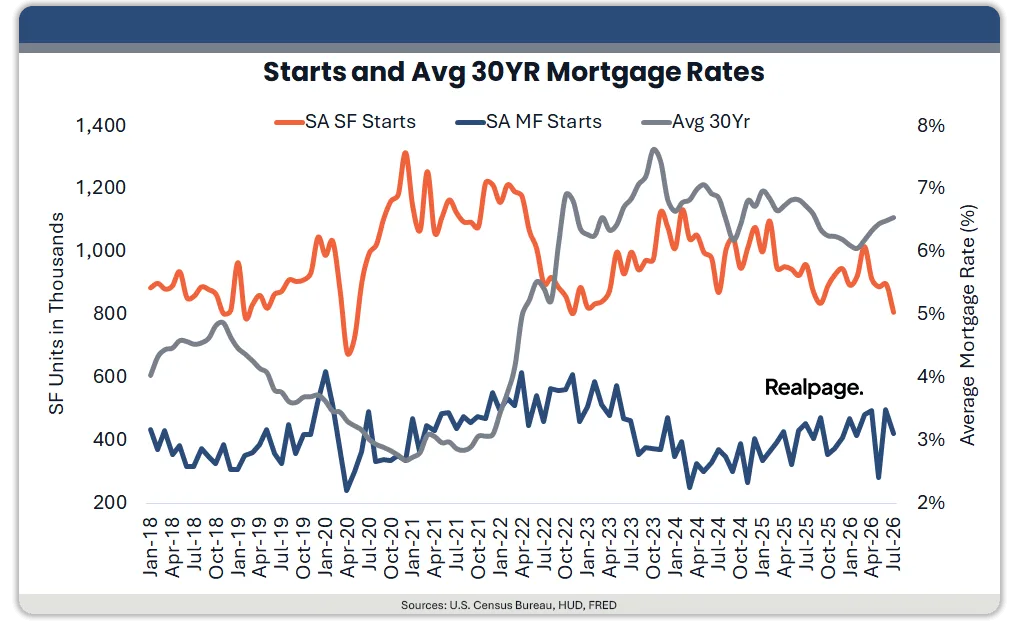
Single-family construction in the US continued to decelerate in July. Higher mortgage rates, construction costs, and weak builder confidence sapped momentum. RealPage Analytics cited new Census Bureau and HUD data showing single-family starts fell to an annualized 808,000 units. That marked the lowest level since November 2022.
Starts dropped 9.9% from June and 15.7% from July 2025. The 12-month average annualized pace has hovered near 900,000 starts since last July. During that period, starts have rarely exceeded the 1M mark.
The US residential market continues to grapple with volatility. Recent months brought hopes for renewed momentum, but tighter lending and high input costs still constrain builders. Consumer uncertainty and weakening confidence add pressure, clouding the sector’s near-term prospects.
Get Smarter about what matters in CRE
Stay ahead of trends in commercial real estate with CRE Daily – the free newsletter delivering everything you need to start your day in just 5-minutes
The Details
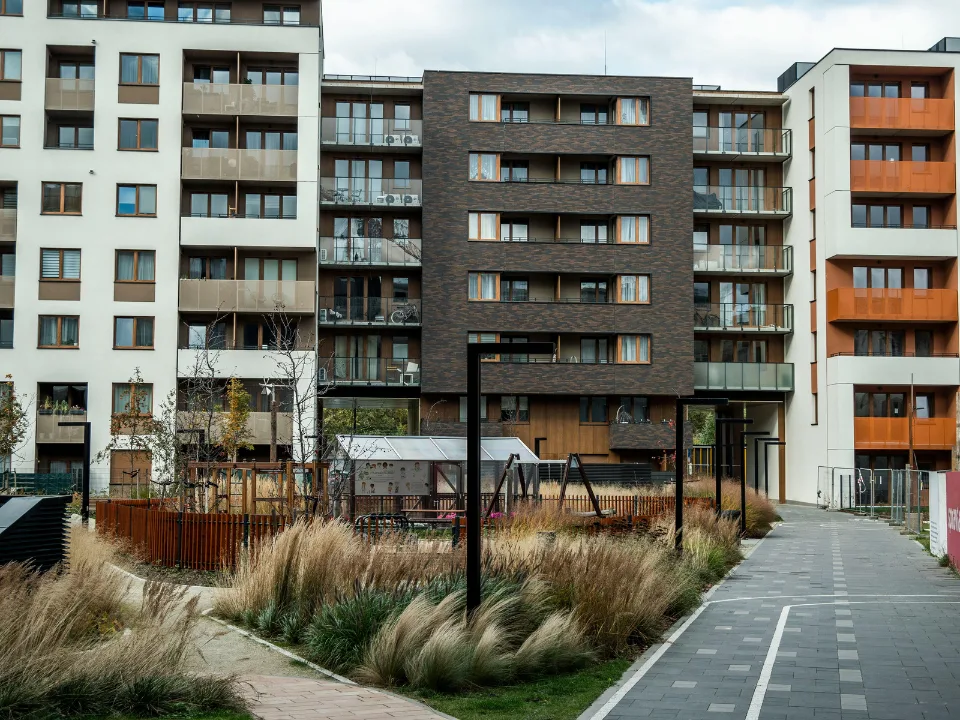
July’s weakness extended beyond single-family construction. Multifamily starts fell to 421,000 units, down 15.6% monthly and 7.1% year-over-year. Including small plexes, total residential starts fell 12.4% monthly to 1.239M. That figure also represented a 13.5% annual decline.
Completions showed similar weakness. Single-family completions fell 12.8% year-over-year to 878,000 units. Multifamily completions dropped 25.6% to 329,000 units. Meanwhile, single-family units under construction reached 579,000, down 7.2% from July 2025. Multifamily units under construction fell 4.4% to 666,000.
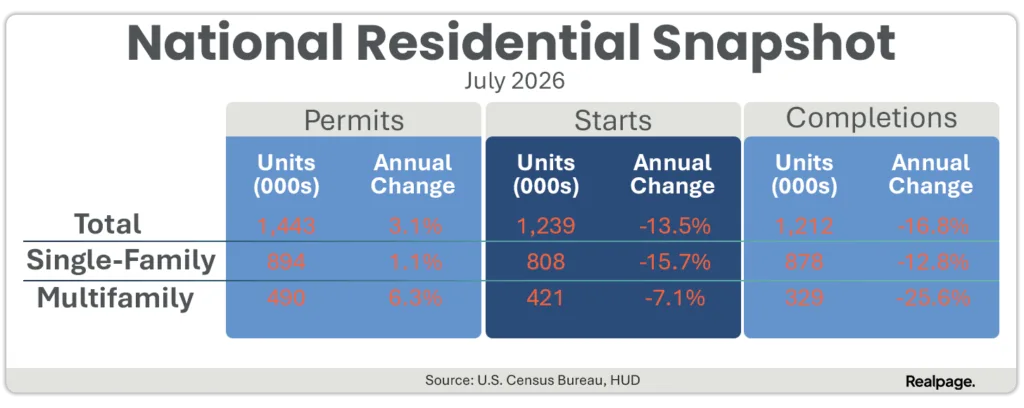
However, forward-looking metrics offered some hope. Total building permits increased 5% monthly and 3.1% year-over-year, largely because multifamily permitting increased.
Permitting Recovers, but Construction Remains Muted
Despite weak starts and completions, July’s permitting activity suggested future supply could recover. Single-family permitting reached 894,000 units, rising 2.5% monthly and 1.1% annually. Multifamily permitting increased 9.1% monthly and 6.3% year-over-year to 490,000 units.
Regionally, the Northeast and West recorded strong multifamily permitting growth, rising 31% and 24.9%, respectively. Meanwhile, the South and Midwest posted small declines. Multifamily starts jumped 176% in the Northeast to 119,000 units. The West also recorded a 106.9% increase.
However, the South and Midwest experienced significant retrenchment, with starts falling more than 40% year-over-year in both regions. This regional divide shows how local economic conditions, costs, and demand increasingly shape project activity.
Why It Matters
Single-family starts have now fallen to their lowest rate since late 2022. The decline signals mounting challenges across US residential construction. Homebuilders face high mortgage rates, restrictive lending standards, and stubborn construction costs. Freddie Mac reports 30-year fixed rates have hovered between 6.75% and 7% since early 2026.
These pressures affect both first-time buyers and move-up households. As a result, more prospective buyers remain in place, worsening the existing housing supply-demand imbalance. Meanwhile, Florida’s unemployment rate has reached a five-year high, adding another potential headwind for housing demand.
The trend extends beyond detached homes. Multifamily construction has softened since peaking in late 2024, while completions have fallen sharply and starts have stalled. Still, stronger permitting shows developers continue watching for opportunities. Activity appears particularly promising in the Northeast and West, where demand remains resilient or economic drivers are shifting.
For CRE investors and lenders, the data reinforces widespread reports of a cooling pipeline. Developers also face growing difficulty launching new projects. Both for-sale and for-rent housing face pressure. The second half will test the sector’s ability to adjust financing, labor, and demand strategies.
What’s Next
Residential developers face an uneven path as markets weigh potential rate relief against persistent cost and demand constraints. If permitting momentum continues, multifamily supply could post modest gains during the second half of 2026. The Northeast and West could capture much of that growth.
However, builders remain unlikely to return to pre-2023 construction levels without significant relief from interest rates or material costs. Developers will likely maintain a cautious approach toward new projects.
CRE stakeholders should expect greater focus on regional performance differences. Investors and lenders will also scrutinize project viability more closely before developers put new shovels in the ground.