








- Starwood Property Trust and Realterm originated a $672M refinancing for a 78-property industrial outdoor storage (IOS) portfolio spanning 33 US markets.
- The deal refinances an earlier $486M loan and represents the largest IOS debt transaction to date, per Bloomberg.
- Rising institutional investment and scarce supply are fueling rapid rent growth and portfolio consolidation in the IOS sector.
IOS Goes Big-League for Institutional Lenders
According to Bisnow, Starwood Property Trust and Realterm originated a $672M loan for a national IOS portfolio. The financing marks the largest IOS loan ever recorded. Stonemont Financial Group and Cerberus Capital Management assembled the portfolio after partnering in 2021. Bloomberg previously described their strategy as a billion-dollar logistics bet.
The new loan refinances 78 properties spanning 830 acres and replaces $486M in previous financing. Eastdil Secured and Savills arranged the deal. For institutional players, IOS is moving from the shadows onto the main stage.
Get Smarter about what matters in CRE
Stay ahead of trends in commercial real estate with CRE Daily – the free newsletter delivering everything you need to start your day in just 5-minutes
The Details
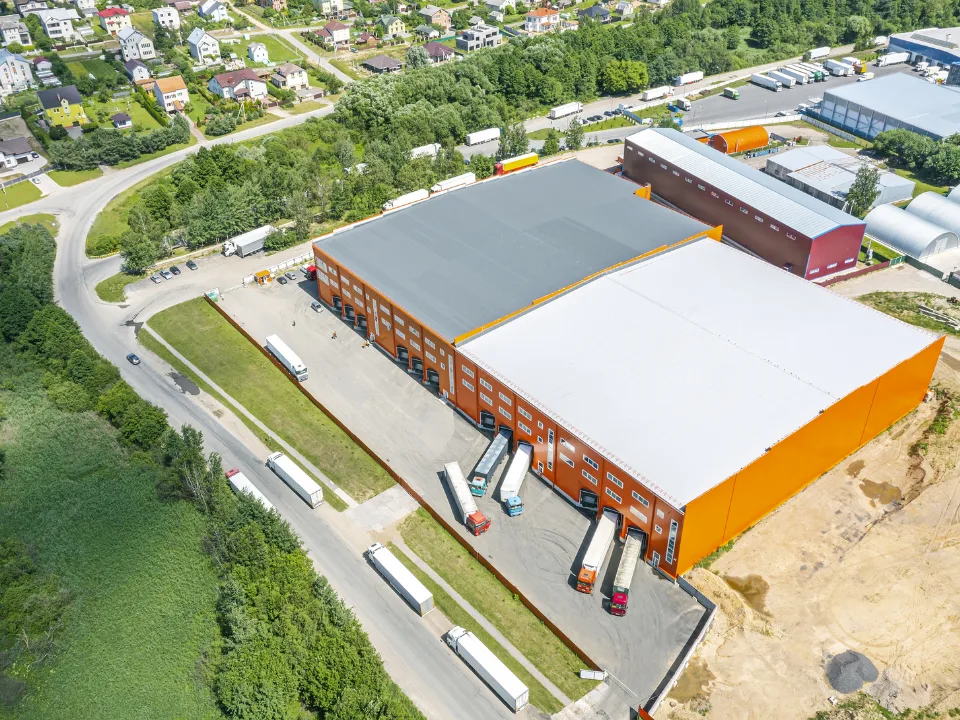
The refinanced portfolio spans 33 US markets, with 78 assets covering 830 acres. Stonemont and Cerberus continue to own and operate the properties. The sites support fleet parking, equipment storage, and other logistics activities.
These properties underpin the country’s e-commerce and distribution infrastructure. Starwood Property Trust operates one of the largest commercial mortgage REIT lending platforms. It partnered with Realterm, a logistics real estate specialist, to originate the debt. Savills and Eastdil Secured arranged the record-setting financing package.
Supply Crunch and Institutional Inroads
US industrial outdoor storage totals only 1.4M acres, roughly equivalent to Delaware’s entire size. According to Newmark, national vacancy stood at just 5% in September. Meanwhile, IOS rents have surged 123% since 2020, significantly outpacing traditional industrial properties.
Geographic constraints limit supply, while developers have added little new inventory. Large real estate investors once largely ignored the sector. This scarcity has also created widening IOS pricing differences across US markets as investors compete for limited supply. However, tax-exempt institutions more than doubled their IOS holdings over five years, according to Newmark. Brookfield’s $1.2B Peakstone Realty Trust acquisition highlights this growing momentum. La Caisse also launched a $360M joint venture with Sagard.
Why It Matters
The $672M refinancing highlights a broader institutional pivot toward industrial outdoor storage. E-commerce and last-mile distribution growth have increased the value of land supporting logistics networks. Starwood and Realterm’s commitment also demonstrates growing lender appetite for niche industrial assets.
IOS can offer inflation-protected cash flows alongside potential value appreciation. Meanwhile, traditional industrial rent growth has moderated across many markets. Newmark reported that IOS returns significantly outperformed traditional industrial properties after 2020. Institutions increasingly pay premiums for scale and scarce locations.
Stonemont and Cerberus recognized the opportunity early and built a portfolio capable of attracting institutional financing. Diversified tenants and mission-critical locations can provide lenders with additional downside protection. Record refinancing also gives borrowers greater confidence to continue consolidation strategies.
Lending Appetite Expands
Tenant demand is also reshaping how lenders evaluate IOS properties. E-commerce companies, equipment rental businesses, and fleet operators increasingly depend on these locations. Their growth strengthens demand for sites near major population and logistics centers.
Lenders previously approached non-traditional industrial collateral more cautiously. However, strong sector performance has encouraged them to reassess those risks. As liquidity enters alternative industrial assets, investors are steadily rewriting the definition of core real estate.
What’s Next
IOS should continue attracting institutional capital as investors recognize its constrained supply and strong fundamentals. Larger debt packages could follow as lenders become more comfortable with the sector. Additional joint ventures, portfolio roll-ups, and M&A activity could also accelerate.
Competition could intensify further if interest rates moderate. Starwood, Realterm, and their peers may establish a template for future IOS financings. For owners, scale and operational expertise should command increasing premiums. The sector continues its transition from niche strategy to mainstream CRE investment.