




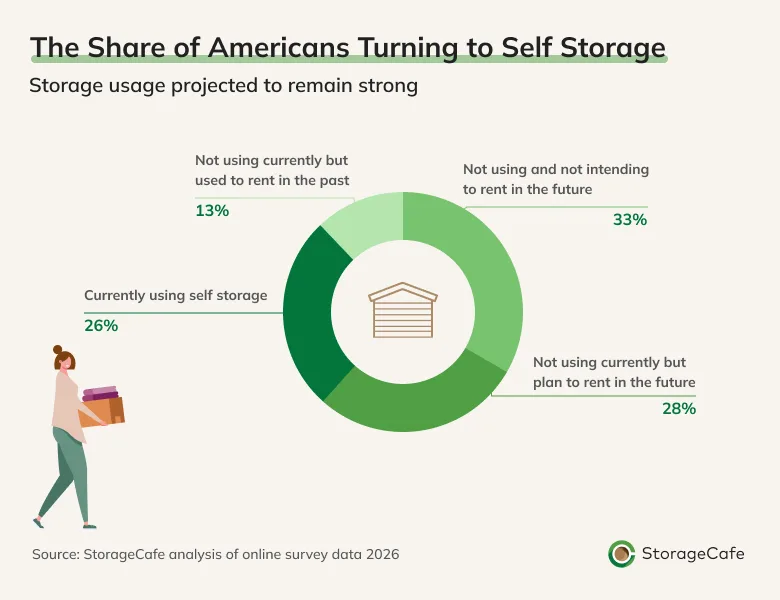
- StorageCafe’s survey found 26% of respondents currently use self storage, with another 28% planning future use.
- Self storage searches across 150 major US cities rose 23% year over year in 2025, nearly triple 2024 growth.
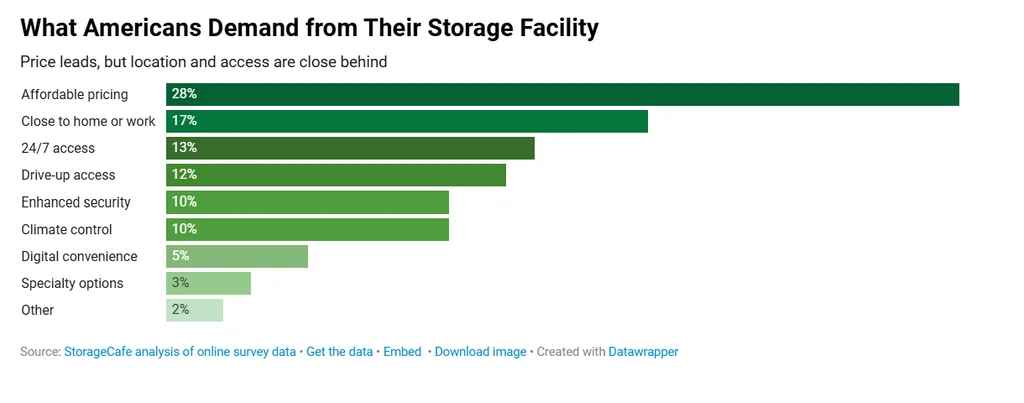
- Affordability ranked as the top facility feature, while national advertised rents fell 1.6% year over year in July 2026.
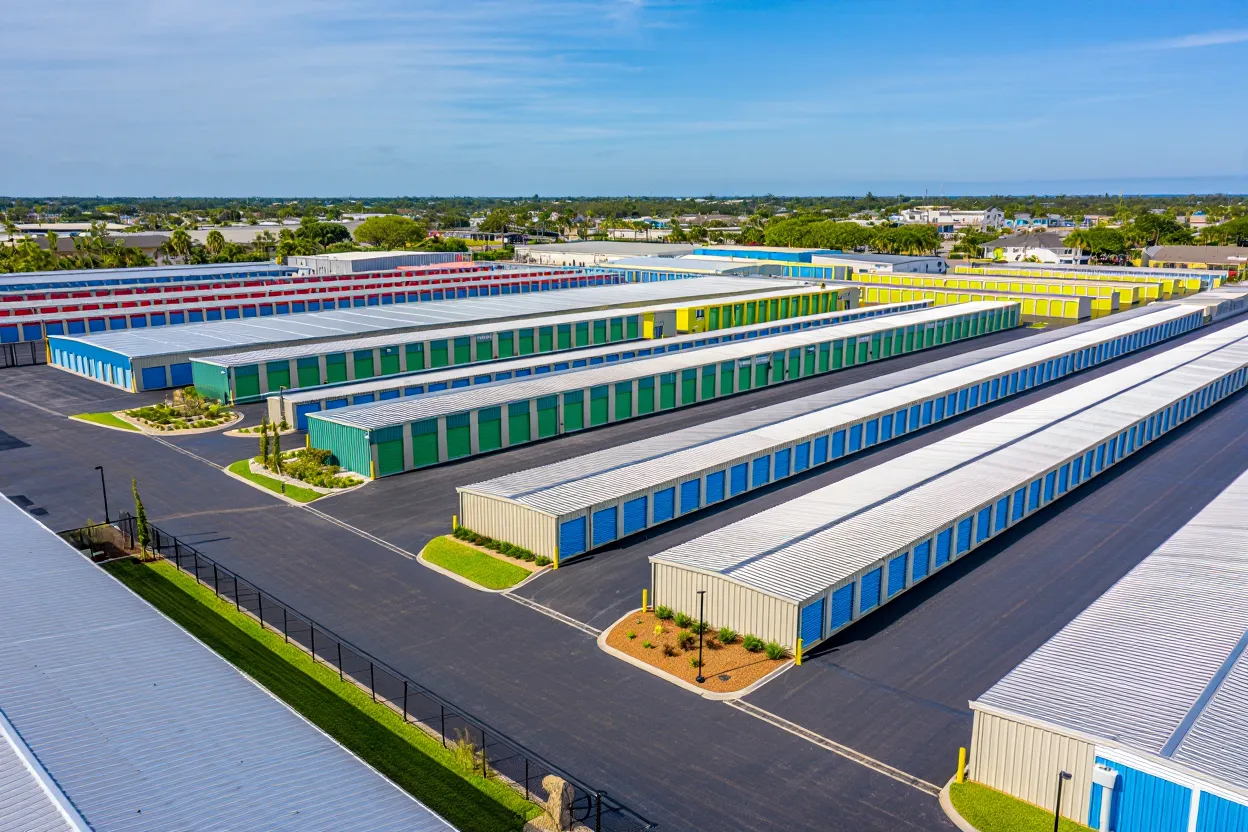
Self storage demand is expanding across both current users and future renters. StorageCafe found that 26% of survey respondents currently rent a unit, while another 28% plan to use storage later. Search activity also accelerated across major US cities in 2025.
Get Smarter about what matters in CRE
Stay ahead of trends in commercial real estate with CRE Daily – the free newsletter delivering everything you need to start your day in just 5-minutes
More Households Treat Storage as Extra Space
StorageCafe’s survey covered 1,430 respondents between November 2025 and June 2026. Current usage reached 29% among homeowners and 21% among renters. Gen X had the highest current use at 35%, while only 13% of Gen Z respondents rented a unit. However, 32% of Gen Z said they plan to use storage in the future.
The Details
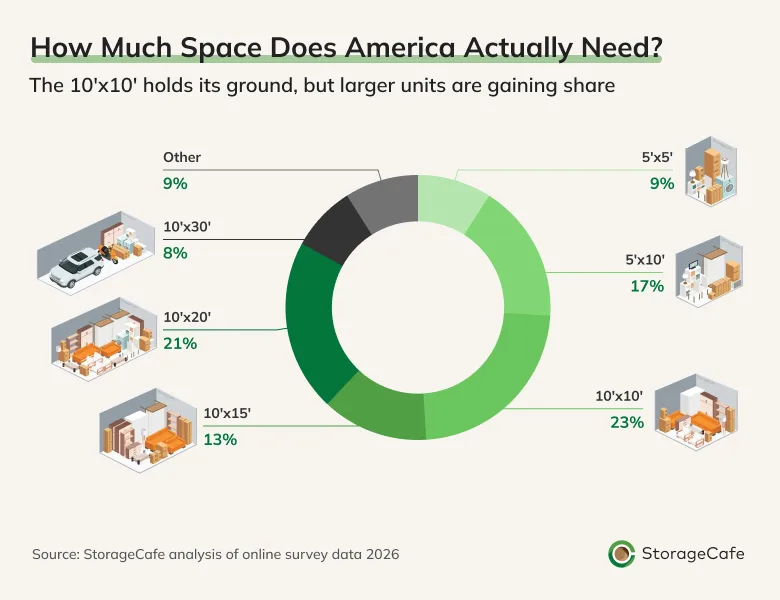
Space constraints remained the leading reason for renting storage. Not having enough room appeared in 34% of homeowner responses and 31% of renter responses. Moving was another major trigger, cited by 20% of homeowners and 30% of renters. Climate-controlled units were the most common format, used by 54% of current users. The 10-foot-by-10-foot unit was the most frequently cited size at 23%.
Self Storage Demand Grows as Pricing Softens
Searches across 150 major US cities increased 23% year over year in 2025, based on Google Ads data used by StorageCafe. Memphis led the dataset with a 181% increase, followed by Port St. Lucie at 175% and Chesapeake at 170%. Yet the broader self storage market still faces softer pricing. Yardi Matrix said national advertised rates fell 1.6% year over year in July 2026, the seventh straight annual decline.
Why It Matters
Affordability was the most-selected facility feature, cited in 28% of survey responses. Location followed at 17%, while security and climate control each drew 10%. The data suggests storage remains useful to households even when budgets are tight. Operators therefore face a market with strong lifestyle demand but greater price sensitivity.
What’s Next
Work patterns may broaden the user base further. Hybrid workers had the highest current storage usage at 34%. Fully remote workers had lower current usage at 28%, but 40% said they intend to use storage in the future. That group could become a meaningful source of incremental demand as households keep adapting living space for work.