






- CRED iQ tracked $2.36B in modified CMBS and CRE CLO loans from May–July 2026, with multifamily now the leading sector for activity.
- Maturity extensions, forbearances, and combination mods made up over 70% of modified balances, signaling a shift from pure “extend and pretend.”
- Mid-size loans ($20M–$50M) dominated, marking a departure from past cycles where mega-loans set the pace for modification volume.
The End of ‘Extend and Pretend’
CRE loan modifications are evolving. CRED iQ tracked $2.36B in CMBS and CRE CLO modifications from May through July 2026. That total reflects rising modification volume and a shift in where distress now sits.
Previous quarters featured huge office and hotel loans seeking maturity extensions. Today, lenders spread relief more evenly across property types and loan sizes. They also use forbearances and hybrid modifications more often, rather than relying mainly on blanket extensions.
Multifamily’s rise to the top of the modification charts marks a significant turn. Investors previously viewed the sector as relatively resilient. However, market conditions and higher interest rates have quickly changed its position. CRED iQ’s data shows how rapidly distress can rotate across sectors during a cycle.
Get Smarter about what matters in CRE
Stay ahead of trends in commercial real estate with CRE Daily – the free newsletter delivering everything you need to start your day in just 5-minutes
The Details
Extensions remained the largest category, accounting for 34% of the $2.36B modified balance. Lenders extended 21 loans totaling $802.5M. Forbearances represented nearly 22%, totaling $514M across 15 loans. Combination deals involving paydowns and rate changes contributed another 15%.
Mid-sized loans drove most of the activity. Loans between $20M and $50M represented 51.7% of modified balances across 38 loans. By comparison, loans above $100M accounted for only 11.9%.
Multifamily represented 48.4% of modified dollars, followed by hotels at 21% and retail at 10%. Office accounted for less than 10%. That distribution shows how lenders and servicers now face risks beyond the office sector.
Rotating Distress Across Property Types
The latest numbers point to a clear shift in sector risk. Multifamily recorded 35 modified loans totaling $1.14B. Rising rates and slower rent growth now pressure apartments in saturated markets.
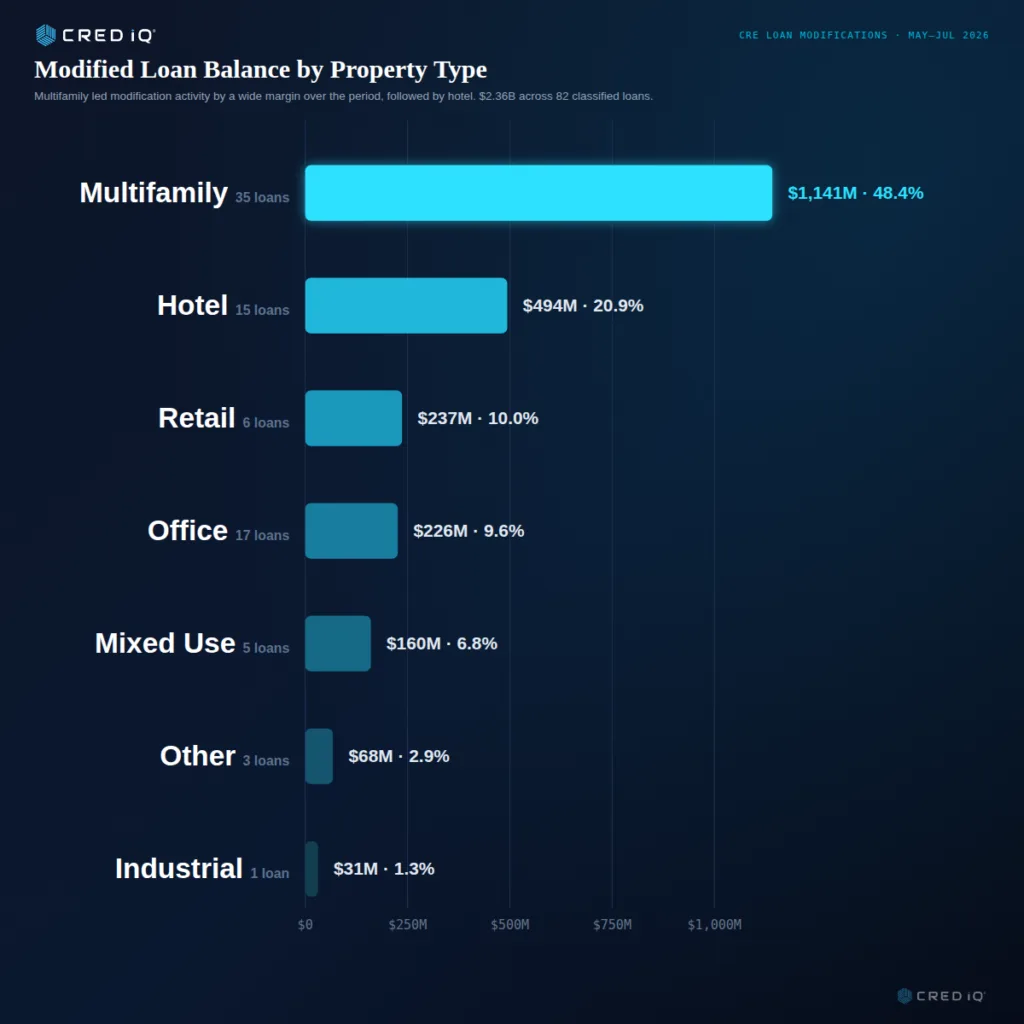
That marks a sharp change from earlier quarters, when hotel and office loans drove modifications. Together, those sectors now represent less than one-third of modified balances. Office alone fell to 9.6%, trailing retail and even mixed-use properties.
Mid-sized loans also dominated both the count and total modified dollars. This cycle increasingly affects the middle of the market rather than only highly leveraged flagship properties. The median modified loan reached $23.1M, reinforcing that trend.
Why It Matters
The changing modification landscape signals two important shifts for US CRE. First, distress is moving into sectors investors previously considered safer. Multifamily led all property types, representing more than 48% of modified balances.
Floating-rate debt, stagnant rents, and shifting fundamentals now pressure borrowers in previously stable markets. This follows an earlier surge in modifications as borrowers faced mounting maturity and refinancing pressures.
Second, lenders are moving beyond the traditional “extend and pretend” strategy. Forbearances and combination modifications now account for more than one-third of modified dollars. Lenders increasingly use broader restructuring tools to address stressed loans.
Regulatory scrutiny may encourage this shift, alongside efforts to preserve asset values across property types. Meanwhile, $100M-plus mega-loans no longer dominate modification activity. Mid-sized sponsors and their lenders increasingly shape the current wave.
That shift carries operational and pricing implications for servicers, capital markets desks, and secondary traders. Financial institutions must also reassess where risk sits across their portfolios.
What’s Next
Borrowers modified $2.36B in loans over just three months, showing that stress remains widespread. Maturity extensions and forbearances accounted for more than 70% of that activity.
Meanwhile, multifamily distress and increasingly varied modification structures point toward a longer market recalibration. Elevated interest rates continue pressuring borrowers as rents, occupancy, and refinancing conditions diverge across metros.
Lenders holding floating-rate and transitional debt will likely pursue solutions beyond simple term extensions. They could increasingly use principal paydowns, rate changes, and covenant resets. CRED iQ’s data suggests distress could continue rotating, challenging lenders to respond as new property types require relief.