



- With the 30-year rate at 7.24% on Oct. 29, RealPage estimates a median home’s loan payment runs about $380 above average rent of $1,915, and about $930 above once taxes and insurance are added.
- Renters are staying put: 57% of those with leases expiring in Q3 2026 renewed, versus 46% in 2006, and the average renewal lease now runs a little over 12 months.
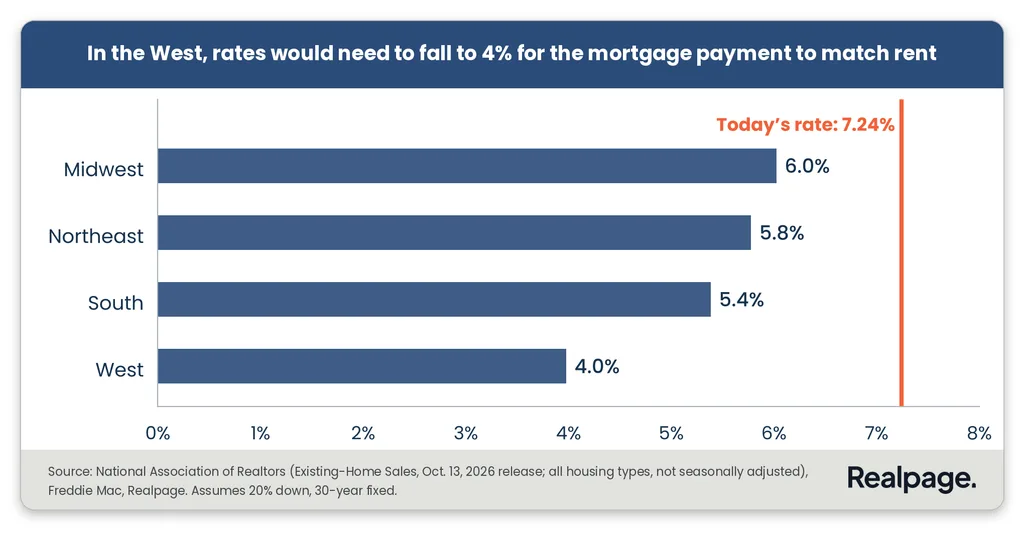
- Break-even rates range from about 4% in the West to 6% in the Midwest, and RealPage says closing the gap would take a mix of lower rates, lower prices and income growth.
Buying a home won’t beat renting until mortgage rates fall a long way, RealPage’s analysis finds. A drop to about 5.5% in the 30-year rate is what it would take for monthly loan costs on a median-priced home to equal typical apartment rent.
Freddie Mac’s rate was 7.24% on Oct. 29, more than a point above a year ago.
Get Smarter about what matters in CRE
Stay ahead of trends in commercial real estate with CRE Daily – the free newsletter delivering everything you need to start your day in just 5-minutes
The Monthly Gap
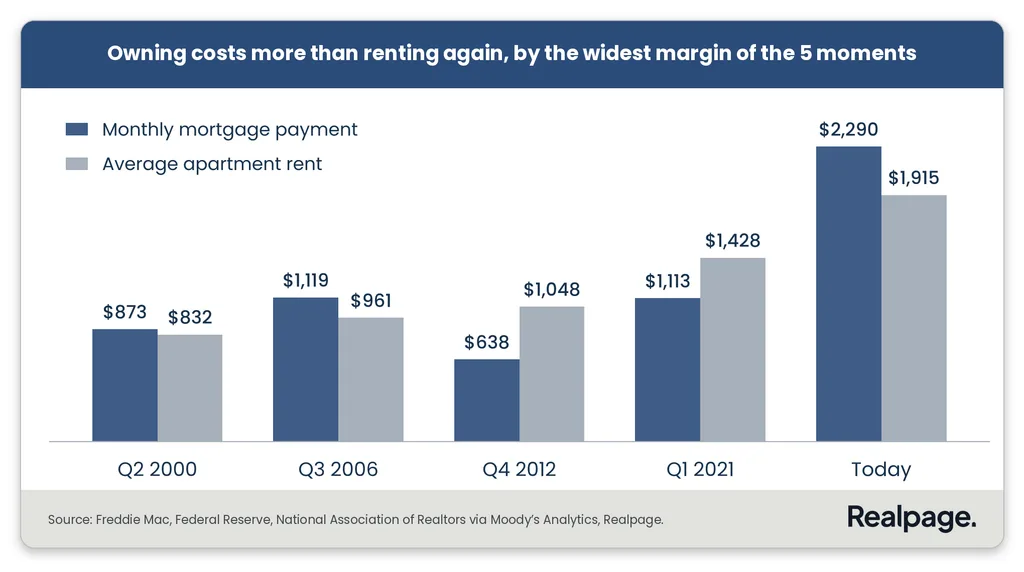
Average rent in RealPage’s data is $1,915. Principal and interest on a median home bought with 20% down comes to about $2,300, roughly $380 more. With taxes and insurance, owning runs near $2,840 a month, about $930 over renting.
Median prices sit near $420,000, up about a quarter since early 2021. Against the $87,500 median household income, that payment eats close to 33%.
How the Math Has Shifted
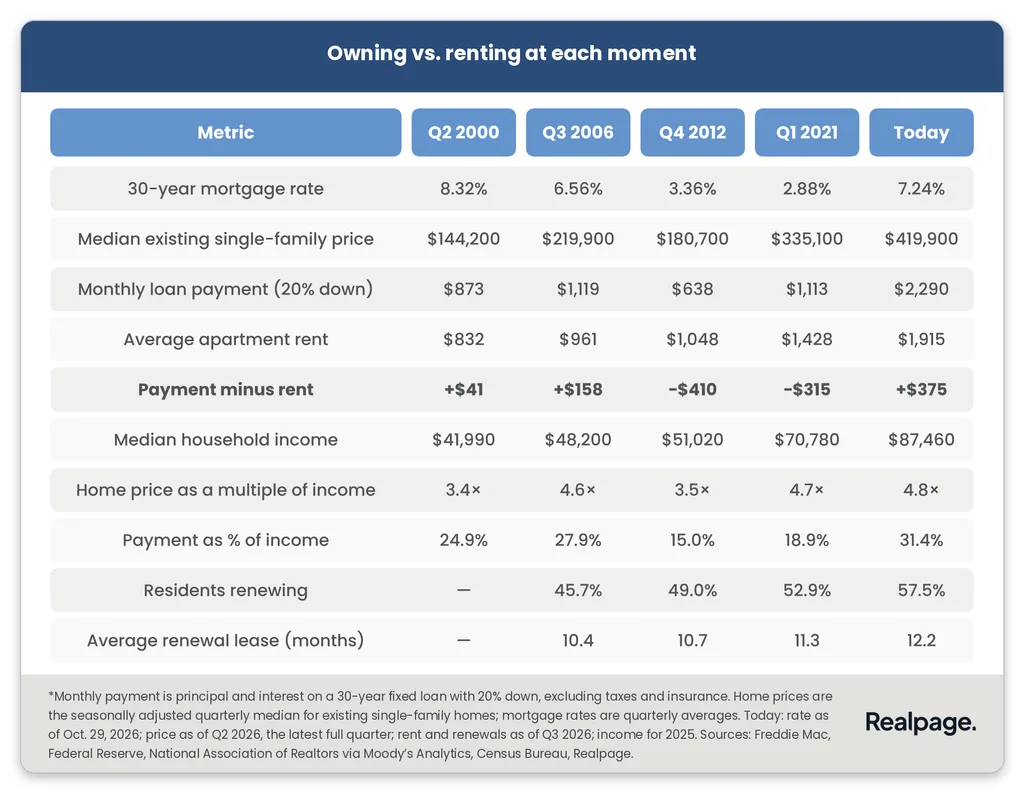
RealPage went back to four moments. In 2000, with rates near 8.3%, buying ran just $40 above renting. By 2006 the premium was $160, and after the crash, in 2012, buying was about $410 cheaper.
In early 2021, payments were still more than $300 under rent. Now they’re about 20% over, while even the 2006 boom peaked near 16%.
The Down Payment Wall
A 20% down payment now means roughly $84,000, almost a full year of median pay. Prices equal about 4.8 times yearly income, the high mark among the periods compared.
NAR data put the typical first-time buyer at age 40, and first-timers’ 21% share of purchases is the lowest on record.
Renters Are Staying Put
Of residents whose leases came up in Q3, 57% renewed, versus 46% in 2006. The Northeast led at 64%.
Renewals now run just over a year, up from roughly ten months in 2006, and new leases average nearly 13 months. For owners, that means less downtime between tenants and smaller turn costs.
Zoom Out
Other data shows the same gap. Zillow’s August figures, which we covered under renting saves $1,066, put typical rent at $1,948 against $3,014 for a new buyer, with renting cheaper in all 50 of the largest metros.
What Would Close the Gap
Holding rates steady, prices would have to slide about 16%, to roughly $351,000. Counting taxes and insurance, break-even lands near 2.7%, not far from January 2021’s all-time low of 2.65%.
Geography matters. The Midwest needs rates near 6%, while the West, with prices above $610,000, needs about 4%.
Income growth helps slowly. At roughly 3% a year, bringing the payment back to a quarter of income would take about eight years.
Why It Matters
Apartment owners benefit when fewer residents leave to buy, especially in markets still absorbing new supply. Zillow’s renter demand index, in our brief on buyers turning to renting, rose 19.2% year over year in September.
What’s Next
RealPage is tracking three things: the 10-year Treasury, which has eased to near 5% from above 5.3% earlier in October, home prices and renter behavior. The Fed held steady on Oct. 28, citing elevated inflation.