







- National industrial vacancy fell to 7.6% in Q3, the first quarterly decline since 2022, with net absorption of 87.5M SF marking the strongest quarter in that span.
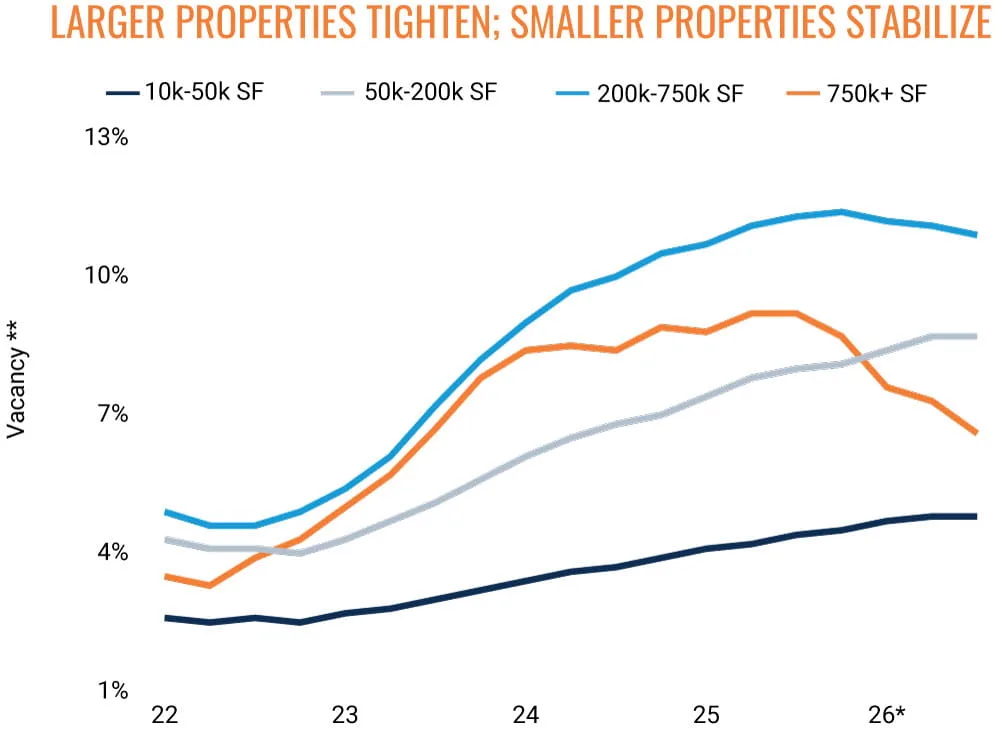
- Demand favors quality. Vacancy in post-2020 warehouse-distribution space dropped 420 bps and fell 260 bps in buildings of 750,000 SF or more over the year ended September.
- Manufacturing output is up but manufacturing leasing is not. Space demand fell 18% quarter over quarter even as the sector added 101,000 jobs.
U.S. industrial vacancy fell to 7.6% in Q3, the first quarter-over-quarter drop since 2022, according to Marcus & Millichap’s November industrial outlook.
Net absorption hit 87.5 million square feet, the strongest quarter since 2022.
Get Smarter about what matters in CRE
Stay ahead of trends in commercial real estate with CRE Daily – the free newsletter delivering everything you need to start your day in just 5-minutes
Flight to Quality
Newer and bigger buildings are winning. Vacancy in post-2020 warehouse-distribution space tightened 420 basis points over the 12 months through September, and buildings of 750,000 square feet or larger improved 260 bps.
Small-bay vacancy stabilized, which Marcus & Millichap links to local service businesses.
Logistics Holds, Manufacturing Lags
Warehouse-distribution leasing grew roughly 20% through September. Intermodal rail volumes hit a quarterly record, and 17 of 20 major carload categories posted annual gains.
Data center construction may add demand, since equipment suppliers and contractors are leasing nearby logistics space. The limits are freight costs: shipper spending is up 32% year over year, and subdued trucking volumes point to tighter carrier capacity.
Manufacturing tells a different story. Durable goods orders and shipments each rose nearly 10%, and the sector added 101,000 jobs through October after three years of declines. Still, manufacturing leasing fell 18% from Q2 and vacancy edged up.
Below-average capacity utilization may let manufacturers add output without more space, and higher input costs could slow expansion plans. About 70% of remaining 2026 deliveries are preleased.
Market by Market
Indianapolis, Columbus and Milwaukee led vacancy compression in the Midwest. Southern California strengthened as loaded TEU imports rose 10.3% year over year in September.
Phoenix and Las Vegas are digesting new supply, while Portland and Seattle-Tacoma posted negative absorption. Philadelphia improved, while Boston and New York saw vacancy climb.
Deals Still Pencil
Sales activity climbed about 15% over the same stretch, led by nearly 20% growth in deals above $20 million. Prices edged up to roughly $138 a square foot.
Zoom Out
Tighter fundamentals come with a catch for developers. Prologis Research says new projects mostly won’t pencil until rents climb about 27%, as GlobeSt reported earlier, which keeps speculative construction in check.
Why It Matters
The recovery is real but selective. Older and smaller buildings and manufacturing space aren’t sharing equally in it.
This also sits inside Marcus & Millichap’s broader November brief, which paired 3.4% Q3 GDP growth with 3.7% inflation and a 10-year Treasury near 5%.
What’s Next
Marcus & Millichap calls the backdrop constructive heading into 2027, though economic uncertainty and steady deliveries could limit tenant expansion and sharpen leasing competition.