







- The backlog of unresolved NYC rental housing violations grew 3.9% year over year in October, and 75.2% of open violations are more than a year old.
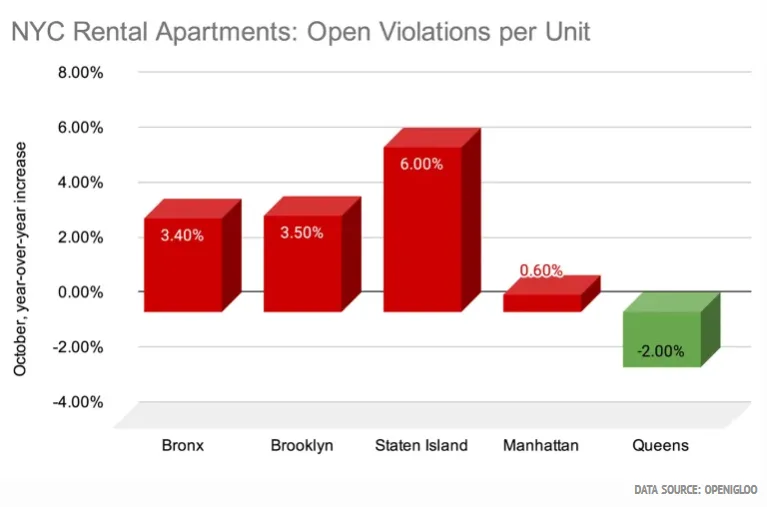
- Heat and hot water complaints rose 40%. Open violations per unit climbed in four boroughs, led by Staten Island at 6%, while Queens was the lone decline at 2%.
- Most violations sit in prewar and rent-stabilized buildings, raising capital needs for owners of aging stock as a shortage of city inspectors slows verification of repairs.
The backlog of unresolved housing violations in New York City rentals rose 3.9% from a year earlier in October, according to Openigloo data reported by Commercial Observer.
Roughly three in four open violations citywide (75.2%) are over a year old, up 0.6 points from last year.
Get Smarter about what matters in CRE
Stay ahead of trends in commercial real estate with CRE Daily – the free newsletter delivering everything you need to start your day in just 5-minutes
Heat Complaints Spike
Heat and hot water complaints rose 40% October over October, Allia Mohamed, CEO and co-founder of Openigloo, told Commercial Observer. She called it a reflection of aging infrastructure that will take substantial investment to fix.
Openigloo blames complaints that never get fixed, plus too few city inspectors to verify repairs.
Borough by Borough
Open violations per unit rose 6% in Staten Island, 3.5% in Brooklyn, 3.4% in the Bronx and 0.6% in Manhattan. Queens alone improved, with a 2% drop.
Old Buildings, Repeat Problems
Prewar buildings and heavily rent-stabilized properties account for most of the problems, per Openigloo.
Mohamed told Commercial Observer that some landlords and managers use quick patches rather than lasting fixes in the same buildings. She also acknowledged that structural work in prewar stock is expensive.
Zoom Out
Mohamed has been a frequent voice on the city’s rental market. Ahead of the FARE Act, she told GlobeSt that fears of landlords rolling broker fees into rent were overstated, since almost half of the city’s housing is rent stabilized, covering around one million units.
Why It Matters
For owners of older and stabilized buildings, rising complaint volume is a capital planning issue as much as a compliance one. Heat and hot water systems are the pressure point.
It is also part of the broader squeeze on renters. A year after the FARE Act, Bloomberg reported that more apartments are being pushed off-market, with renters paying brokers for access to units that never reach major listing sites.