







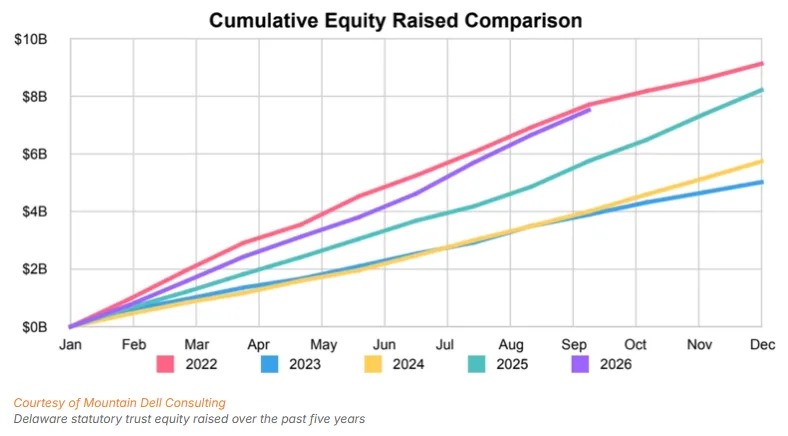
- Delaware statutory trust equity raised hit $7.5B through September, up 27% from $5.9B a year earlier, per Mountain Dell Consulting, though September’s $357M trailed last September’s $461M.
- Ares Real Estate Exchange leads sponsors with just under $1.5B, or 19.3% of activity, followed by Blue Owl at $626M and ExchangeRight at $619M.
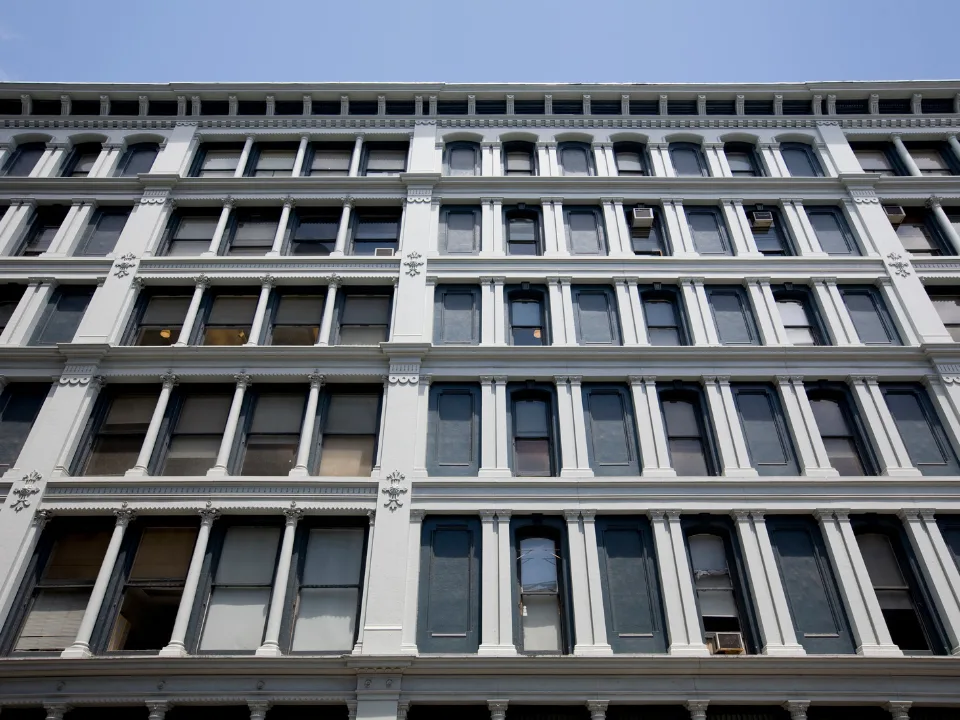
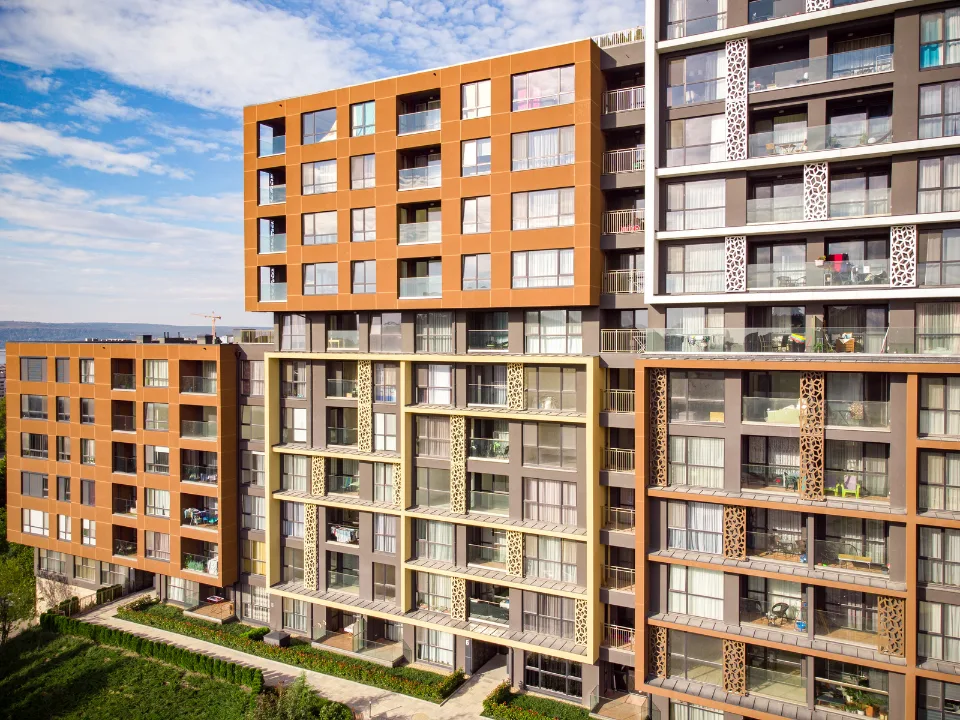
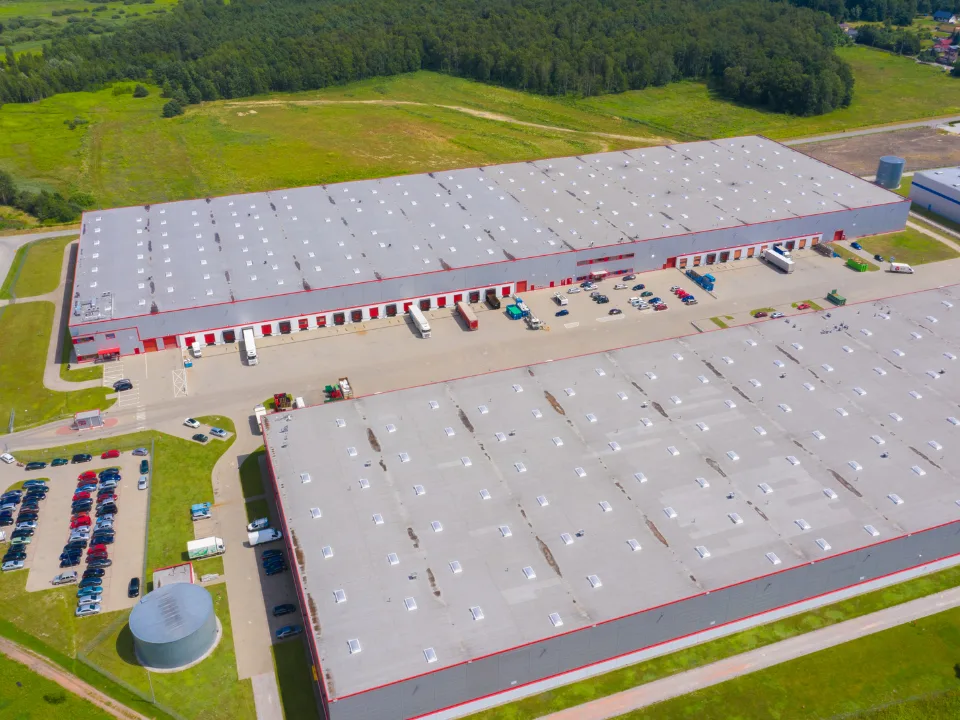
- Industrial draws 39% of DST equity and multifamily 22%, with retail third at 8%, as more institutional sponsors build platforms for passive, tax-deferred investors.
Investors have put more than $1B more into Delaware statutory trusts this year than in the same stretch of 2025, according to Bisnow, citing Mountain Dell Consulting data first reported by AltsWire.
DST equity totaled $7.5B through September, up 27% from $5.9B a year earlier. September alone brought in $357M, below the $461M of September 2025.
Get Smarter about what matters in CRE
Stay ahead of trends in commercial real estate with CRE Daily – the free newsletter delivering everything you need to start your day in just 5-minutes
Why DSTs Keep Growing
DSTs let individuals pool money into commercial properties and hold fractional stakes while managers run the assets. They have become a popular way, especially for aging baby boomers, to invest passively and defer capital gains taxes.
That demand is drawing more institutional firms to launch DST platforms.
Ares Leads the Sponsor Ranking
Ares Real Estate Exchange is the busiest sponsor this year, with just under $1.5B raised, or 19.3% of all DST activity, according to Mountain Dell’s September report.
Blue Owl Capital ranks second at $626M and ExchangeRight Real Estate third at $619M. Hines Real Estate Exchange, whose DST platform opened in September 2022, has raised $590.6M so far in 2026.
Industrial Takes the Biggest Share
Industrial properties draw the largest slice of DST equity at 39%. Multifamily follows at 22% and retail is third at 8%, per Mountain Dell.
A Softer September
Monthly volume cooled. September’s $357M was about $104M below the $461M raised in September 2025, a reminder that the year-to-date gain is not evenly spread across months.
Why It Matters
DSTs give individuals a path into institutional-quality property, and the 27% gain shows retail-investor money is still flowing to commercial real estate. It fits a broader move toward hard assets, as CRE Daily reported when alternatives fundraising shifts that direction.
The industrial tilt also tracks the market, as industrial and retail drive a recovery in smaller deals.
What’s Next
Watch whether fourth-quarter inflows close the gap with last year’s pace and whether more institutions follow Hines and Ares into the DST market.