






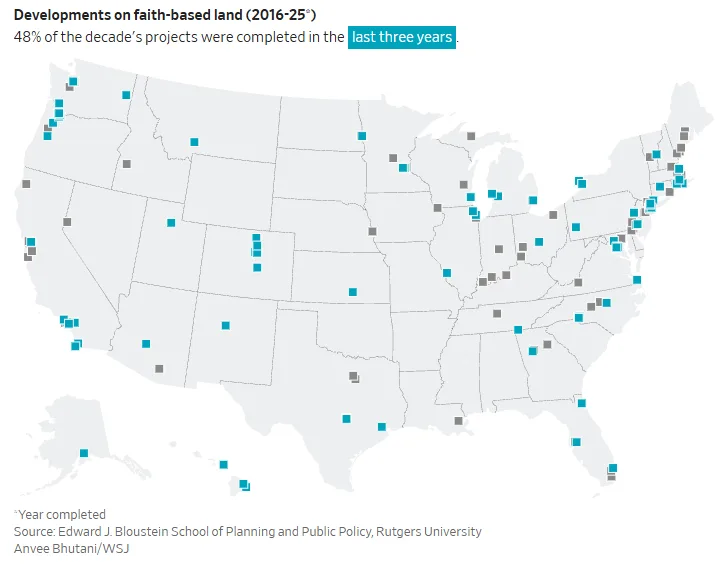
- Churches are partnering with developers to build affordable housing on underused land, including a $270 million Brooklyn project that opened 385 apartments this month.
- Weekly attendance fell to 26% in 2025 from 31% in 2013, and Berkeley’s Terner Center counts 47,000 developable faith-owned acres in California alone.
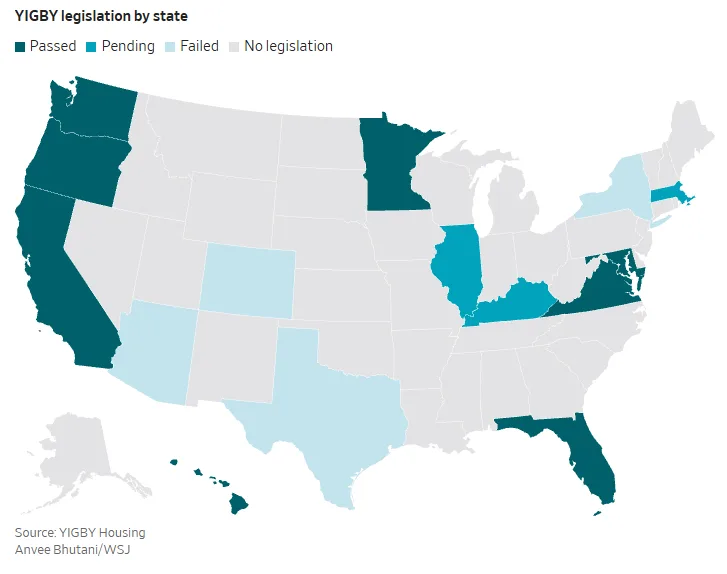
- At least six states have passed laws that allow housing on church land by right, though critics question the constitutionality and deals still move slowly.
Churches with shrinking pews and spare land are enlisting developers to put affordable housing on their own land, The Wall Street Journal reports.
The trend is known as YIGBY, for Yes in God’s Backyard.
Get Smarter about what matters in CRE
Stay ahead of trends in commercial real estate with CRE Daily – the free newsletter delivering everything you need to start your day in just 5-minutes
Brooklyn Sets the Scale
The Christian Cultural Center’s East New York campus offers the biggest example. Earlier this month, state and city leaders celebrated the opening of 385 below-market apartments. Gov. Kathy Hochul and Rep. Hakeem Jeffries joined the event.
The project cost $270 million. State tax credits, municipal and state housing subsidies, and a Goldman Sachs investment covered the cost.
The 10.5-acre site could eventually hold about 2,000 apartments across roughly 10 buildings. Plans also include a supermarket, vocational school, child care center and arts venue. Pastor A.R. Bernard spent eight years negotiating building heights and density. The next phase should begin next summer.
Four Ways to Build
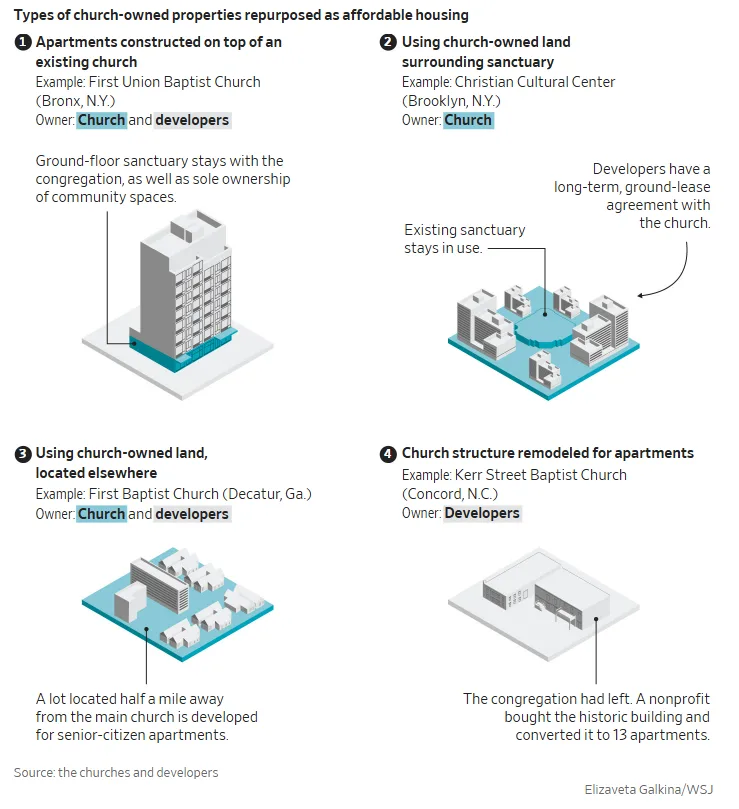
In the Bronx, First Union Baptist is partnering with nonprofit developer Community Builders. Together, they plan to build 13 stories of senior apartments above a new street-level sanctuary. The church will retain ownership of the sanctuary.
Meanwhile, First Baptist Church in Decatur, Ga., partnered on Solace Grove. The $37 million project will bring 125 units to a 5.3-acre lot the church has owned for years. Residents must be at least 62. In addition, income limits restrict tenants to 60% of AMI.
Elsewhere, a nonprofit converted an empty historic church in Concord, N.C., into 13 apartments. In Colorado Springs, Woodmen Valley Chapel contributed more than an acre to a nonprofit. The nonprofit used the land to build a 50-unit senior housing building.
Why the Pressure Is On
The Public Religion Research Institute found that weekly religious service attendance fell to 26% of Americans in 2025. In 2013, that figure stood at 31%. Meanwhile, the share who seldom or never attend rose to 53%, up from 42%.
No national database tracks developable church land. However, the Terner Center estimates that California has 47,000 acres of developable faith-owned land. Other groups identify tens of thousands more acres in Massachusetts, Florida and Maryland.
States Clear the Path
California passed the model legislation in 2023. Since then, Minnesota, Maryland, Oregon, Washington and Virginia have followed. Florida expanded its law in 2026. Meanwhile, Massachusetts, Kentucky and Illinois are considering similar measures. New York and Texas lawmakers saw their proposals fail.
These laws generally allow congregations to build housing on their land without rezoning. As a result, developers can avoid the rezoning hearings and special-permit battles that often take years.
However, critics question whether special treatment for religious groups passes constitutional muster. Others worry that cash-strapped congregations may prioritize profits over their missions.
Why It Matters
Land remains the biggest challenge in affordable housing. Church properties offer a potential solution because congregations already own the sites. Many also sit in neighborhoods that need more housing.
Still, projects often move slowly and depend on tax credits and public funding.
CRE Daily previously covered several YIGBY projects. Those examples included a $30 million, 90-unit senior building from Houston’s Trinity East United Methodist Church. They also included more than 500 units on Bronx convent property. That report noted that only a minority of church-owned land is currently under development.
What’s Next
In Massachusetts, a bill would prevent towns from unreasonably restricting housing on religious properties. The measure has cleared a House vote. Its sponsor hopes lawmakers will approve it before the session ends.
Meanwhile, a federal grant bill from Sen. Mark Warner of Virginia remains in committee.