






- Nareit’s Q3 tracker shows REIT net operating income up 7% year over year, with same-store NOI up 4.6% and more than 70% of REITs reporting gains.
- Average equity REIT occupancy reached a record 94.2%, and office occupancy rose 2.4 percentage points year over year to 87.9%, while apartments held flat.
- REITs were net buyers of $8.5 billion in Q3, with debt 91.9% fixed-rate and leverage at 34.8%, even as industry FFO slipped 3.2% on a few constituents.
Listed equity REITs filled their buildings to a record 94.2% average occupancy in Q3, Nareit’s latest industry tracker shows.
Net operating income grew 7% from a year earlier, and over 71% of companies saw increases.
Get Smarter about what matters in CRE
Stay ahead of trends in commercial real estate with CRE Daily – the free newsletter delivering everything you need to start your day in just 5-minutes
Occupancy by Sector
Retail is fullest at 97.5%, then apartments at 95.7%, industrial at 94.7% and office at 87.9%. Every one of those sectors gained year over year except apartments, which was unchanged.
Office improved by 2.4 percentage points.
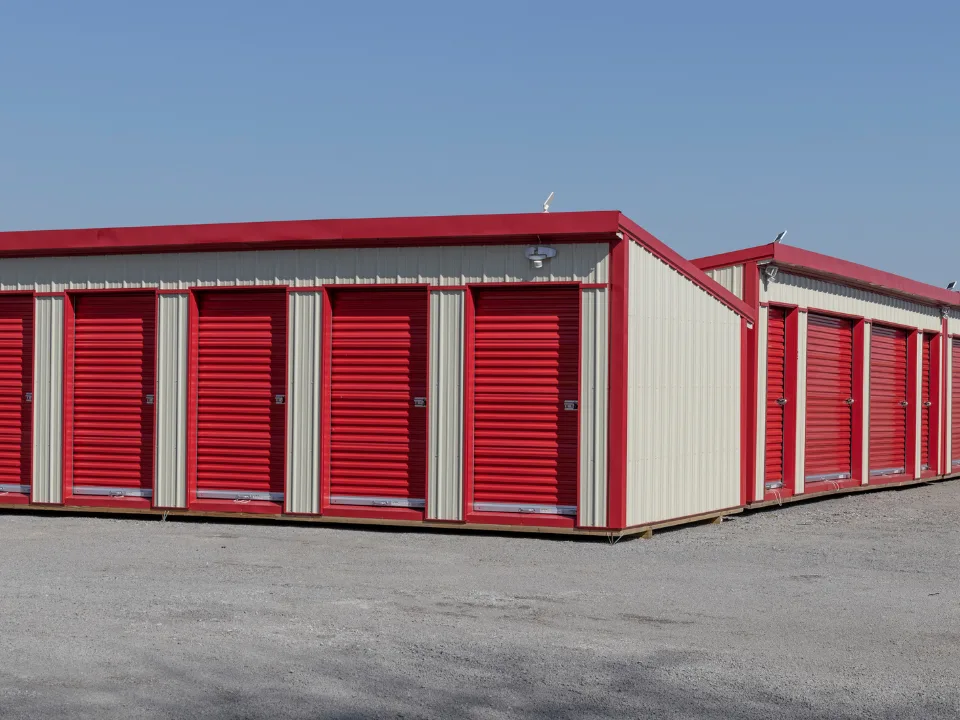
Newer sectors also posted gains: self-storage at 89.7%, health care at 87.4% and lodging at 76.1%.
Same-Store Strength
Same-store NOI climbed 4.6%, which Nareit says keeps REIT income growth ahead of inflation.
Nareit’s research chief John Worth said in a statement that REITs have the capital access and discipline to handle a potentially higher-rate backdrop and pursue growth in 2027.
A Soft Spot in FFO
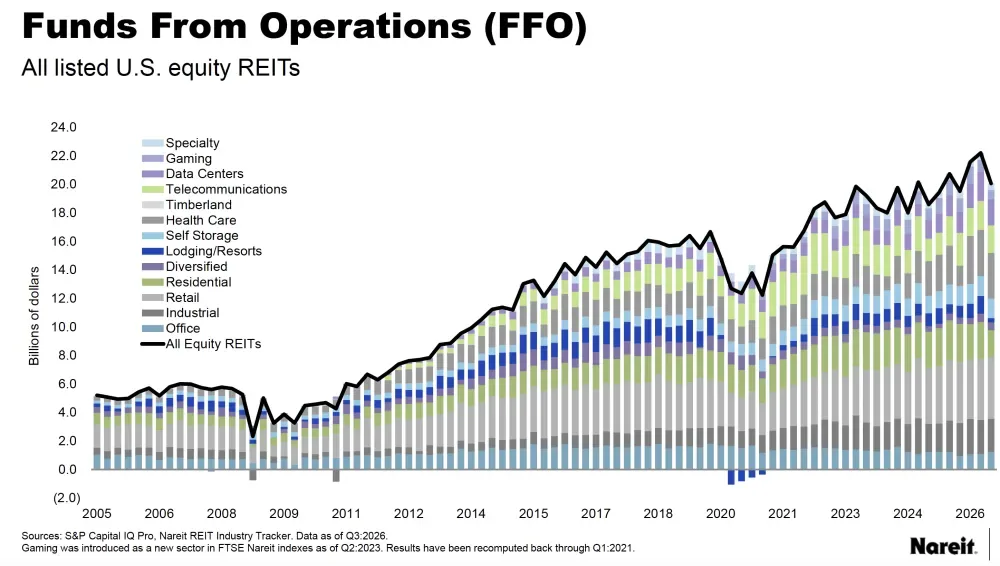
Funds from operations totaled $20.1 billion, off 3.2% year over year. Nareit blames a few companies, not the broader group.
Most REITs, above 65%, actually grew FFO. Remove the outliers and the industry figure is up 3%.
Zoom Out
Other recent coverage points the same direction. TractIQ found all four public self-storage REITs grew same-store revenue and NOI in Q3, a first since it began tracking in Q2 2024. Nareit’s October commentary had global listed real estate rising 3.6% that month and 6.1% year to date, behind broader equities.
Dealmaking and Pricing
REITs bought more than they sold. Gross acquisitions totaled $22.6 billion against $14.1 billion of dispositions, a net buy of $8.5 billion.
The market is also valuing the group at a 5.8% implied cap rate, Nareit’s tracker shows.
Why It Matters
The balance sheets look conservative. Fixed-rate loans make up 91.9% of REIT debt and 83.3% is unsecured, with debt at 34.8% of market assets.
Debt runs 5.8 years to maturity at a 4.27% average rate, which gives REITs room if borrowing stays expensive.
What’s Next
Nareit sees REITs positioned for accretive deals in 2027. One thing to track is whether office occupancy keeps narrowing its gap with other property types.