






- U.S. retail net absorption totaled 8.3M SF in Q3 after 10.2M in Q2, and vacancy slipped to 4.3%. Over 12 months the market absorbed 24.4M SF, versus a 7.0M SF loss a year earlier.
- Discount, off-price, grocery, fitness and entertainment tenants are backfilling boxes left by the 2024-2025 bankruptcy wave, often at higher rents. Net new supply is only 0.25% of inventory.
- Asking rents are up 1.8% against 3.7% inflation. JLL expects rent growth to pick up in 2027 as older leases renew, though a prolonged fuel spike could delay it.
U.S. retail vacancy slipped to 4.3% in the third quarter as net absorption reached 8.3 million square feet, according to JLL’s latest quarterly retail report.
That follows 10.2 million square feet in Q2. Over the trailing year, demand totaled 24.4 million SF, a swing from a 7.0 million square foot loss a year earlier.
Get Smarter about what matters in CRE
Stay ahead of trends in commercial real estate with CRE Daily – the free newsletter delivering everything you need to start your day in just 5-minutes
Openings Beat Closures
Retailers have announced more than 5,800 openings this year against about 4,000 closures. In 2025, closures led at this point.
Much of the absorption is backfilling. Expanding value, grocery, gym and entertainment operators are filling boxes emptied in the 2024-2025 retail bankruptcies, frequently paying more than the prior tenant. Burlington, Ollie’s, Nordstrom Rack, Crunch Fitness and Barnes & Noble top the backfill list.
Every one of the six property types is positive over 12 months, and malls gained 1.9 million square feet during Q3. Over the past year, Dallas/Fort Worth leads with 4.8 million, then Phoenix at 3.1 million and Detroit at 2.3 million.
Supply Stays Tight
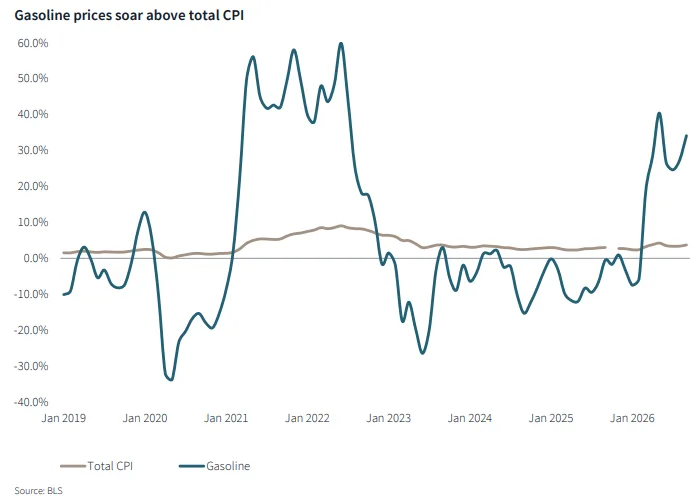
Developers opened roughly 47.3 million square feet in the last 12 months. Demolition trimmed net growth to 29.1 million, a mere 0.25% of stock. Another 60.6 million is under construction against an 11.7 billion square foot base.
Nearly all deliveries and demolitions are freestanding general retail. Together, neighborhood, strip and power formats shed under 1 million square feet.
Rents Lag Inflation
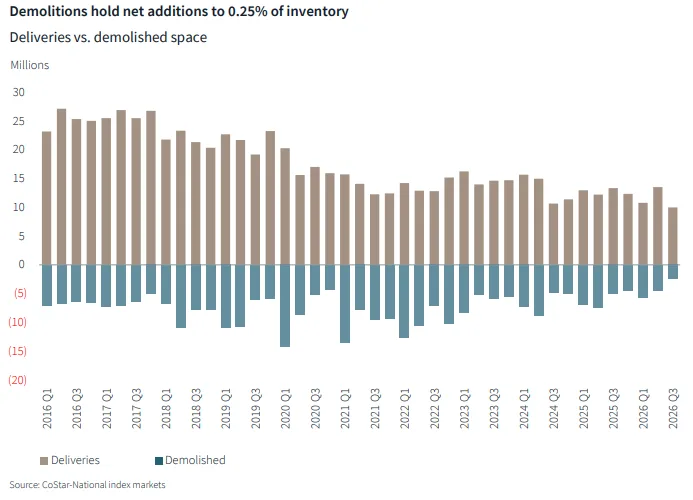
Asking rents rose 1.8% to $26.24 per square foot, well behind 3.7% consumer price growth. JLL notes headline rents understate owner gains, since public landlords report new leases above expiring rents with smaller concessions.
Open-air formats lead: power centers grew 2.6% and neighborhood centers 2.5%, against 1.2% for freestanding retail. Palm Beach tops markets at 7.4%, with Phoenix at 4.41% and Charlotte at 4.31%.
Gas Prices Squeeze Shoppers
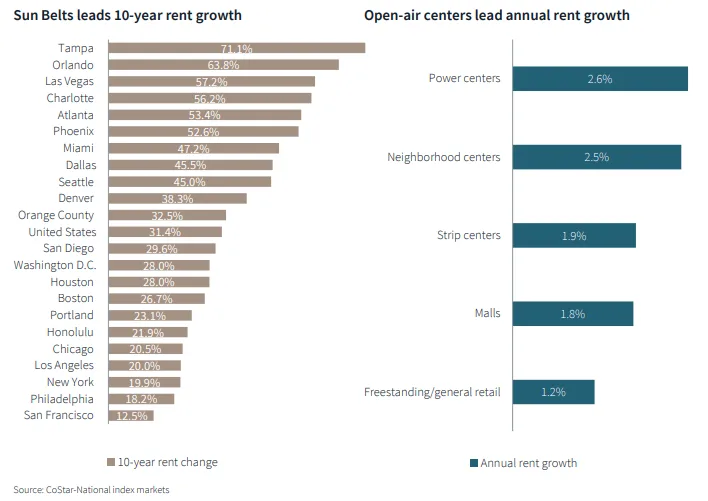
Gasoline was up 34.2% year over year in September, lifting headline CPI to 3.7% while core inflation held between 2.4% and 2.9%. Retail sales grew 0.8% in September but just 0.1% in real terms.
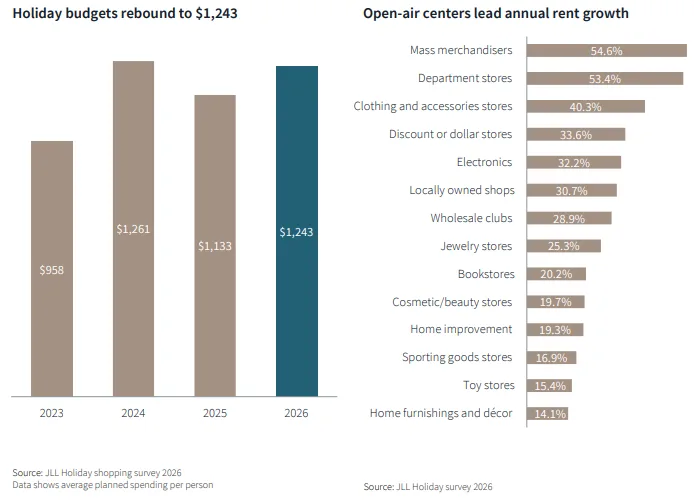
JLL says value, grocery and off-price tenants tend to gain share in that setting, which supports open-air centers. Its holiday survey puts the average planned budget at $1,243, up 9.7%.
Zoom Out
CBRE’s data, reported by IREI, put Q3 net absorption at 9.6M SF, the fifth straight positive quarter. JLL’s 8.3 million is lower but tells the same story.
The holiday outlook points the same way. Newmark expects Q4 retail sales to climb 5.1% to about $1.82 trillion, as the Newmark forecast noted, with most dollars still spent in stores.
Why It Matters
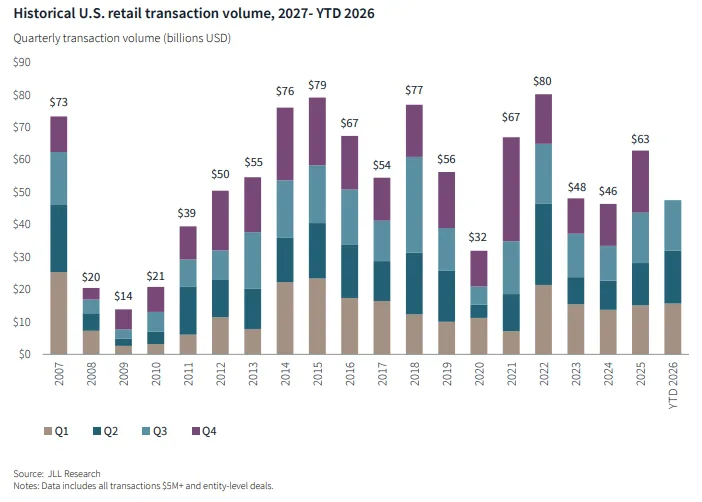
Investor appetite is outrunning product. JLL says deal volume is up 9% so far this year, settled deals are up 20% and the active pipeline is up 40%, with roughly $58 billion in equity chasing deals in the space.
What’s Next
JLL expects rents to catch up in 2027 once cheaper legacy leases renew. A drawn-out run of high gas prices could delay it.