









- Newmark forecasts October through December retail sales will rise 5.1% year over year to about $1.82 trillion, a gain of nearly $88 billion.
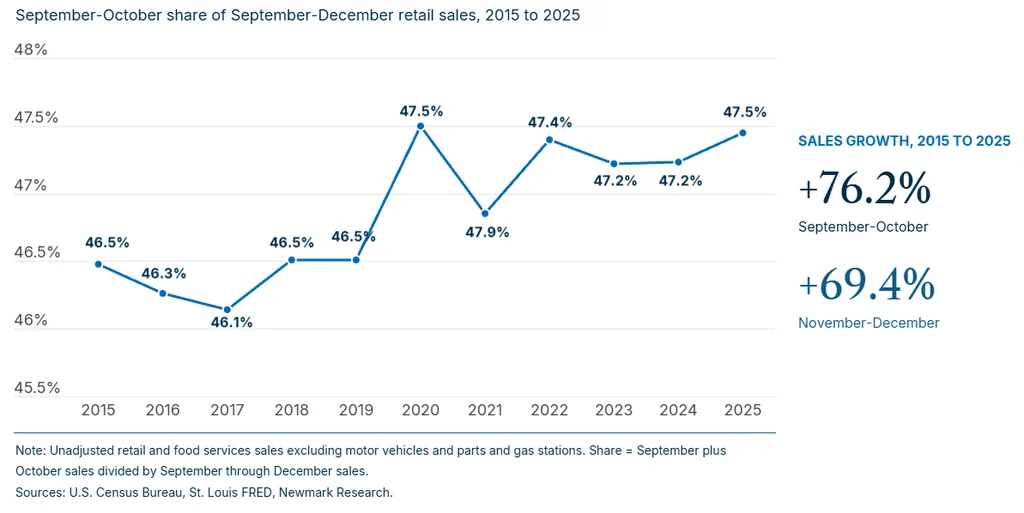
- September and October made up 47.5% of September-to-December spending in 2025, up from 46.5% in 2015, and 45% of shoppers planned to start before November.
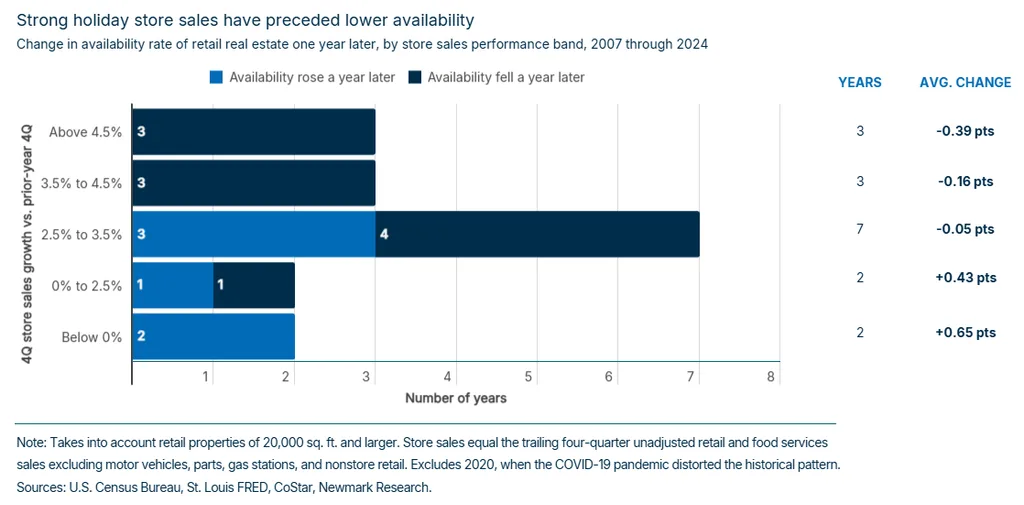
- Stores still anchor the season, and Newmark’s data shows retail availability usually falls the year after fourth-quarter sales growth tops 3.5%.
Newmark expects retail sales from October through December to climb 5.1% from a year earlier, to roughly $1.82 trillion, or about $88 billion more.
Newmark says shoppers are starting sooner, yet most dollars are still spent in stores. That favors tenants with real storefronts and the owners who house them.
Get Smarter about what matters in CRE
Stay ahead of trends in commercial real estate with CRE Daily – the free newsletter delivering everything you need to start your day in just 5-minutes
The Season Starts Earlier
In 2025, the first two months of the stretch captured 47.5% of fall spending, or $1.07 trillion, versus 46.5% ten years earlier. October grew 77.6% over the decade; December managed 65.1%.
Surveys agree. McKinsey found 45% of consumers expected to begin before November, with Millennials at 50%. Accenture found nearly one in five began ahead of August, roughly twice last year’s share.
Early data agrees. Bank of America says holiday-item card spending through September 26 was nearly 9% above the same point last year.
Over 2015 to 2025, September and October spending grew 76.2%, versus 69.4% for November and December.
Tech Helps, Stores Close the Sale
Adobe sees mobile driving 57.4% of online holiday sales, about $158 billion, and fourth-quarter online sales of $370.9 billion, a 7% rise. McKinsey says 46% of consumers would likely use AI to shop.
Younger shoppers lean on loyalty apps: EY puts likely use at 69% for ages 25 to 44 and 46% for those 55 and up. About two-thirds of U.S. shoppers told Accenture AI will sway at least 30% of their holiday spend, and Adobe sees AI-sourced visits to retailer sites jumping 130%.
Mastercard found heavy AI users shopped earlier in 2025, which may reflect more deliberate planning to dodge last-minute rushes.
Stores still win the decision. In PwC’s survey, 52% plan to visit stores to choose gifts, compared with 14% who will lean on AI tools, and 60% expect to buy in a store, against 4% through AI. Bain projects stores will capture close to 70% of holiday sales.
What It Means for Landlords
Newmark ties holiday sales to retail space. Across six seasons when fourth-quarter growth topped 3.5%, availability fell the following year.
When growth came in under 2.5%, availability climbed three times out of four, including both quarters when store sales shrank.
Why It Matters
Foot traffic is already running hot. As we reported earlier this week, Placer.ai data showed high-street retail visits hitting a four-year high across 10 top corridors this summer and early fall, with family households making up roughly half of captured visitors in July and August.
Together, the data points to a stronger fourth quarter for stores, with Newmark’s historical pattern suggesting tighter availability could follow.
What’s Next
Other forecasts span roughly 4% to 5.5%, each covering different periods and exclusions. Where actual sales land will show how much of Newmark’s availability pattern holds this year.