







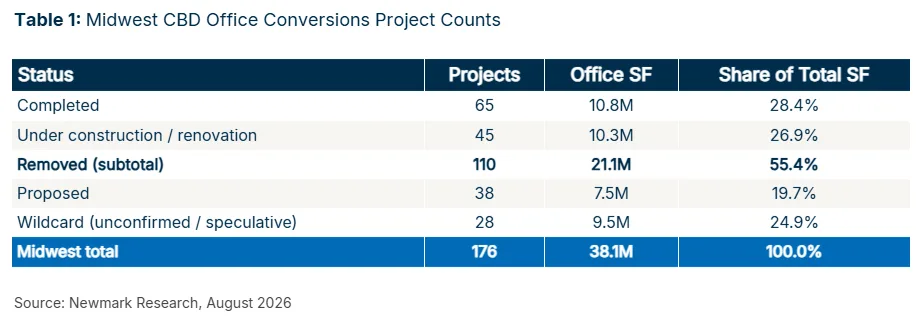
- Newmark tracks 176 office properties covering 38.1M SF across 10 Midwest downtowns, and 110 projects totaling 21.1M SF have been removed through completed or active conversions.
- Conversions concentrate in aging Class B and C buildings, with a median age of 106 years, and renovation costs average $339.40 per SF, so acquisition discounts and incentives decide feasibility.
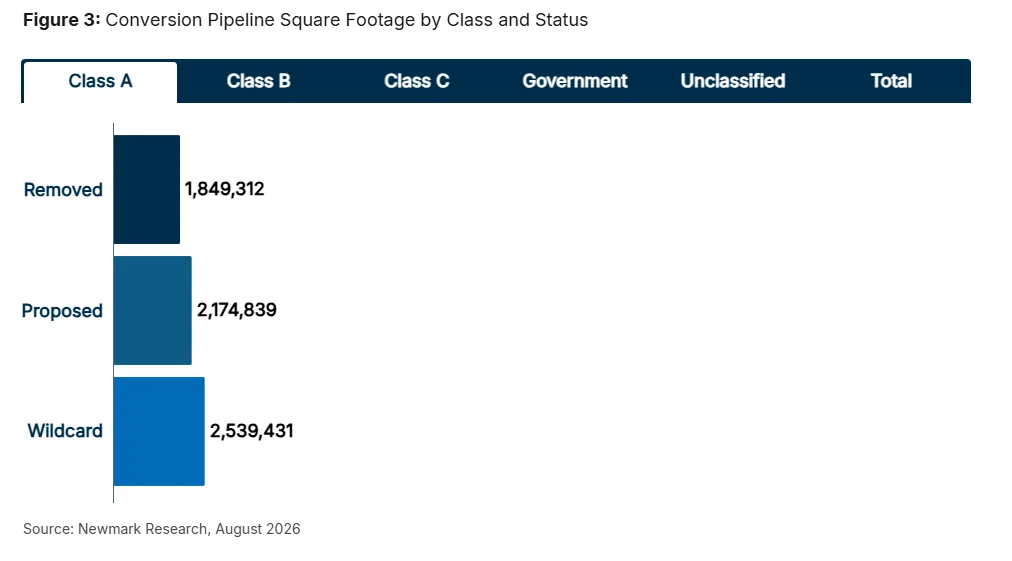
- A 17.0M SF proposed and speculative pipeline is nearly as large as the space already removed, which signals the Midwest conversion wave is not over.
A Newmark study finds 176 office properties covering more than 38.1M SF in the middle of conversion across 10 Midwest downtowns. They are completed, under construction, proposed or flagged by Newmark as likely candidates.
Of those, 110 projects totaling 21.1M SF have already left the office inventory. Markets covered are Chicago, Cleveland, Cincinnati, Columbus, Detroit, Indianapolis, Kansas City, Milwaukee, Minneapolis and St. Louis.
Get Smarter about what matters in CRE
Stay ahead of trends in commercial real estate with CRE Daily – the free newsletter delivering everything you need to start your day in just 5-minutes
Old, Lower-Tier Buildings Lead
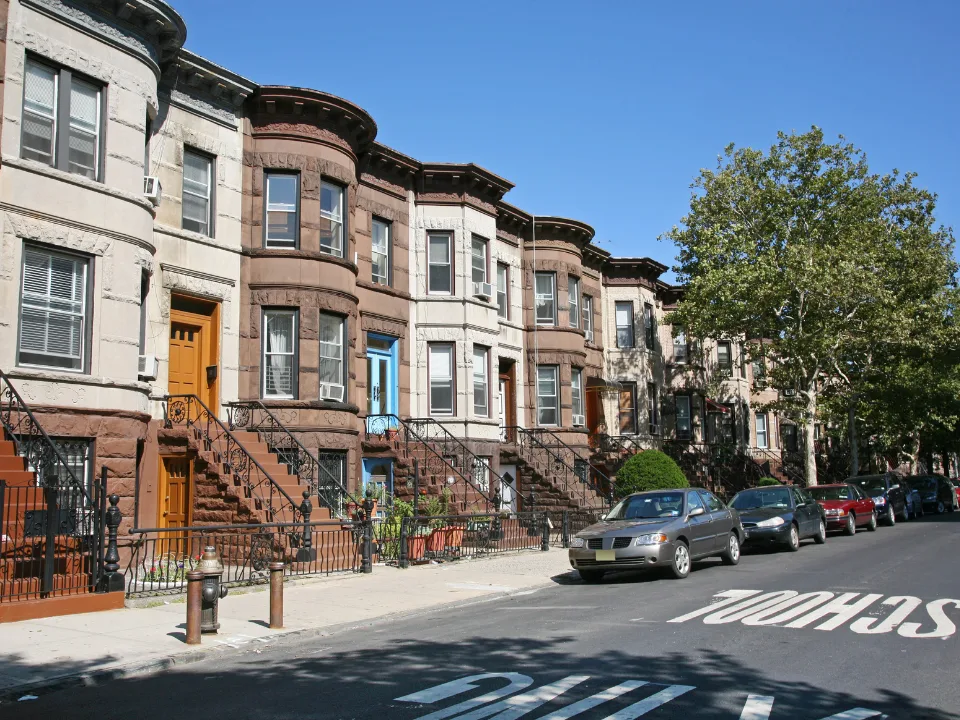
The wave is largely about obsolete stock. The median building was 106 years old when converted, and 70.3% of candidates predate 1945.
Class B accounts for 14.6M SF, or 69.1%, of space removed, with Class C adding 4.2M SF. Class A makes up just 1.8M SF, mostly in Cincinnati, Milwaukee and Indianapolis.
The average converted building spans 237,213 SF, pulled up by a few large trophy projects. The data also includes 33 partial conversions that keep some office use, most often in Cleveland, Milwaukee and Kansas City.
Residential Takes Most of the Space
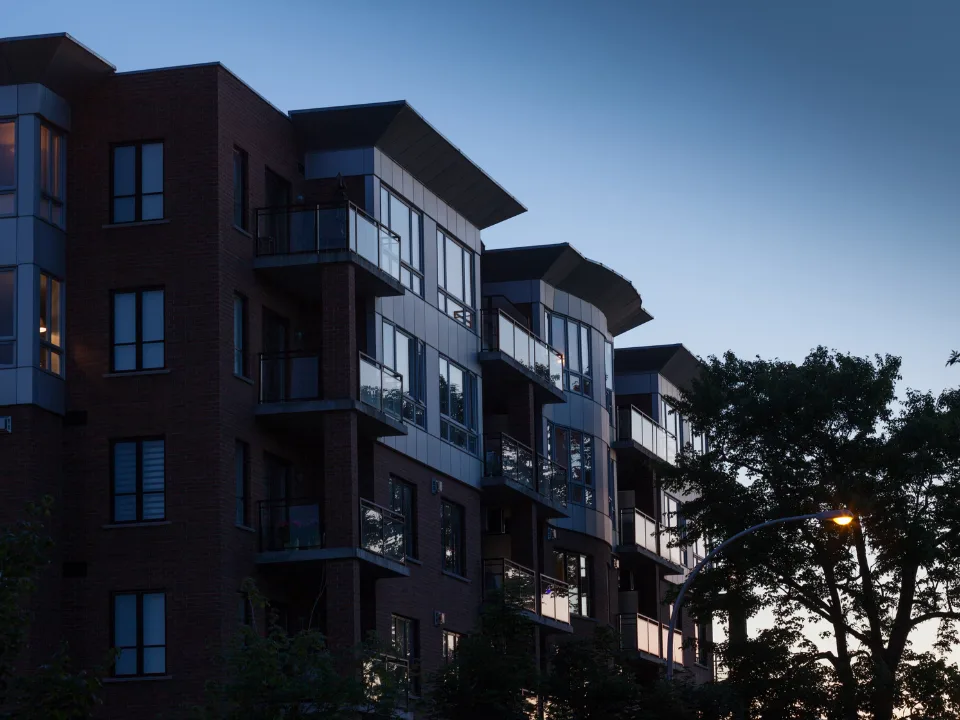
Apartments dominate with 118 projects, of which 15.3M SF is already gone from office inventory, nearly three-quarters of the total. Hotels follow with 28 projects and 2.6M SF.
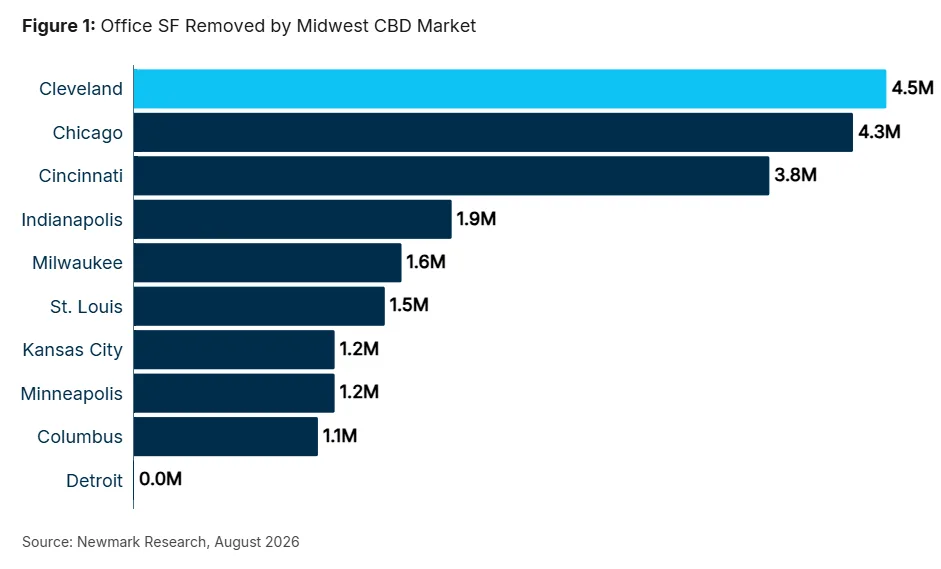
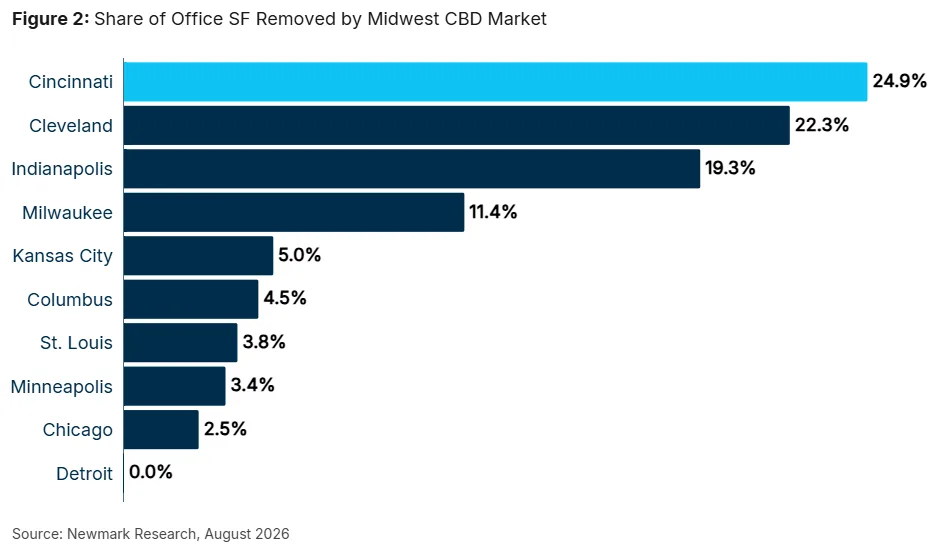
Cleveland leads in square footage removed, narrowly ahead of Chicago, with Cincinnati close behind. Cincinnati has shed 24.9% of its inventory and Cleveland 22.3%.
Detroit is the outlier. The Renaissance Center is going through demolition rather than conversion, so the city shows no removals under Newmark’s definition.
Midwest Office Conversion Economics
Construction cost is the tightest constraint. Renovations average $339.40 per SF unweighted and $277.24 weighted, from $193.22 in Milwaukee to $342.29 in Chicago, and spending on active and completed projects tops $8.5B.
Conversion costs about $386,105 per unit, more than ground-up multifamily, because of inefficient floor plates, code-driven systems work and preservation rules. Acquisition is only 17.8% of project cost, so a low purchase price is often the one lever owners have.
Prices have reset. Across 108 paired sales, the median value drop is 23.2% and the combined basis decline is about $1.3B, including $747.3M in Chicago. Historic tax credits are close to a prerequisite for many deals, and every market offers at least one abatement, TIF district or credit.
Local Developers Carry the Load
Local developers drive the pipeline, not institutions. Of 129 sponsors across the 176 projects, only 26 appear more than once, and local developers make up 64.4% while owners and operators add 21.2%.
Each deal needs its own solutions for pricing, floor plates, zoning, tax credits and layered capital. Newmark sees room for well-capitalized repeat players to consolidate part of what remains.
A Cleveland Case Study
Newmark advised the owner of 700 Prospect Avenue, the former United Church of Christ headquarters in Cleveland’s Gateway District, on its sale. K&D Group paid $4.5M, or $33.45 per SF, for the 134,517 SF historic building on May 31, 2022.
K&D turned it into about 120 apartments called The Electric Building, using brownfield funding and historic tax credits. Initial occupancy began in the first half of 2026.
Why It Matters
Owners of obsolete Class B and C offices face a pricing reality check. Newmark says holding out for pre-pandemic values is out of step with how buyers underwrite, and 58.3% of matched sales priced lower.
The repricing also shows up in Chicago CMBS distress and in the price retrades buyers are demanding.
What’s Next
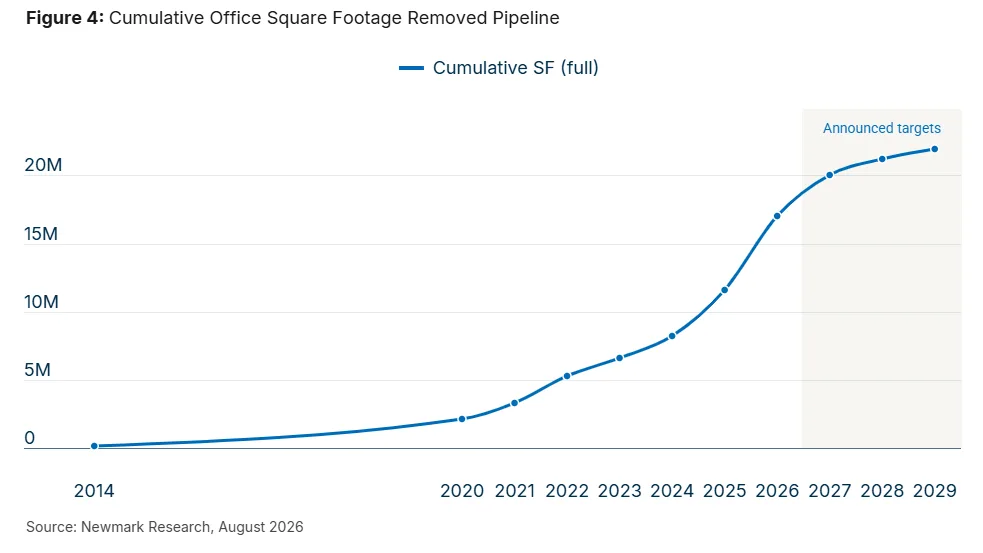
Conversions jumped to 22 projects in 2025 and 24 in 2026, the busiest years on record. With 2027 to 2029 delivery dates already set, Newmark expects completions to continue through the end of the decade, and the 17.0M SF proposed and speculative pipeline suggests the wave is far from over.