



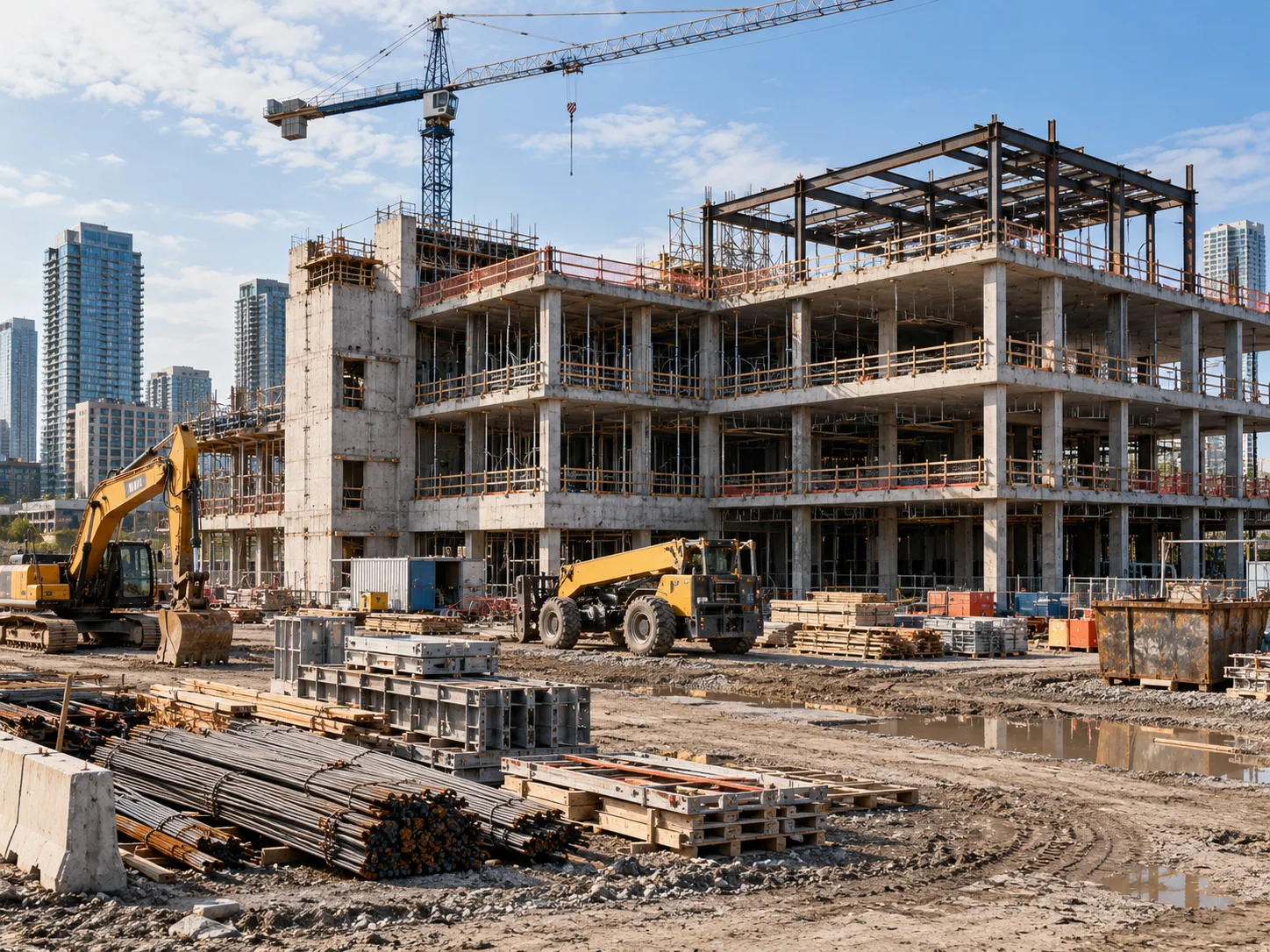
- Construction material prices rose 13.3% year over year, according to Cushman & Wakefield data cited by Bisnow.
- Georgia-Pacific canceled its Atlanta headquarters conversion, while projects in Virginia and Philadelphia were also abandoned or sharply reduced.
- Dodge data showed August US commercial construction starts fell 37.6%, with offices and parking garages leading the decline.
Bisnow reports in its review of canceled development projects that rising construction costs are pushing more commercial projects off the board. Developers face higher material prices, elevated fuel costs, and expensive financing at the same time. Those pressures are showing up in canceled conversions, reduced development plans, and a broader slowdown in commercial starts.
Get Smarter about what matters in CRE
Stay ahead of trends in commercial real estate with CRE Daily – the free newsletter delivering everything you need to start your day in just 5-minutes
Construction Costs Reshape Pipelines
Georgia-Pacific abandoned a plan announced in 2024 to convert part of its downtown Atlanta headquarters. The proposal included apartments, retail, and entertainment space. It called for 400 apartments on the upper floors and 125K SF of retail and entertainment uses. Georgia-Pacific Head of Real Estate Suzanne Maynard told Bisnow that higher construction costs changed the project’s viability. Broader market headwinds also weighed on the plan. In Arlington, Virginia, a Snell Properties affiliate moved to cancel another redevelopment. The former office site had approvals for more than 700 residential units plus retail. The developer believed project costs would exceed the value of the completed property.
The Details
Philadelphia developer Gridmark Group also changed course after acquiring vacant parcels nearly four years earlier. Instead of a luxury residential high-rise, the company is pursuing a 34K SF retail building. Founder Ari Weber told the Philadelphia Business Journal that interest rates and construction costs made the timing wrong for a Center City tower. Across the US, Dodge Construction Network said August construction starts fell nearly 25%. The seasonally adjusted annual rate dropped to $1.34T. Commercial starts fell 37.6%, led by canceled offices and parking garages. Dodge said part of the decline reflected normalization after a July surge.
Materials Take the Lead
Cushman & Wakefield data cited by Bisnow showed construction-related material prices up 13.3% year over year. That increase was nearly five times the rate recorded a year earlier. Aluminum rose nearly 41%, copper nearly 40%, and nonferrous metals 38.5%. The report said materials are replacing labor as the main source of construction cost growth. Steel and aluminum have also faced a 50% import tariff since June 2025, according to the source. Diesel added another layer of pressure. US Energy Information Administration data cited by Bisnow put diesel above $6.50 per gallon. That was nearly $3 higher than two years earlier. Associated Builders and Contractors economist Zack Fritz noted that diesel affects transportation for nearly every other input. Construction material costs have been rising quickly across multiple project types.
Why It Matters
Cost escalation is changing what developers can justify before construction begins. Electrical contractor 5 Points Electrical said higher input costs ultimately move up the chain to project owners. Those increases can make a previously workable budget unfinanceable. Dodge Research Director Sarah Martin said commercial projects still face material inflation and labor shortages. Juneau Construction has so far seen only modest material-driven increases on its projects. Chief Operating Officer Greg Cornwell said some cost increases have moved through slowly enough to plan around. He still expects metals to create more pressure this year. 5 Points Electrical CEO Daniel Perdomo said cumulative increases can become too much for some clients. Bisnow also noted that further escalation could affect hundreds of billions of dollars in private commercial projects already underway.
What’s Next
ABC economist Zack Fritz expects construction costs to improve in 2027 if fuel pressure eases. Other industry participants were less confident about timing. Shine Invest founder Rubi Esmeralda expects landlords with thinner capital sources to keep shelving projects. She expects larger developers to fill some of the gaps. That leaves project feasibility highly sensitive to materials, fuel, financing costs, and repricing. A further cost increase could affect a large pipeline of private commercial work already underway.