






- The top 10 multifamily permitting metros recorded 150,614 permits over the past year through August, up 25% year over year.
- New York, Los Angeles, Dallas, and Houston led metro permitting, while Austin replaced Denver in the top 10.
- City-level data shows apartment development remains concentrated in urban cores even when metro rankings suggest broader geographic activity.
RealPage Analytics reports in its August permitting analysis that multifamily permits are more concentrated than metro-level rankings suggest. The top 10 multifamily permitting metros produced 150,614 permits over the past year through August. That total increased 25% year over year and 3.4% from the prior month. Nine markets stayed in the top 10, while Austin replaced Denver in the final spot.
Get Smarter about what matters in CRE
Stay ahead of trends in commercial real estate with CRE Daily – the free newsletter delivering everything you need to start your day in just 5-minutes
Multifamily Permits By Market
New York remained the national leader with 36,496 units permitted, according to RealPage Analytics. Los Angeles followed with 17,926, Dallas with 15,924, and Houston with 13,772. Dallas still ranked near the top despite permitting about 2,300 fewer units than a year earlier. Several other major markets posted larger annual declines.
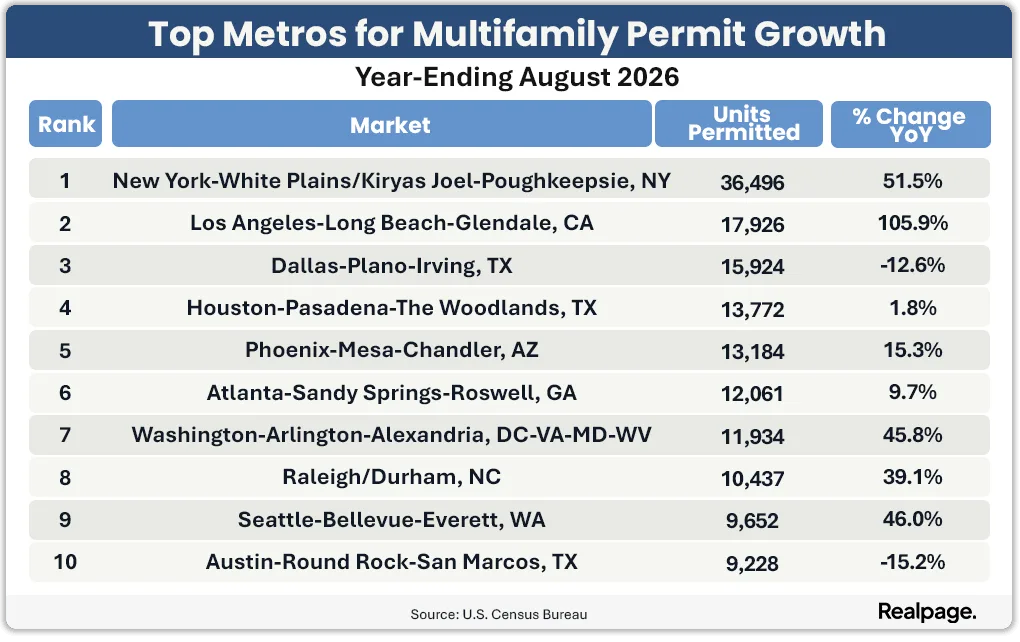
Orlando fell by 3,496 units and Columbus by 2,619. Miami declined by 2,219, Lakeland-Winter Haven by 1,999, and Chicago by 1,927. Other markets moved the opposite direction. West Palm Beach added 2,502 permits, San Jose added 2,427, Cincinnati added 2,207, and Oakland added 2,008.
Urban Cores Drive Metro Totals
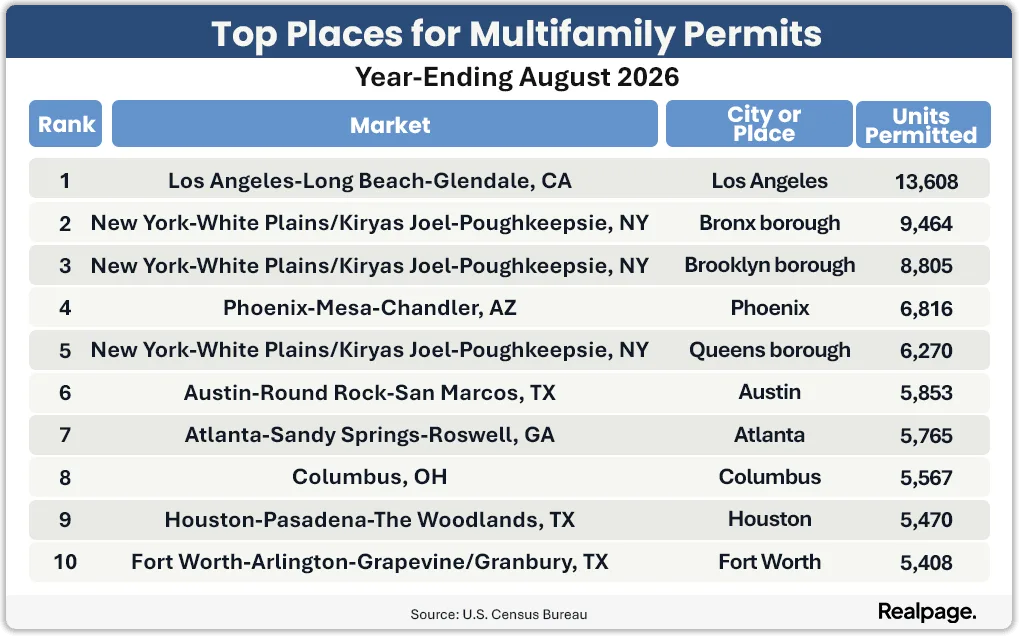
Metro totals often depend on a small number of local jurisdictions. The city of Los Angeles issued 13,608 multifamily permits. That represented roughly three-quarters of the Los Angeles-Long Beach-Glendale metro total. Phoenix generated more than half of the Phoenix-Mesa-Chandler total. Atlanta, Houston, and Austin also supplied substantial shares of their respective metro counts. Houston was the only new city in the top 10 permitting places, replacing Denver. That was the only change in the August city ranking.
Standalone Growth Centers Emerge
Some cities are also producing large permitting volumes without their wider metros appearing in the national top 10. Columbus ranked eighth among permitting places with 5,567 units. Its metro did not make the top 10. Fort Worth issued 5,408 permits on its own. The figure shows how development in Dallas-Fort Worth extends beyond Dallas and its northern suburbs. These city-level results reveal growth centers that can disappear inside broader metro comparisons.
Why It Matters
RealPage links the concentration to employment density, transit access, redevelopment opportunities, and housing demand in major cities. The August data points to continued urban-core importance despite persistent discussion of suburban migration. Recent shifts in multifamily permits also show how quickly the leading market mix can change. Permitting totals are therefore more useful when investors look below the metro headline. A strong metro can still depend heavily on one core jurisdiction. City-level data offers a sharper view of where new apartment competition is forming.