




- The US economy grew at 1.5% in Q2 2026, below expectations, as reported by the Bureau of Economic Analysis.
- While total consumer spending accelerated, gains remain skewed to higher-income households—impacting rental housing dynamics for core renters.
- Persistent inflation and fluctuating Treasury yields could complicate rent growth prospects heading into the second half of 2026.
Growth Momentum Tapers in Q2
US GDP growth slowed to 1.5% on an annualized basis in Q2 2026, according to the Bureau of Economic Analysis’ advance estimate released July 30, reported by Chandan Economics. This marks the second straight quarter of decelerating expansion after Q1’s 2.1% and Q4 2025’s modest 0.5% growth.
Notably, the Q2 print fell short of the 1.8% consensus forecast, signaling a cooler economic trajectory for the midyear stretch. Core contributors—consumer spending, investment, and exports—did lift Q2 results, but declines in government outlays and weaker investment muted topline gains. The GDP figures surfaced one day after the FOMC’s July meeting, adding fuel to the debate over further interest rate moves as 2026 unfolds.
Get Smarter about what matters in CRE
Stay ahead of trends in commercial real estate with CRE Daily – the free newsletter delivering everything you need to start your day in just 5-minutes
The Details
The Q2 deceleration was primarily driven by a contraction in government spending—especially federal nondefense consumption, impacted by technical adjustments from Strategic Petroleum Reserve sales. Private inventory investment also pulled growth lower, but neither component indicated a drop in private sector demand. Digging deeper, real final sales to private domestic purchasers—a closely watched measure of fundamental demand—jumped 3.9% in Q2, up from 1.7% in Q1.
Consumer spending carried much of the weight, leaping to 2.1% from 0.4% the prior quarter, powered by categories like prescription drugs, vehicles, and financial services. Meanwhile, the 10-year Treasury yield briefly spiked to 4.71% before settling at 4.65% on Thursday, reflecting both the data and global tensions.
Consumer Spending Drives, But Not Equally
The increase in consumer spending, per BEA’s Q2 release, supports demand for rental housing by signaling resilience in aggregate household budgets. But beneath the headline, Chandan Economics points out that spending growth has remained concentrated among higher-income households this cycle. This leaves the core rental pool—lower- and middle-income earners—still facing significant financial constraint, with personal savings rates hovering near multi-year lows.
Operators might see short-term stabilization in occupancy as a result, but the broader market remains marked by pronounced divides along geographic and income lines. On-time rent collections did improve year-over-year through June, per Chandan’s proprietary data, suggesting some relief for property managers even as July hinted at seasonal softening.
Why It Matters
For CRE professionals, the main headline—a slowing but steady GDP environment—offers decent footing for rental housing fundamentals, but not without caveats. The Q2 GDP price index jumped 5.7%, reiterating that inflation pressures have by no means disappeared. That aligns with other recent economic data showing resilient growth alongside persistent inflation, leaving investors with a mixed outlook for the months ahead. With ongoing Middle East tensions keeping energy markets volatile and the Strait of Hormuz unresolved, rising energy prices could pass through to both operating expenses and consumer budgets. The June PCE price index, though, reported a moderation in headline inflation to 3.7% year-over-year, delivering modest relief for stretched renters and aiding rent collection rates.
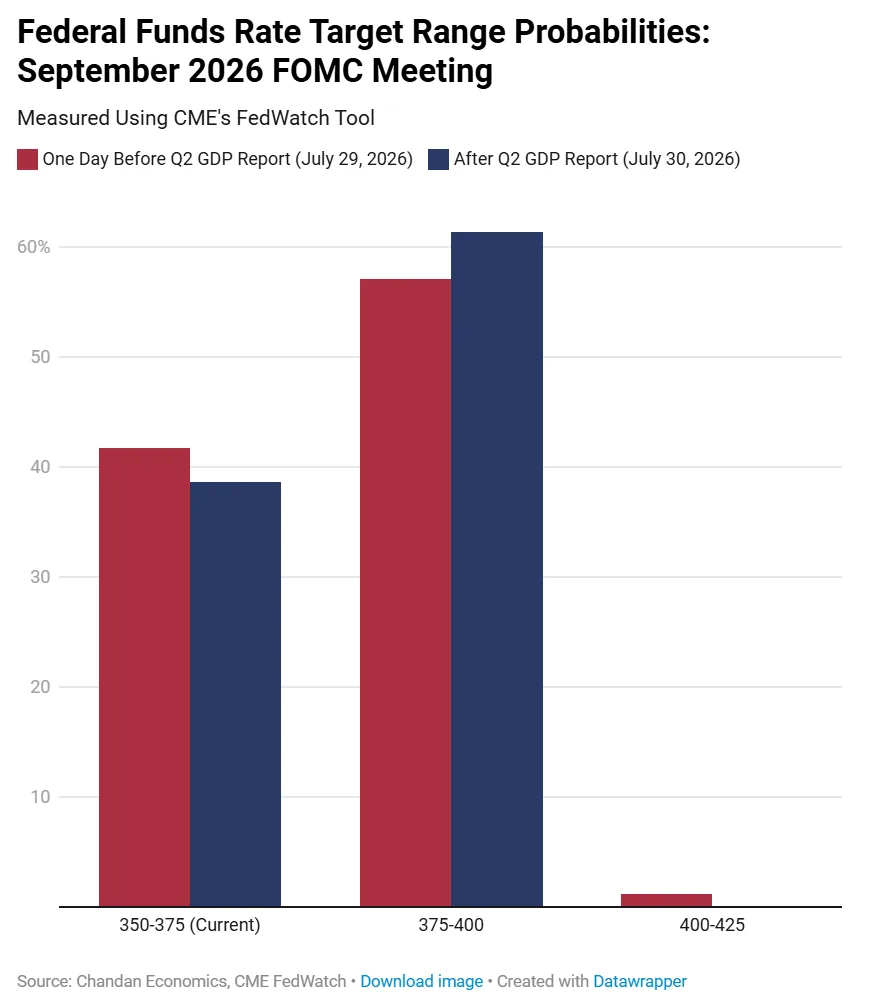
On the monetary policy front, the FOMC’s divided July vote (9-3 for holding rates) and the subsequent uptick in market expectations for a September hike reflect how today’s GDP data subtly strengthens the argument for caution. According to CME FedWatch, the probability of a rate increase edged up to 61.4% following the data release. Multifamily operators and investors need to monitor both the inflation picture and the Fed’s next moves closely. With spending growth favoring higher-income brackets, Class A and core properties may fare better than workforce housing assets in the coming quarters.
What’s Next
The rental housing sector heads into the second half of 2026 with a cautiously stable backdrop. The aggregate consumer profile remains resilient, but geographic and income-driven bifurcation will persist as the defining theme.
All eyes are now on the September FOMC meeting, where futures markets are pricing in an elevated chance of a rate hike. Energy costs, inflation prints, and the evolving strength of the US consumer will shape day-to-day operator performance through year-end. For now, expect steady rent collections but watch for rapid shifts if macro risks intensify.