



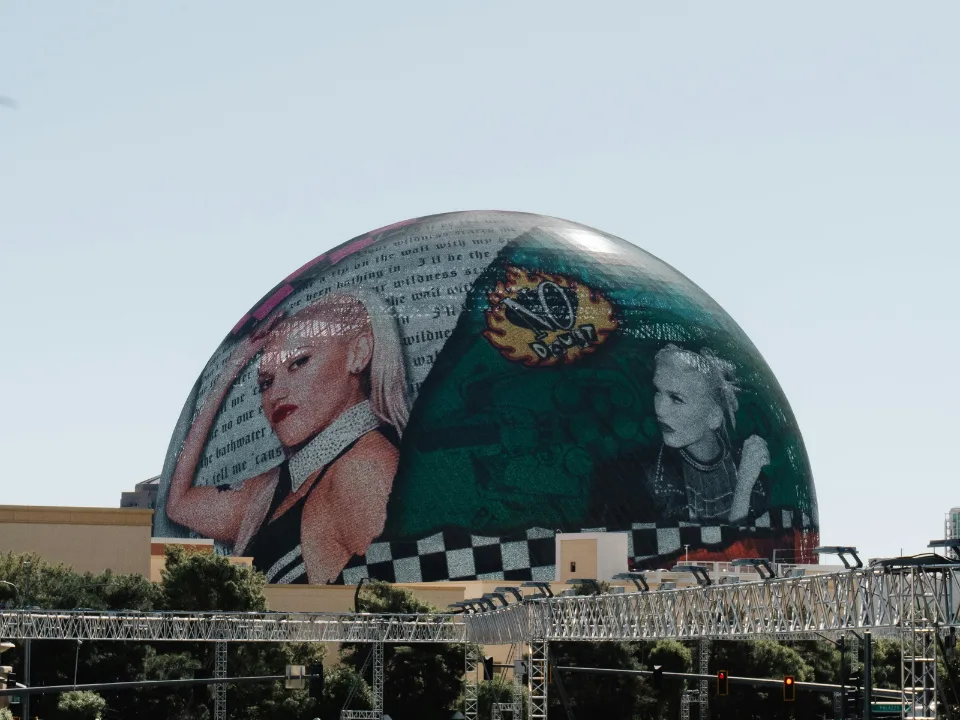
- Las Vegas Sphere generated $379M on 1.7M tickets sold in 2025, making it the highest-grossing arena globally, according to Pollstar.
- The venue’s model pairs expensive, tech-heavy production with long artist residencies and premium-priced immersive film programming, helping offset its $2.3B development cost.
- Sphere’s turnaround is now fueling expansion plans in Abu Dhabi and Maryland, suggesting immersive venues could become a larger entertainment real estate play.
Las Vegas Sphere looked like a cautionary tale when it opened in 2023, per WSJ. The venue cost $2.3B to build, came in nearly $1B over budget, and opened years late. Three years later, it has become one of the more surprising success stories in entertainment real estate.
The venue is now the highest-grossing arena in the world, according to Pollstar, after generating $379M from 1.7M tickets sold in 2025. That performance is giving Sphere Entertainment a clearer path to expansion, with new venues planned in Abu Dhabi and National Harbor outside Washington, DC.
Get Smarter about what matters in CRE
Stay ahead of trends in commercial real estate with CRE Daily – the free newsletter delivering everything you need to start your day in just 5-minutes
From Boondoggle to Blockbuster
Sphere began as a bold concept from James Dolan in 2016, then quickly turned into a high-risk development story. Construction started in 2018 with a $1.2B budget, but the project was hit by delays, Covid-era shutdowns, and ballooning costs. By the time it opened in September 2023, it carried a $2.3B price tag and plenty of skepticism.
Sphere was asking artists to spend millions on custom production for a single venue in Las Vegas. It also had to convince fans to pay premium prices and travel for a show built around a format no one had seen before. For a while, the venue looked like a spectacular but financially shaky experiment.
The Details
The business model that emerged is simpler than the building itself. Sphere books established acts with deep catalogs and multigenerational fan bases, then locks them into multi-show residencies that help spread out production costs. U2 opened the venue with a 40-show run in 2023, and later residencies featured Phish, Dead & Co., Eagles, Kenny Chesney, and the Backstreet Boys.
Sphere also monetizes dark hours with immersive film programming. Its remastered version of The Wizard of Oz opened on Aug. 28 and generated more than $260M in ticket sales through Jan. 20, according to the company. Concert pricing is also holding up. SeatGeek said the average resale ticket price at Sphere this year is $521, up from $415 last year. Phish resale averaged $798, followed by U2 at $754 and Eagles at $639.
Residencies Make the Economics Work
Sphere’s biggest innovation may be less about the screen and more about programming. The venue appears to work best with artists willing to stay put for weeks and fans willing to build a trip around the show. That makes residencies the economic engine, not just the entertainment format.
For artists, the pitch is clear. They can invest in a custom production once, then amortize that cost across dozens of performances. For Sphere, the payoff is equally obvious. Longer runs reduce booking risk, support premium pricing, and create a destination event that can pull visitors from outside Las Vegas.
The Las Vegas Sphere Playbook
Sphere has also found a sweet spot in nostalgia. Many of its biggest acts skew older, from U2 and Eagles to Backstreet Boys and upcoming runs from Metallica and No Doubt. That lineup brings in fans with higher discretionary income and a willingness to pay for travel, hotels, and premium seats.
At the same time, the venue’s visuals broaden the appeal beyond the core fan base. Phish turned the room into a cracked egg and a surreal animation trip. Backstreet Boys used lifts and synchronized visuals to mimic a ride through a space station. Zac Brown Band built an underwater world around its set. The common thread is that Sphere is not just selling a concert ticket. It is selling a travel-worthy event with enough novelty to justify a premium.
Why It Matters
For CRE professionals, Sphere is a reminder that entertainment venues can function more like destination assets than traditional arenas. The building itself is the draw, and that changes the revenue stack. Ticket sales remain central, but immersive programming, repeat visitation, premium seating, sponsorship, and tourism spillover all become more important when the venue is part attraction and part content platform.
What’s Next
Sphere Entertainment is already moving into growth mode. The company is bringing a Sphere to Abu Dhabi and planning a smaller, 6,000-seat venue at National Harbor in Maryland. Executives are also evaluating additional cities, and Dolan has said publicly that the company could handle five or six projects at a time.
The next test is whether the Las Vegas formula travels. A smaller format could open the door to more markets and lower development risk, but it will still depend on the same core inputs: artists willing to commit to residencies, fans willing to travel, and enough original programming to keep the building active outside concert nights.