




- Brooklyn’s tech workforce has increased by 45% since 2019, transforming the borough into a new hotspot for high earners.
- Rising tech salaries and the influx of startups are fueling intense competition with finance workers for premium housing.
- The city’s affordability challenge deepens as even mid-level tech employees find it harder to secure family-sized homes.
Brooklyn’s Rise As A Tech Magnet
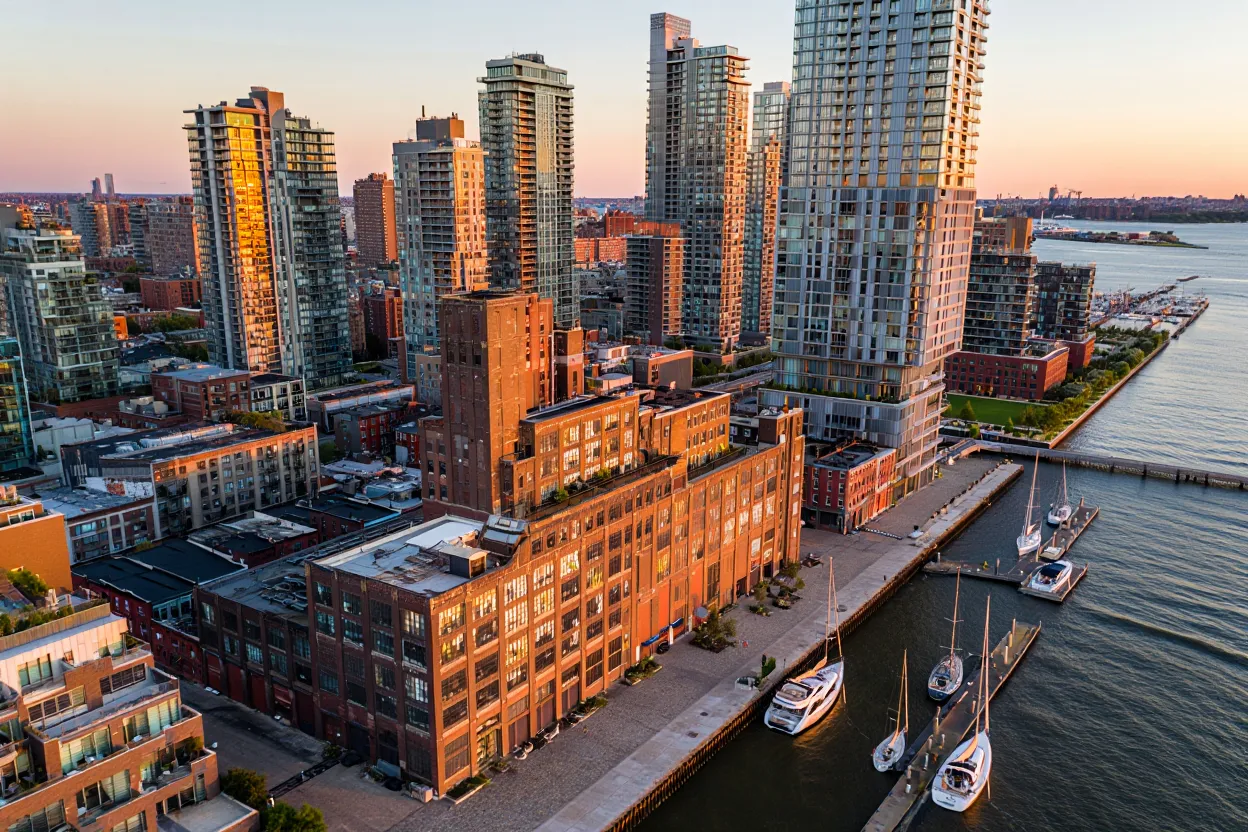
New York City’s tech sector is rapidly redrawing the city’s economic map, especially across Brooklyn’s transformed waterfront, per Bloomberg. Once dominated by finance, high-paying tech jobs are now outpacing traditional industries in both growth and influence. In Williamsburg, spots like the Domino Sugar redevelopment have taken on the role of de facto tech campuses, with tech firms occupying the majority of office leases and a sizable share of residential units. Local businesses, gyms, and coffee shops now teem with remote workers clad in Google and Meta swag, reflecting a palpable demographic shift.
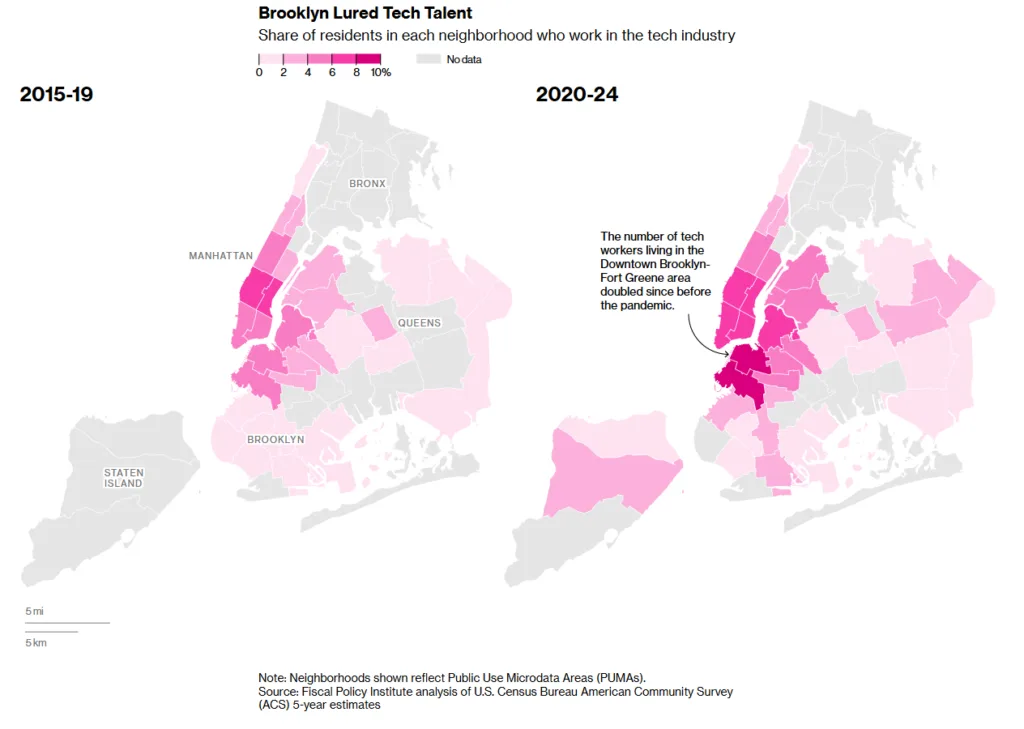
According to a Center for an Urban Future and Tech:NYC report, Brooklyn neighborhoods such as Williamsburg and Bedford-Stuyvesant posted some of the largest post-pandemic gains in tech worker residents. Downtown Brooklyn-Fort Greene saw its tech sector population double, putting additional strain on already tight housing supply. This influx not only signals the borough’s new status as a tech magnet but is also driving broader shifts in local demand for premium living and amenities.
Get Smarter about what matters in CRE
Stay ahead of trends in commercial real estate with CRE Daily – the free newsletter delivering everything you need to start your day in just 5-minutes
The Details
Between 2019 and 2024, New York’s tech sector added more than 42,000 jobs—becoming the city’s largest engine for high-wage employment per the Center for an Urban Future. Tech workers’ median income reached $130,000 in 2024, well over double that of other private sector workers in NYC, while mid-level software engineers now command roughly $285,000, based on Levels.fyi data. Real estate developers like Two Trees Management report that tech companies now lease 75% of office space at the Domino Sugar complex, and tech tenants also fill around a quarter of One Domino Square’s apartments.
This surge has had outsized impacts on Brooklyn home prices and rents. In Fort Greene, median home sale prices hit $1.8M in 2025, up 54% from 2019, according to StreetEasy. That momentum has also coincided with stronger rent growth across Manhattan and Brooklyn, as high-income demand continues to outpace available supply. Luxury buildings such as Eighty Nine Dekalb count tech workers as 40% of tenants, with finance close behind. Monthly rents for two-bedroom units in these buildings can reach $12,888, reflecting the willingness of high-earning professionals to pay a premium for space and location.
Finance Faces Competition For Prime Brooklyn Real Estate
New York’s economic center of gravity is visibly shifting. Wall Street still delivers higher average paychecks and robust bonuses, but financing’s dominance of the luxury housing market is under threat. Compass broker Ian Slater notes that tech professionals now compete toe-to-toe with finance for high-end properties, splitting his sales roughly 50/50 between the sectors—a sharp shift from pre-pandemic trends where finance reigned supreme.
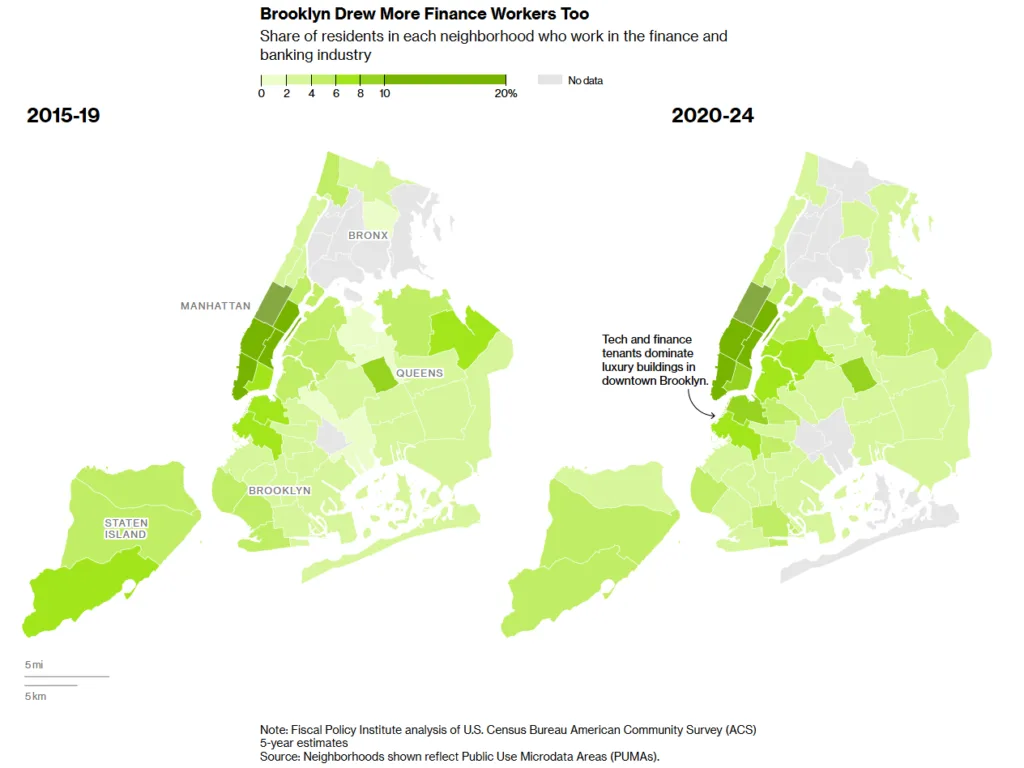
Brooklyn continues to draw both tech and finance pros looking for more space, pushing up demand and prices in neighborhoods like Brooklyn Heights and the West Village. JPMorgan, meanwhile, has reduced its New York headcount by 6,000 over the past decade while expanding faster in lower-cost markets like Texas. For developers and landlords, these shifts are a double-edged sword: higher income tenants bolster demand but make competition for attractive assets fiercer and exacerbate affordability strains for everyone else.
Why It Matters
New York’s tech boom is doing more than diversifying the city’s job market—it is fundamentally reshaping how and where affluence manifests. As tech jobs become the city’s single largest source of high-wage employment, per the Center for an Urban Future, their ripple effects are seen in both the city’s real estate and broader economy. The Fiscal Policy Institute found that between 2019 and 2023, the number of city tax filers earning $200,000 to $350,000 grew by more than a third, outpacing increases in every other income bracket. Increased disposable income among affluent professionals supports local retail, restaurants, and schools, propping up city tax revenues in a post-pandemic world.
However, surging paychecks for tech and finance workers have supercharged competition for already limited luxury housing—and the effect is most acute in Brooklyn. In neighborhoods like Fort Greene, home prices have grown more than twice as fast as the citywide average since 2019. At the same time, the cost of living is pushing even well-paid professionals to their limits, with entry-level and mid-level tech talent struggling to afford larger apartments and homeownership. Developer RXR notes that while luxury buildings can capitalize on demand from tech tenants, rising costs are straining workers’ ability to live where they work. Concerns over wage disparity and affordability are increasingly pressing for the city’s public officials, developers, and major employers alike.
What’s Next
The question for Brooklyn and the wider NYC market: Can the supply of high-end housing keep up as both tech and finance talent continue to cluster in the city’s most desirable neighborhoods? The Fiscal Policy Institute warns that workplace automation and AI adoption could disrupt the city’s white-collar base in coming years. At the same time, the city’s Rent Guidelines Board voted to freeze rents on approximately 1 million stabilized apartments, signaling political pressure to address affordability even as luxury demand surges. For now, expect continued strong appetite from tech and finance tenants for new and existing premium inventory—alongside growing calls for policies that help extend New York’s prosperity beyond its highest earners.