





- Grand Rapids ranked among the most accessible U.S. housing markets for first-time buyers in 2025, with nearly 50% of new Kent County homeowners under age 35 — well above the national average.
- The metro’s relative affordability and diverse employment base in healthcare and manufacturing have supported young buyer activity, with a median home price of roughly $280,000 versus a $415,000 national median.
- Rapid price appreciation of approximately 9% year-over-year through Q1 2026 is eroding Grand Rapids’ affordability edge, and analysts warn the first-time buyer window could close within a few years.
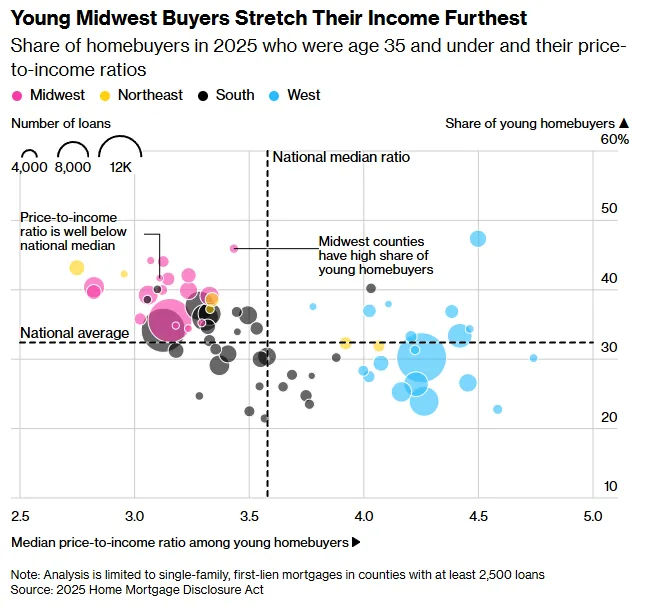
Grand Rapids, Michigan, is quietly defying the national homebuyer affordability crisis. While the median age of a first-time buyer nationwide has climbed to 40 — the oldest in records dating to 1981 — Kent County, home to Grand Rapids, has maintained one of the highest concentrations of young homeowners in the country, according to Bloomberg. Nearly half of all new homeowners in the county in 2025 were younger than 35, compared with about a third nationwide, per an analysis of Home Mortgage Disclosure Act data.
Get Smarter about what matters in CRE
Stay ahead of trends in commercial real estate with CRE Daily – the free newsletter delivering everything you need to start your day in just 5-minutes
A Different Kind of Rust Belt City
Grand Rapids sits in the Rust Belt but rarely behaves like one. The city has roughly 200,000 residents and sits about two hours from both Detroit and Chicago. Unlike many Rust Belt cities, it never built its economy around a single industry.
Today, healthcare anchors the local economy. Corewell Health, a hospital and clinic network, employs 25,000 people. The metro also topped LinkedIn’s 2025 ranking of the 25 fastest-growing metros for jobs. Grand Rapids is home to the headquarters of Amway and legacy furniture manufacturers Steelcase, Herman Miller (now MillerKnoll), and Haworth.
Kent County’s population grew roughly 13% over the past two decades to 675,200, according to Federal Reserve analysis of Census Bureau data. By comparison, neighboring Wayne County, which includes Detroit, saw its population decline 13%.
The Details
Kent County issued roughly 3,300 home loans to buyers under 35 in 2025. That was the second-highest total among US counties with at least 2,500 mortgages. Only Utah County, Utah, had more, with about 5,000 loans.
The Midwest also has the highest concentration of counties where homes remain affordable for young adults. More than 90% of Midwest counties have home-price-to-income ratios below the national average of 3.6x median income for homeowners 35 and under.
Grand Rapids’ Alger Heights neighborhood has become a magnet for first-time buyers. Cape Cod-style homes and 1950s bungalows average around $292,000. Individual sales regularly close between $249,000 and $283,000.
The Window May Be Closing
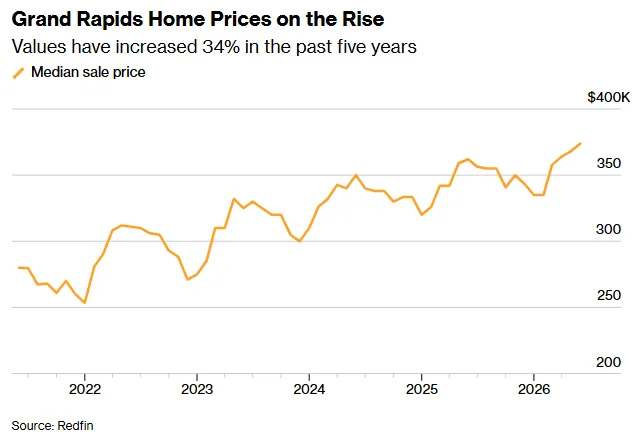
Grand Rapids’ affordability advantage is real, but it may not last. Median home prices in the metro have risen more than a third over the past five years. Prices have now reached roughly $374,000, according to Redfin.
Housing inventory is also about 30% below pre-pandemic levels. Newly built homes accounted for just 5.3% of sales last year, compared with 7% nationally, according to Realtor.com.
Competition is especially intense in desirable neighborhoods. Some properties go under contract before open houses are even scheduled. Local agents report deals closing $20,000 above asking price, in cash, and without inspections.
At the same time, new construction is increasingly focused on high-end properties rather than starter homes. Local agents say this is creating a bottleneck for first-time buyers.
Why It Matters
Grand Rapids represents an increasingly rare market type. Young workers, job growth, and accessible housing still align in the city.
The national outlook for first-time homebuyers is worsening. The median buyer age is now at a 45-year high. A new federal housing law also began restricting large investors from owning single-family homes last month. Its full impact on the market could take years to emerge.
Mid-sized cities with diverse economies and below-average home-price-to-income ratios could become the next targets for in-migration. This could be especially true as many coastal and Sun Belt markets remain out of reach for first-time buyers.
What’s Next
Grand Rapids is also investing in public amenities that could drive further demand. A new $175 million soccer stadium is scheduled to open next year.
Half of Kent County’s residents are currently 34 or younger, and the population continues to grow. That growth will likely keep pressure on the area’s limited housing supply.
Easing that pressure will require more new construction at starter-home price points. Whether Grand Rapids can maintain its affordability through the end of the decade will depend on local builders and policymakers.
They will need to deliver enough housing at prices accessible to the young buyers who have helped make Grand Rapids a national outlier.