






- IBHS updated its Wildfire Prepared program to include new standards for neighborhoods and multifamily assets across 14 Western and Sun Belt states.
- The enhancements introduce Essential and Enhanced mitigation levels, with revised requirements for trees, shrubs, decks, and attached structures.
- This approach aims to boost CRE resilience against wildfire, providing owners and developers with clearer, scalable risk reduction strategies beyond single-family homes.
From Single Homes to Entire Communities
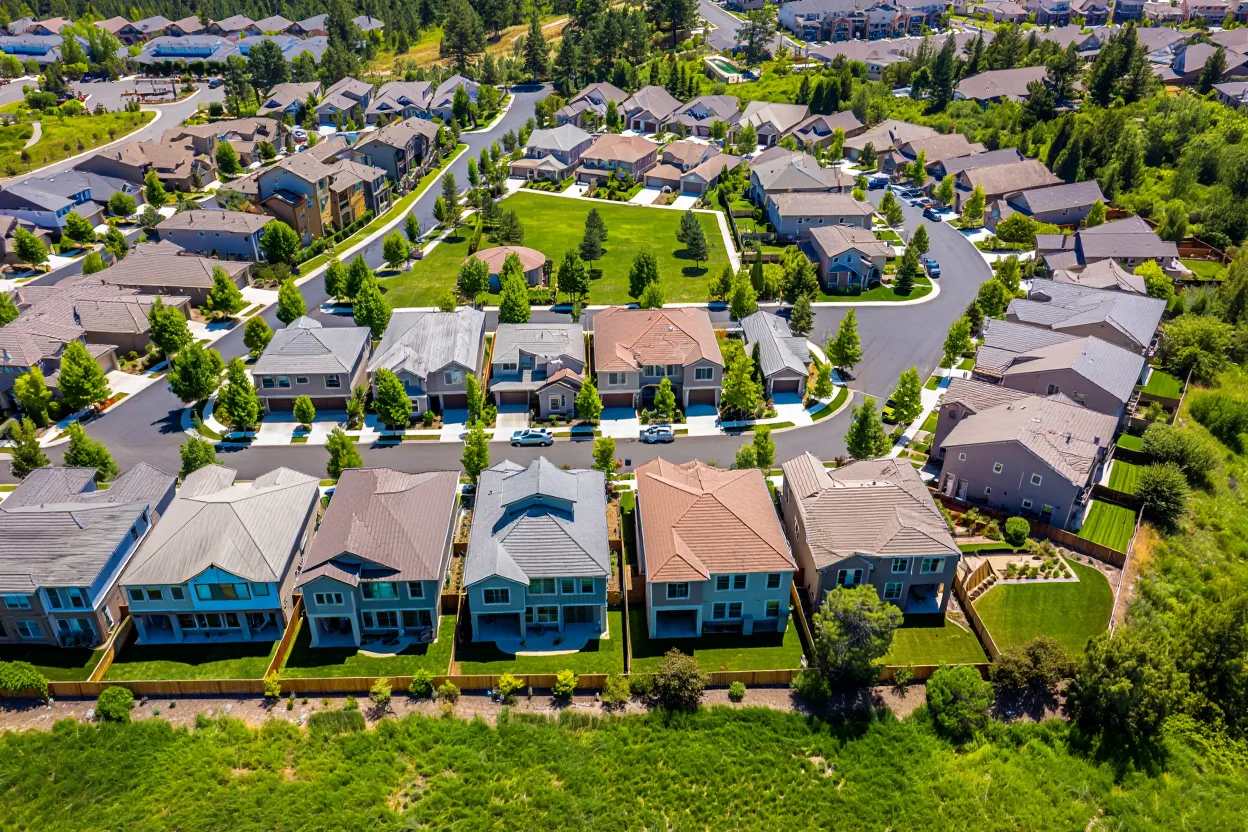
The Insurance Institute for Business & Home Safety (IBHS) has broadened the scope of its Wildfire Prepared program, adding official wildfire mitigation standards for both neighborhoods and multifamily properties. Bisnow reports that the initiative, which started with single-family homes in 2022, now formalizes guidelines for communities and property types hardest hit by wildfire risk. These new measures are designed to reduce not just initial home ignition, but also the risk of a fire spreading from one structure to another—an escalating issue in dense communities, especially in wildfire-prone states.
The expansion is notable given the ongoing threat of wildfires across the West. With 14 states included in the program (among them California, Arizona, and Oregon), IBHS is seeking to give property owners, CRE developers, and community builders a unified playbook for risk mitigation at scale.
Get Smarter about what matters in CRE
Stay ahead of trends in commercial real estate with CRE Daily – the free newsletter delivering everything you need to start your day in just 5-minutes
The Shift Toward Community-Wide Mitigation
IBHS launched its Wildfire Prepared program in 2022. It focused on research-backed strategies for single-family homes. However, recent wildfires exposed resilience gaps in multifamily properties and neighborhoods.
The new Wildfire Prepared Neighborhood standard expands protection efforts. IBHS previously tested it with KB Home in California. The standard lets CRE operators and builders coordinate mitigation across blocks and communities. Meanwhile, the new multifamily standard covers duplexes, townhomes, apartments, and condos. It reflects the growing role of dense housing in fire-prone areas.
These updates arrive as insurers and investors seek clearer guidance. They want practical ways to reduce losses across diverse portfolios.
The Details
The updated program introduces Essential and Enhanced tiers for homes and multifamily properties. The tiers reflect changing wildfire risks in CRE. Essential, formerly Wildfire Prepared Home Base, aims to reduce ember damage. Enhanced, formerly Wildfire Prepared Home Plus, addresses radiant heat and direct flames.
IBHS also revised single-family standards. The new rules give owners more flexibility for tree and shrub placement. They also clarify requirements for decks and attached structures. For multifamily properties, the standards target specific vulnerabilities. They give asset managers clearer paths to improve insurability.
The Neighborhood designation builds on pilot projects with KB Home at Dixon Trail and Stone Canyon. It supports community-scale firebreak efforts. IBHS backs all standards with scientific research and live field testing.
Market Momentum for CRE Wildfire Resilience
Investor scrutiny and insurance challenges have pushed wildfire resilience higher on the CRE agenda. According to IBHS, the program serves high-risk markets in Arizona, California, Colorado, Idaho, Montana, Nevada, Oregon, Utah, Washington, and other states. Property losses have increased in many of these areas.
The new standards arrive as multifamily deliveries remain elevated. Yardi Matrix tracked more than 420,000 apartment completions in the US during 2025. Many of those projects sit in wildfire-prone regions.
Builders and operators have struggled to find affordable mitigation frameworks. They also need solutions that meet insurance and lender requirements. IBHS hopes to lower barriers to designation through clear risk reduction steps. The organization also aims to encourage investment and improve liquidity in vulnerable markets.
Why It Matters
Wildfire risk now shapes underwriting and asset management decisions across the Western US. A 2024 Moody’s Analytics report found insured wildfire losses in California exceeded $5.5B annually over the last three years. Recent Southern California fires caused tens of billions in damage and slowed rebuilding efforts, highlighting the growing cost of delayed recovery. As a result, insurers have reduced coverage or exited some markets.
CRE owners and multifamily operators now face rising premiums and coverage gaps. These pressures threaten both NOI and property values.
The Essential and Enhanced designations give owners a practical resilience strategy. According to IBHS’s Steve Hawks, the science-based approach balances effectiveness with feasibility for existing buildings. The standards also address lender and investor demand for transparent benchmarks. Those benchmarks may support refinancing efforts and asset sales.
Most importantly, the program recognizes changing CRE risks. Multifamily density continues to rise in Western states. Neighborhoods also remain highly interconnected. Therefore, broader mitigation efforts are critical to reducing fire spread, disruption, and insurance costs.
What’s Next
Property owners, multifamily operators, and builders can now use the updated program in all 14 participating states. Builders seeking designation can access the new standards at wildfireprepared.org. Pilot projects with national homebuilders are already underway.
As fire seasons grow longer, lenders, insurers, and institutional investors may increase participation. Developers that market wildfire-resilient properties could gain an advantage. IBHS may also add new states or asset types as research expands and demand grows.