







- The top 20 NYC lenders originated a combined $36 billion in loans from August 2025 to July 2026, up 57% from a year earlier, with Wells Fargo taking the top spot.
- Loan count rose just 2.4%, so the dollar surge came mostly from bigger checks, including a $1.2 billion construction loan for BXP’s 343 Madison Avenue tower.
- Treasury yields spiked in 2026 and slowed deals in recent months, a drag lenders say could persist into 2027 even as fundamentals and rents stay strong.
New York’s biggest lenders wrote far larger checks this year: the top 20 lenders originated $36 billion in city loans over 12 months, up 57%, according to The Real Deal’s 2026 rankings.
Wells Fargo took the top spot. But Treasury yields spiked in 2026, and deal activity has slowed in recent months.
Get Smarter About What Matters in New York
Subscribe to our free newsletter covering the biggest commercial real estate stories across the five boroughs — delivered in just 5 minutes.
Wells Fargo Takes the Top Spot
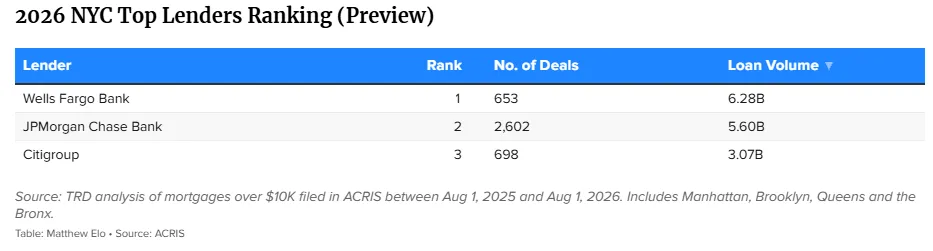
The top three names didn’t change, but their volume did. Wells Fargo, JPMorgan Chase and Citibank together wrote $15 billion, up 60% versus $9.4 billion the year before.
Wells Fargo jumped from second to first with about $6.3 billion, up from $2.7 billion. JPMorgan slid to second at $5.6 billion, and Citibank held third at about $3.1 billion.
The Real Deal built the list from mortgages the city recorded between August 2025 and July 2026, and left out documents filed as agreements.
Nonbanks Gain Ground
Traditional banks still dominate, but a few alternative lenders climbed. S3 Capital sits eighth with $1.4 billion, up from $1.1 billion. Apollo Global Management debuted with $1.2 billion.
Valley National Bank moved up a spot to tenth, lending $1.18 billion versus $750 million before. Its biggest ranked loan, $69 million, helped Atlas Capital buy a rental building on East Houston Street’s 250 block in the East Village.
The number of loans from the top 20 grew only 2.4%. That means the dollar jump came mostly from larger loans, not more of them.
The Biggest Checks
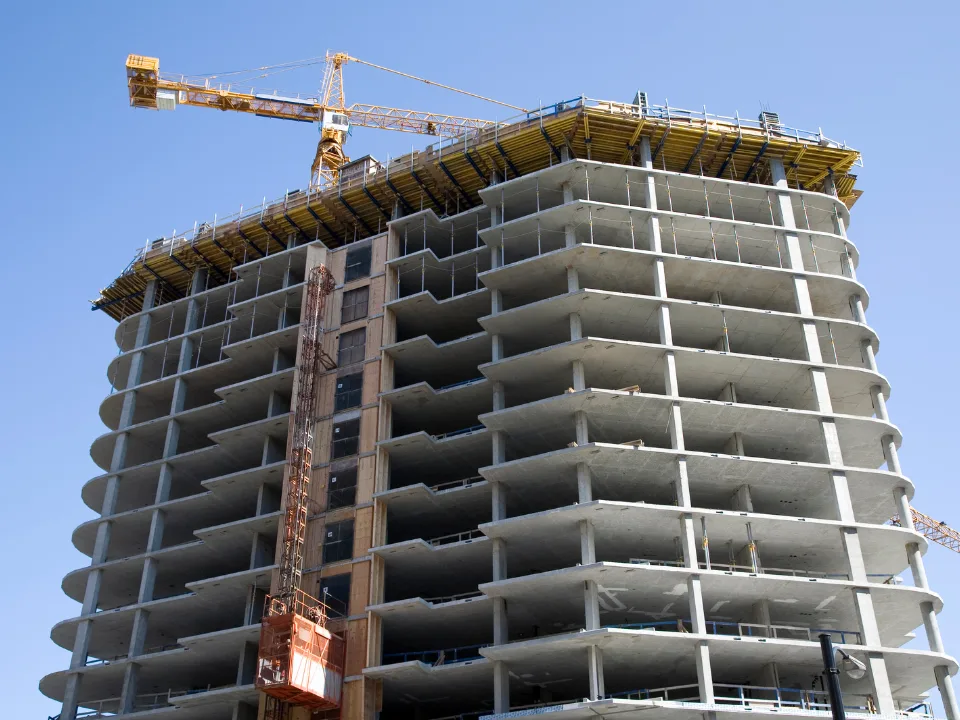
BXP’s office tower at 343 Madison Avenue drew the biggest single financing in the data, a $1.2 billion construction package led by Wells Fargo. BofA Securities, BNY Mellon and JPMorgan joined it. As we reported when the 343 Madison tower hit its podium level, completion is targeted for 2029 and the building was about half pre-leased in July.
S3’s largest ranked loan, $131.5 million, funded a Washington Heights student housing project by Edge Property Group, with 276 units.
Gregg said record rents, healthy condo sales, a recovering office market and steady retail all made projects easy to finance, and clients were out buying and building as a result.
Multifamily Still Leads
Multifamily was the biggest slice of new financings citywide, at about 18.5%. Developers are still adapting to the 485x and 467m tax incentives, which took effect in January 2025.
485x’s wage and affordability rules kick in at 100 units, so most new projects stay smaller. Our look at the 485x data found 20 of 152 newly registered projects sitting at exactly 99 units.
S3 Capital Partners nearly doubled its lending year over year on a wave of new mixed-use and residential construction.
Why It Matters
Lenders say the demand behind the deals is real. Shawn Safdie, S3’s head of origination, told The Real Deal that developers are underwriting to elevated rents and condo sales that have held up, so projects still pencil even if lenders tighten the numbers.
Safdie also said developers’ optimism outweighs temporary blips. In his words, they are dreamers who have to keep building.
That credit also has a flip side. Banks originated 82 of the NYC loans in Circlemark’s maturity wall analysis, worth $5.75 billion of the $8.7 billion coming due over the next 12 months. The lenders writing new paper are also the ones holding the old.
What’s Next
Rates are the swing factor. Chris Gregg, Valley National’s division head for New York CRE, told The Real Deal his team was busy early in the year but would rather see slow and steady than volatile.
The Real Deal noted the slowdown could last into 2027. Rising construction costs are sending some borrowers back to the table on financing, though Safdie said clients’ business plans haven’t shifted much. His read: the dust will settle, even with rates a bit higher.