






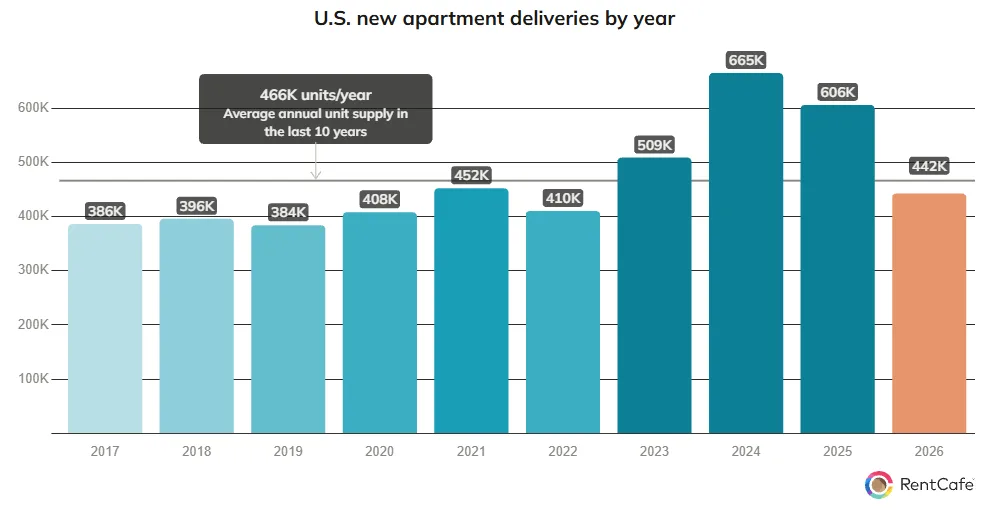
- RentCafe expects 442,395 new U.S. apartments to open in 2026, down 27% from 605,768 in 2025 and below the roughly 466,000 ten-year average for the first time in four years.
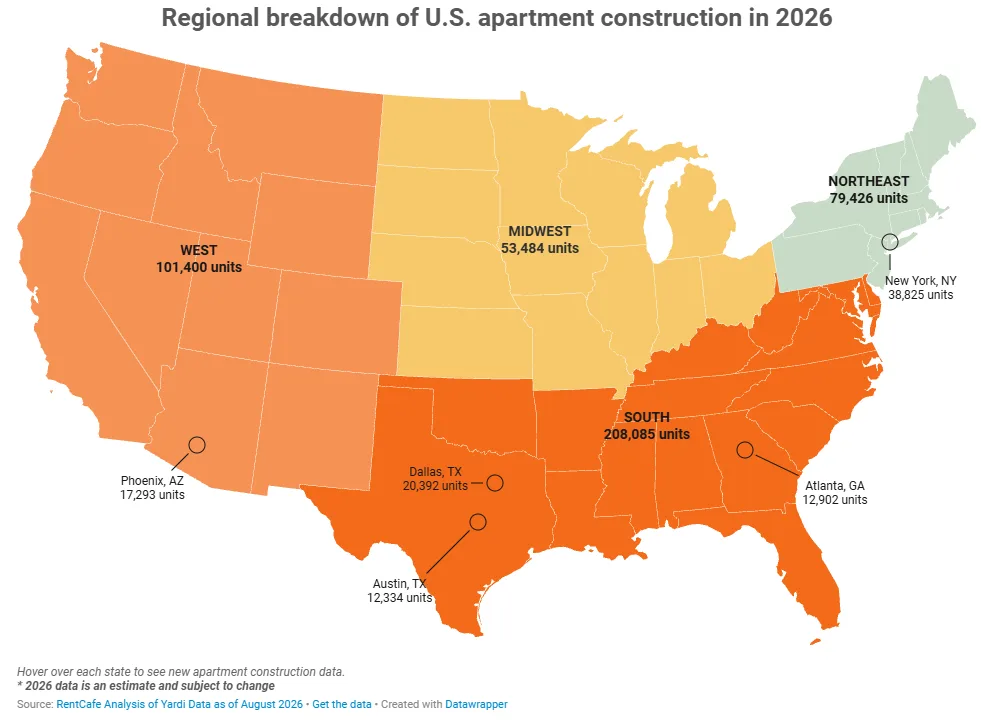
- The Northeast is the only region adding more, up 20% to 79,426 units, led by the New York metro’s 38,825 and Brooklyn’s 13,011, the most of any single city.
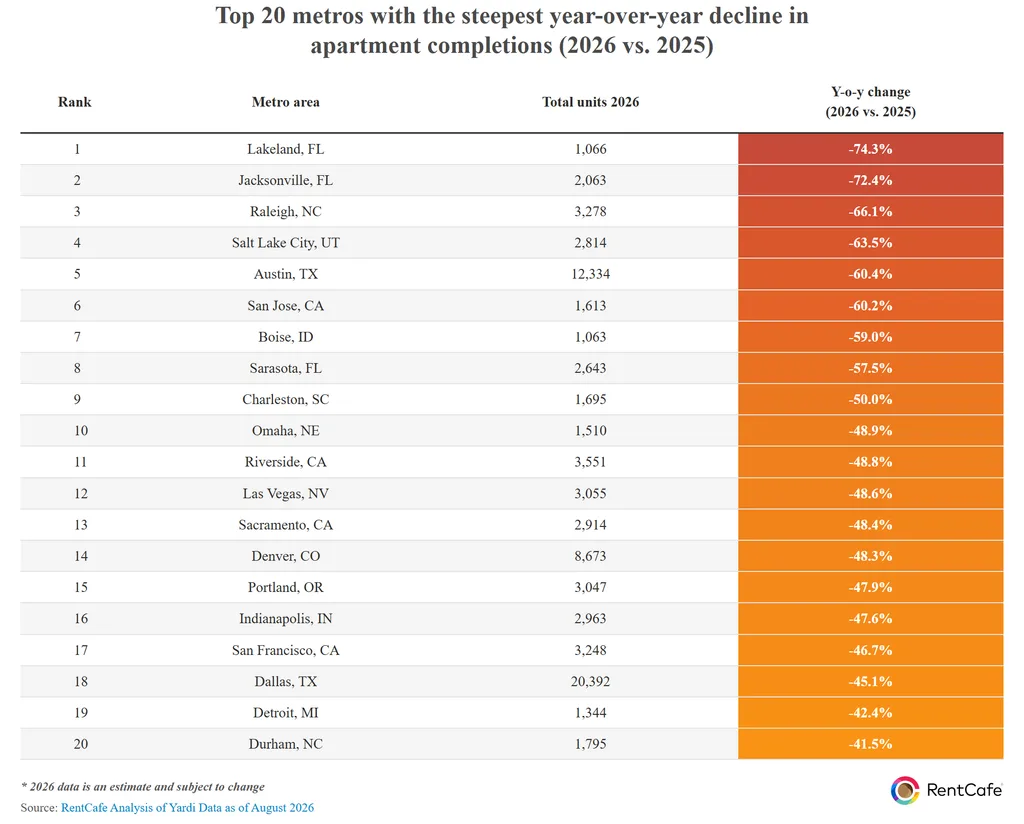
- The South still delivers 47% of new units, but Dallas and Austin are slowing sharply, so renters in those markets may see tighter choices heading into 2027.
U.S. apartment construction is cooling fast, with RentCafe’s analysis of Yardi Matrix data projecting 442,395 new units in 2026, a 27% drop from 605,768 last year.
That’s the first sub-average year in four, against a ten-year norm of roughly 466,000.
Get Smarter about what matters in CRE
Stay ahead of trends in commercial real estate with CRE Daily – the free newsletter delivering everything you need to start your day in just 5-minutes
The Northeast Goes the Other Way
Only the Northeast is building more than a year ago. Openings there are up 20% to 79,426 units, as buildings started during the earlier demand surge reach completion.
The region historically struggles with permitting, zoning and high costs, so the jump stands out.
New York Leads
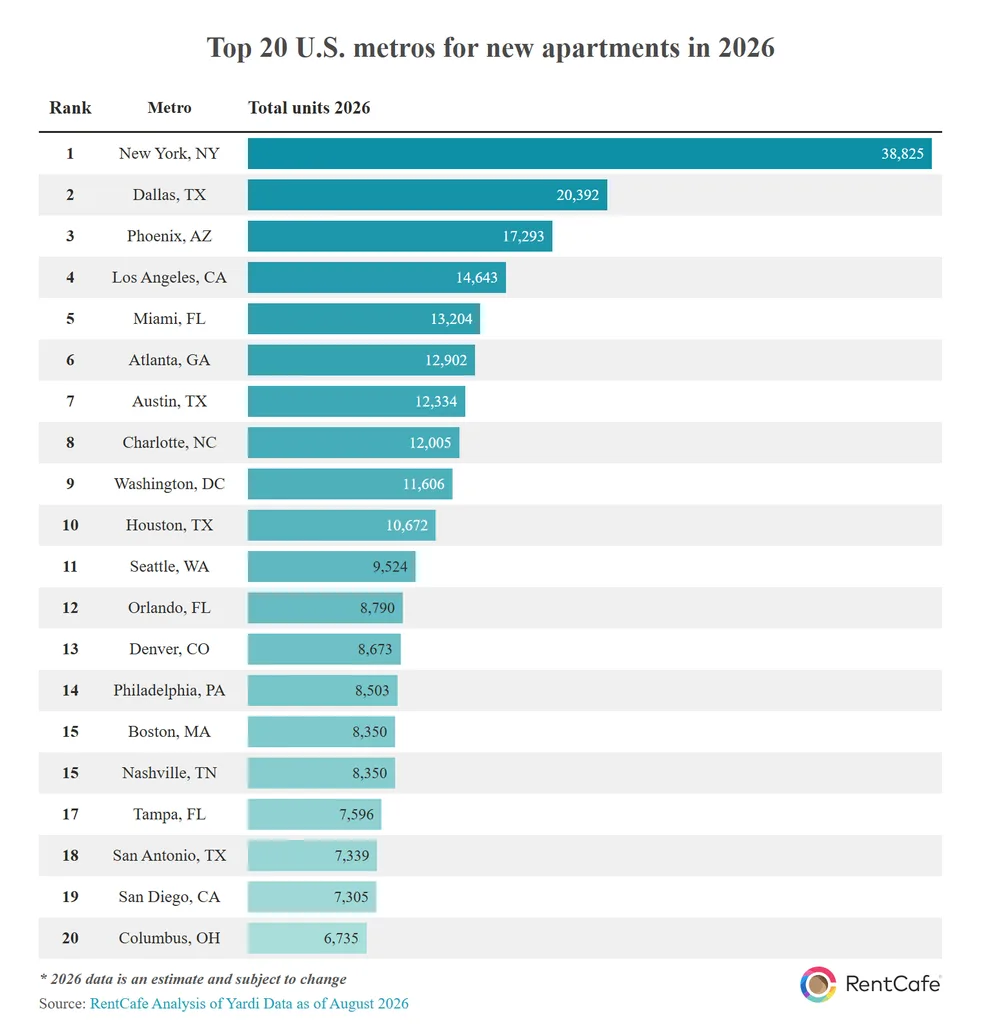
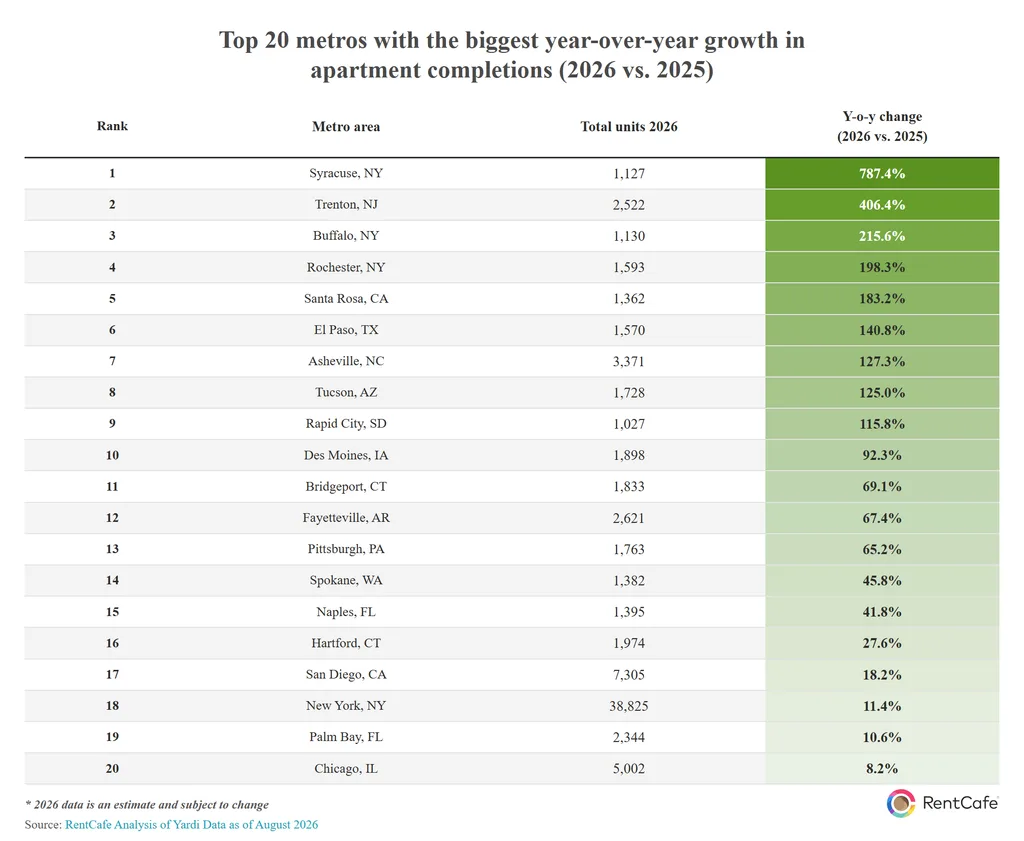
The New York metro tops the nation with 38,825 units, up 11.4%. Brooklyn alone will add 13,011, the most of any city and a 37.3% gain.
Queens adds 4,072 units and Manhattan 3,944. Jersey City surges 807.4% to 4,637. The study covers buildings with 50 or more units and leaves out the Bronx and Staten Island.
That tracks with our look at multifamily permits, where gateway markets and NYC at 37,691 led the way.
The South and West Slow
The South still accounts for 47% of openings, or 208,085 units. Texas leads with 56,394 and Florida follows with 50,392. The West adds 101,400, with California at 38,201 and Arizona at 19,245.
Dallas is the second-largest metro at 20,392 units but 45.1% lower than last year, and Phoenix ranks third at 17,293. Austin falls 60.4% to 12,334. Lakeland, Florida, posts the steepest decline at 74.3%.
Why It Matters
RentCafe says the decline isn’t a sign of weaker demand. The market is moving past the post-pandemic construction wave, and renters in places like Dallas and Austin can still find incentives in recent deliveries.
RealPage shows the same trend from another angle. Its count of about 82,000 Q3 completions, covered in our apartment completions brief, put 2026 deliveries 27% below last year’s pace.
What’s Next
Yardi’s Doug Ressler, quoted in the report, expects fewer properties to finish in both 2026 and 2027 than in 2024 and 2025, with the growth over pre-pandemic levels expected mostly in mixed-income and affordable projects.
Where construction slows the most, options could tighten heading into 2027.