



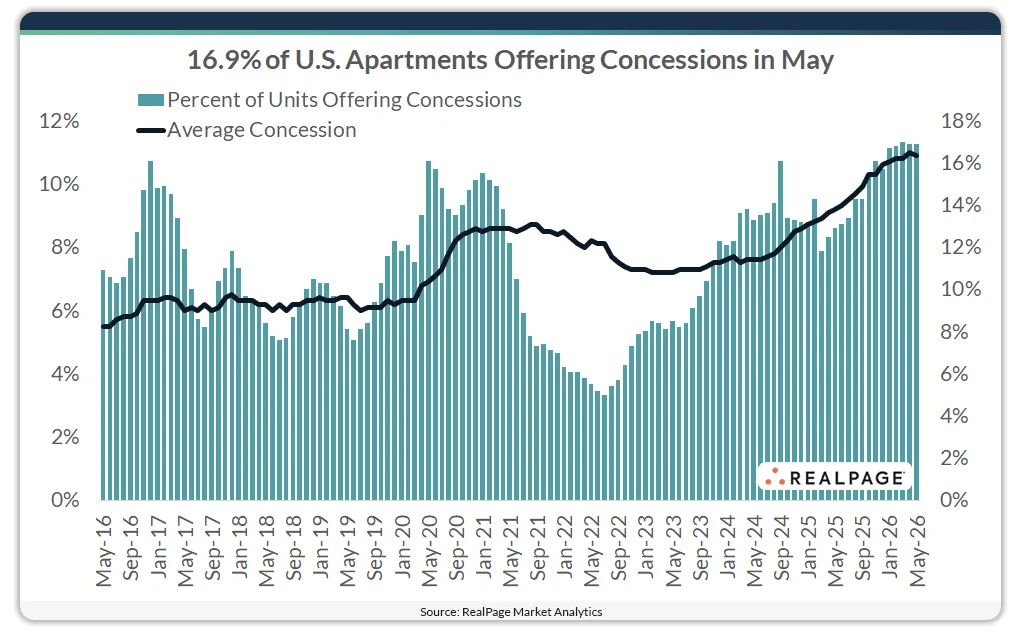
- US apartment concession usage was steady at 16.9% in May 2026, close to the highest levels since 2014.
- The average discount dipped slightly to 10.9%, the first monthly decline in over two years, but remains elevated year-over-year.
- Southern and Midwest regions saw slight increases in concession usage, while the West and Northeast posted declines.
Concession Levels Remain Elevated
US apartment concessions remained notably high in May 2026, with RealPage Market Analytics reporting flat usage at 16.9% of stabilized units. This figure represents a four-point jump from one year earlier and sustains a trend of elevated incentive use by property managers, which has held near decade peaks since the sector’s cycle lows in mid-2016. The current readings approach conditions last seen in the wake of the Great Financial Crisis, underscoring a persistently competitive leasing environment. Despite month-to-month stabilization, property owners continue tapping concessions as a primary lever for tenant retention and occupancy amid heavier new supply in several metros.
Get Smarter about what matters in CRE
Stay ahead of trends in commercial real estate with CRE Daily – the free newsletter delivering everything you need to start your day in just 5-minutes
The Details
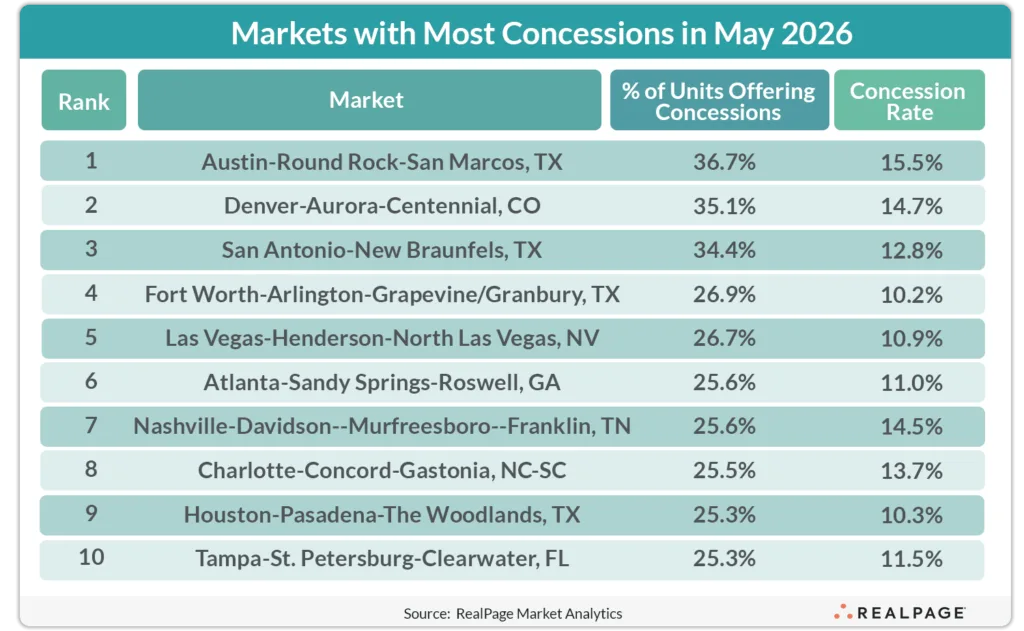
May’s data shows the average US apartment concession rate dropped by 0.1 points month-over-month to 10.9%, breaking a streak of uninterrupted increases since March 2024. Still, the discount amount sits 1.7 points higher than May 2025, equating to about six weeks of free rent on a typical 12-month lease. Class C properties led concession usage at 21.8%, with Class A at 13.7% and Class B at 15.4%. Discount depths by class were comparable, with the highest seen in Class A (11.2%) and B and C trailing closely. Regionally, the South registered the highest usage at 22.1%, while the Midwest posted the lowest at 10.6%. Major Texas markets—including Austin, San Antonio, and Houston—remained outliers for high concession saturation.
Sun Belt and Class C Product Story
The South—particularly high-growth metros like Austin, Dallas, Houston, and San Antonio—continues to anchor national concession trends due to persistent supply pressure. The Southern region’s 22.1% share of apartments offering concessions leads all other regions and rose 0.3 points from April. At the same time, some operators continue pushing rents higher in premium properties, creating a growing divide between top-tier assets and supply-heavy markets. Class C product, which serves the most price-sensitive renters, still leads concession frequency, underscoring pricing challenges at the lower end. Meanwhile, modest increases in the Midwest and pullbacks in the Northeast and West suggest a fragmented recovery, with markets most exposed to new inventory still using incentives to stabilize occupancy. Discount rates run the deepest—up to 15.5%—in top-concession metros like Austin, Denver, and Nashville.
Why It Matters
Concessions remain a key tool as demand slows and apartment deliveries stay elevated. RealPage data shows US concession usage nearing post-recession highs. Lease-up competition remains intense, especially across Sun Belt metros. The average discount rate dipped slightly to 10.9%. However, year-over-year gains in usage and value show renters still hold leverage. Most markets continue competing aggressively for tenants.
More than 21% of Class C properties now offer incentives. That trend reflects affordability pressures and limited rent growth. Meanwhile, Class A properties still rely on discounts despite recent moderation. Rising concession usage in Midwest metros shows supply-demand imbalances are spreading. The pressure remains less severe than in the South. RealPage estimates current discounts equal six weeks or more of free rent. Those incentives appeal to renters facing affordability challenges. Owners must balance occupancy goals against the costs of sustained incentives. Many still view concessions as preferable to outright rent cuts.
What’s Next
Apartment deliveries will remain elevated through late 2026, especially across Southern and select Western metros. As a result, concession pressure will likely persist. Markets with heavy new supply may struggle to reduce incentives. RealPage expects only modest moderation through year-end.
Watch discount rates closely. Another decline could signal that peak concessions have passed. However, persistent discounts would show owners still face affordability pressures and intense competition. Regional differences may shape the next phase of the cycle. Coastal markets and higher-end Class A properties may reduce concessions before other segments.