






- Lenders have tightened credit spreads on 60–65% LTV retail CRE loans by 16 basis points over the past year, per Trepp.
- The cost of incremental debt in the 50–59% LTV tier is nearly unchanged in the same period, underscoring a shift in lender competition.
- Lenders prioritizing pricing competitiveness in the middle of the capital stack could alter borrower decisions and reshape risk distribution in retail loan origination.
Middle of the Retail Debt Stack Gains Attention
Retail commercial real estate lenders are shifting their focus toward moderate leverage. Trepp data shows the most aggressive pricing now sits in the middle of the debt stack.
Over the past year, the 60–65% loan-to-value (LTV) band recorded the sharpest decline in credit spreads. Lenders are competing for deals above low-leverage tiers but below riskier, higher-leverage exposure.
Meanwhile, spreads elsewhere in the stack moved little. This trend suggests lenders are recalibrating risk and returns as borrower demand and credit conditions evolve.
Get Smarter about what matters in CRE
Stay ahead of trends in commercial real estate with CRE Daily – the free newsletter delivering everything you need to start your day in just 5-minutes
The Details
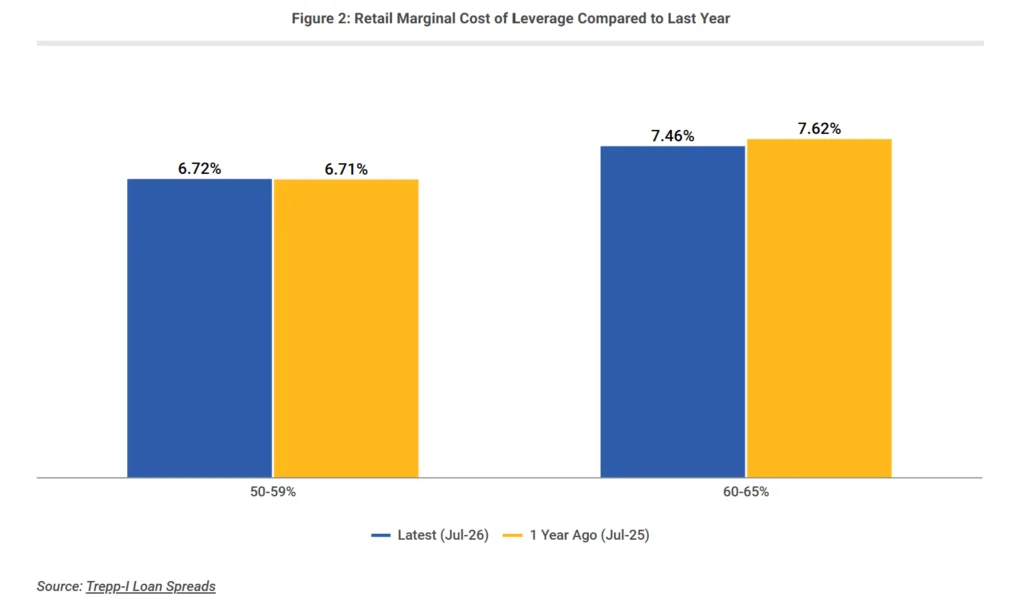
Trepp’s weekly nationwide lender survey shows incremental rates for 60–65% LTV retail loans currently stand at 7.46%. That figure fell from 7.62% in July 2025, representing a 16-basis-point decline.
Meanwhile, the 50–59% LTV segment increased only one basis point to 7.11% over the same period. The difference shows lenders are competing heavily for middle-tier loans rather than cutting rates across all leverage levels.
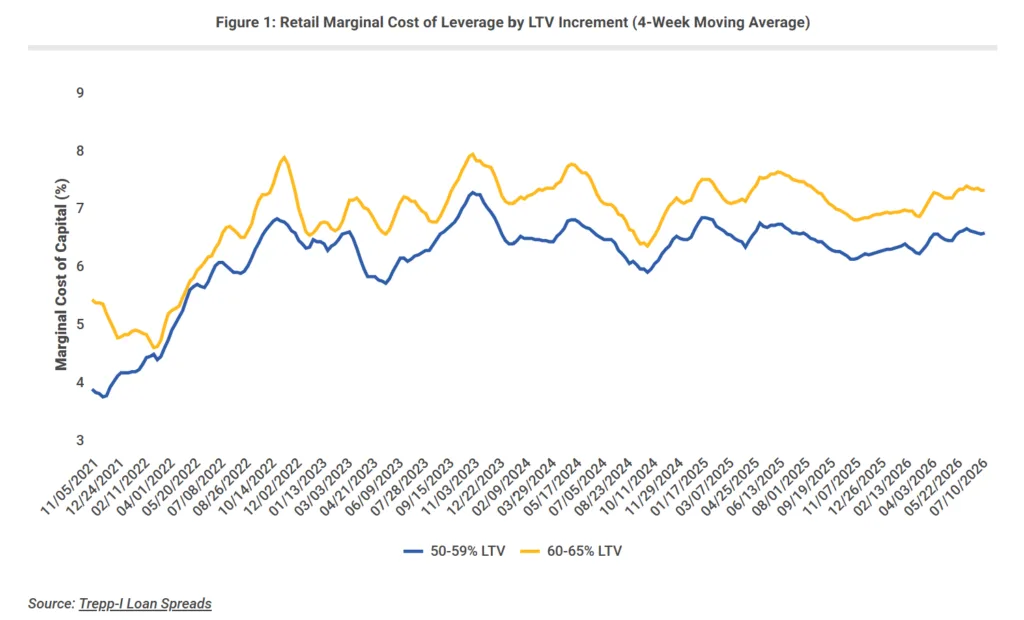
For sponsors, the 60–65% LTV range now offers an attractive balance between leverage and financing costs. Borrowers can secure more capital without paying the premiums associated with higher-leverage debt.
Competitive Pressure Shifts Up the Stack
Competition in retail CRE lending traditionally concentrated in the safest, lowest-LTV loans. However, lenders have increasingly moved their attention higher up the leverage stack.
Persistent spread compression below 60% LTV previously pushed more lenders toward the 60–65% range. Trepp highlighted this shift in its June 2026 analysis.
Now, lenders are pricing middle-tier loans more aggressively. They appear increasingly willing to accept moderately higher risk while pursuing stronger yields.
This pricing also differs from commercial mortgage-backed securities markets. CMBS markets typically experience more frequent repricing and greater transparency through actively traded spreads.
Why It Matters
Lending spreads provide an important measure of market sentiment and capital availability across commercial real estate. The strongest compression at 60–65% LTV signals changing risk appetite among banks and balance sheet lenders.
Trepp data shows incremental rates in this middle tier dropped 16 basis points. By comparison, pricing below 60% LTV remained virtually unchanged.
Credit spreads increasingly shape CRE transaction activity, often carrying more weight than expectations for interest rate cuts. That makes current retail spread compression especially important for borrowers evaluating new deals.
That divergence creates a new competitive hotspot for lenders. It also provides a financing advantage for borrowers seeking moderate leverage.
For retail owners and buyers, borrowing above 60% leverage now costs less relative to last year. This shift could create additional acquisition and refinancing opportunities without requiring expensive upper-stack debt.
Meanwhile, lenders that resist tighter spreads could lose deal flow to more aggressive competitors. Over time, attractive pricing could also encourage borrowers to pursue slightly higher leverage.
That shift could gradually increase average leverage and change risk profiles across retail property portfolios. Therefore, lenders must regularly benchmark pricing and adjust spreads to remain competitive.
What’s Next
Competition could intensify further if current pricing trends continue across the 60–65% LTV segment. Sponsors and lenders may increasingly structure transactions around this leverage range.
However, changes in Treasury yields, credit conditions, or broader CRE pricing could quickly reset lending spreads. These factors remain important variables for both borrowers and lenders.
Trepp’s weekly survey should reveal whether middle-tier compression continues or spreads across other leverage levels. Those trends could influence borrower leverage, loan originations, and retail investment strategies in the coming months.