



- Galveston County is seeing a wave of investment across NASA’s Exploration Park, the Port of Galveston’s $2.4B expansion plan and a converted downtown office tower.
- Johnson Space Center is accepting proposals for 183 undeveloped acres at Exploration Park, following a first round that delivered a 1.5M SF innovation hub.
- Developers say high interest rates and inconsistent municipal fees, including one city’s roadway impact fee that jumped from $12K to over $1M, threaten to slow the region’s growth.
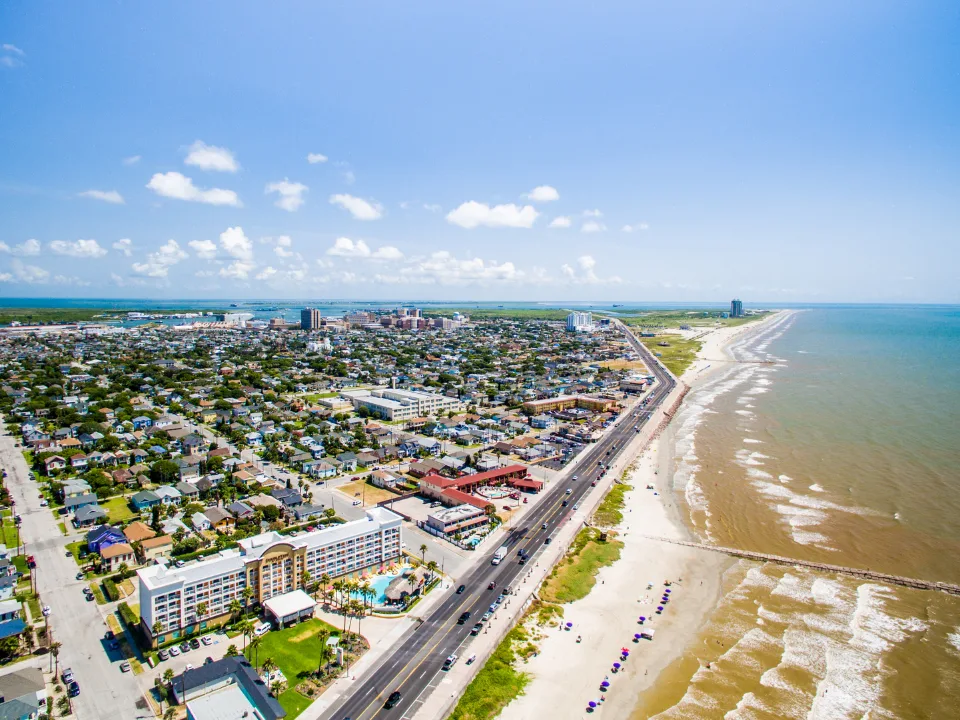
Galveston County and Houston’s Bay Area are drawing billions in new investment, from NASA’s Exploration Park to the Port of Galveston and the island’s lone skyscraper, according to Bisnow.
But developers say realizing the area’s full potential will require local officials to make it easier, not harder, to build.
Get Smarter About What Matters in Texas
Subscribe to our free newsletter covering the biggest commercial real estate stories across Texas — delivered in just 5 minutes.
A Region on the Rise
“If your door is open in your communities, we will come. We will deliver capital. We will be an asset,” MOS R.E. CEO Johnny Vassallo said at Bisnow’s Future of Galveston and Bay Area event at the South Shore Harbour Resort & Conference Center.
“We just need to know what you want,” he added. Johnson Space Center’s location, meanwhile, was originally chosen for its distance from population centers, in case it became a rocket launch site, Associate Center Director Donna Shafer said. Today, the center is inviting development instead of avoiding it.
The center opened a second round of lease proposals in January for Exploration Park’s remaining 183 acres. Its first RFP produced ACMI Properties and Griffin Partners’ 1.5M SF commercial space innovation hub and Texas A&M’s Space Institute, set to open in November.
The Details
Galveston’s port, the fourth-busiest cruise hub in North America, opened its fourth cruise terminal in November, just 25 years after its first ship departed. Port Authority CEO Rodger Rees said the terminal arrived five years ahead of its original 2031 timeline.
The port’s $2.4B, 20-year master plan calls for a fifth terminal, and officials are actively negotiating with Royal Caribbean for what would be the cruise line’s second terminal in Galveston. The plan also calls for hotels, retail, restaurants and multifamily housing meant to bridge downtown Galveston and the port.
Separately, Davie Defense-Gulf Copper broke ground in June on a $1B modernization of Coast Guard icebreaker production facilities in Galveston and Port Arthur, plans Rees said will help catalyze development on the largely undeveloped, 357-acre Pelican Island, where a liquefied natural gas developer is also pursuing a marine fueling project.
On land, MOS R.E. won an online auction for One Moody Plaza, Galveston’s tallest building at 23 stories and former home of American National Insurance Co., with a $3.8M bid, well under its $36.4M appraised value. The firm plans to convert the tower into a hotel or apartments using state and federal tax credits, betting the project will draw residents who add to the local tax base.
Zooming Out
Galveston has emerged as one of the Gulf Coast’s more active development corridors this year. Just up the coast, the Margaritaville resort project has also picked up speed, adding to the island’s growing hospitality and leisure pipeline.
That momentum, though, is unfolding against a backdrop of high construction costs and interest rates that panelists said make development math harder to pencil across the board, even for well-capitalized developers.
Why It Matters
Office repositioning is central to the county’s next chapter. One Moody Plaza’s planned conversion echoes a broader adaptive reuse trend playing out across Texas, where developers are turning underused towers into hotels and housing rather than leaving them vacant.
But local fees can undercut that math. JRH Engineering President Jennifer Henrichs cited one small, growing city east of Houston that raised a roadway impact fee on a Memorial Hermann medical building project from $12K to more than $1M, a jump she said even a major health system balked at, let alone smaller developers.
“So, a lot of mom-and-pop business owners cannot; they will not,” Henrichs said of the fee hike, adding that she isn’t sure how the community in question will sustain growth under those terms.
What’s Next
Vassallo said Galveston County and the Bay Area need new housing to support the jobs being created, and developers have roughly 10 area municipalities to choose from.
Panelists said the region’s growth will increasingly hinge on which cities streamline permitting, build relationships with developers and align fees with what projects can realistically absorb. “If you get crystal-clear direction from the local communities, it will attract capital,” Vassallo said.