



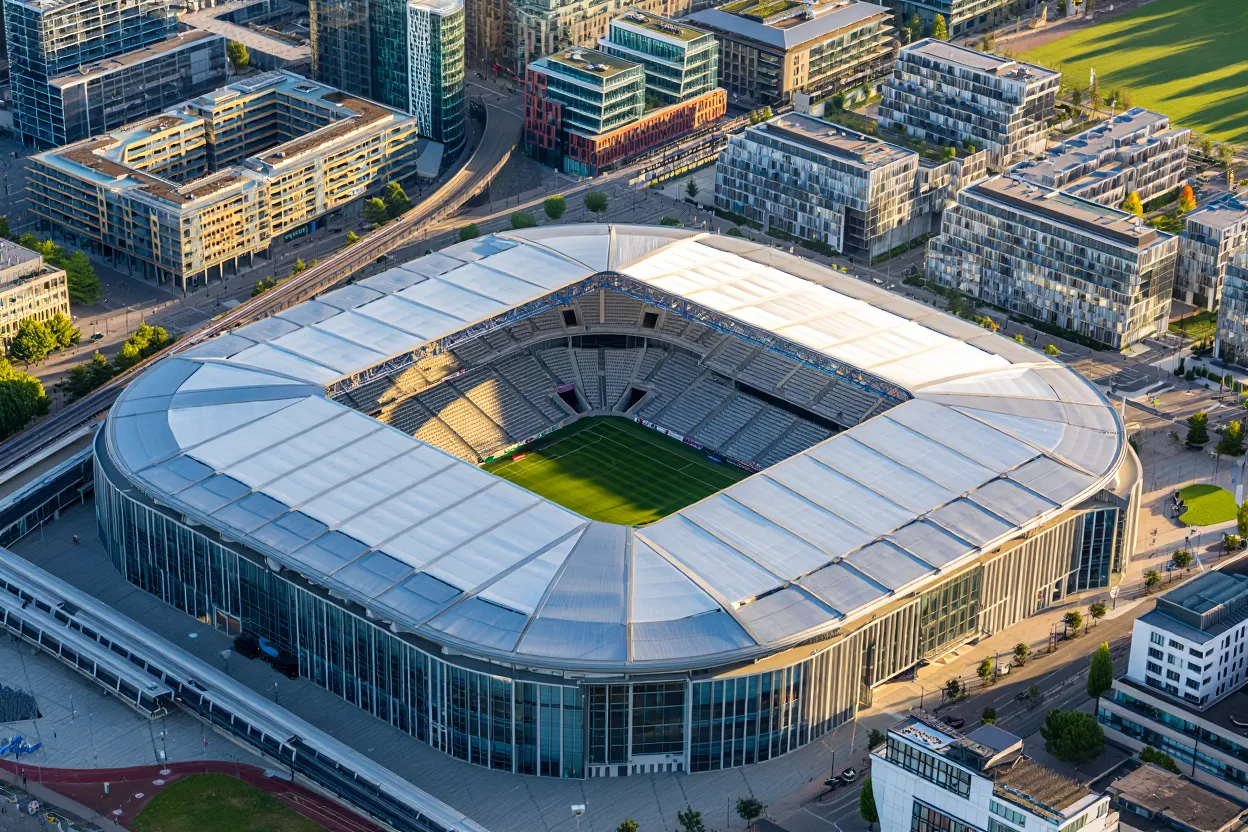
- Urban host stadiums average six times more nearby coworking spaces than their suburban counterparts, per CoworkingCafe’s analysis.
- Houston and Atlanta stand out for combining coworking access, affordability, and transit options for remote-working World Cup fans.
- Employers and traveling professionals face vastly different realities depending on a stadium’s location, shaping flexible work strategies around the tournament.
Work Meets World Cup in Eleven US Host Cities
Flexible work gets a trial by fire whenever the World Cup comes to town. The 2026 tournament will test office routines across 11 US stadium cities over 48 days and 78 matches. According to CoworkingCafe, the way remote work fits into this event depends heavily on geography. Its survey mapped every coworking space within three miles of each US stadium and ran the numbers on day pass pricing, transit fares, and local amenity densities. The findings, as reported by Bisnow, paint a sharp contrast between urban stadiums—overflowing with workspace options—and suburban or outlying venues where flexibility gets tough fast.
Per a 2026 UKG workplace survey, a third of employees expect to take at least one day off for the World Cup, and a quarter plan to miss part of a workday. This is no minor distraction: workspace proximity to stadiums can make or break the productivity game plan for professionals blending soccer and business.
Get Smarter about what matters in CRE
Stay ahead of trends in commercial real estate with CRE Daily – the free newsletter delivering everything you need to start your day in just 5-minutes
The Urban-Suburban Divide Defines Access
The core split in coworking access boils down to location. Four stadiums—Atlanta’s Mercedes-Benz Stadium, Houston’s NRG Stadium, Philadelphia’s Lincoln Financial Field, and Seattle’s Lumen Field—are actually embedded within their cities. Around these urban venues, the average is 33 coworking spaces available within a three-mile walk or transit hop. That’s the infrastructure needed for on-the-go work, client calls, and networking near the action.
Contrast that with the six suburban stadium sites—such as Gillette Stadium (Foxborough) representing Boston and SoFi Stadium (Inglewood) for Los Angeles—where the average plummets to just 5.5 spaces per venue. In Kansas City, Arrowhead Stadium comes up empty: not a single coworking facility in a three-mile radius. The analysis, drawn from 2026 CoworkingCafe listings, leaves little doubt about how location shapes flexibility for traveling fans and employees.
Stadium Penalties and City Standouts
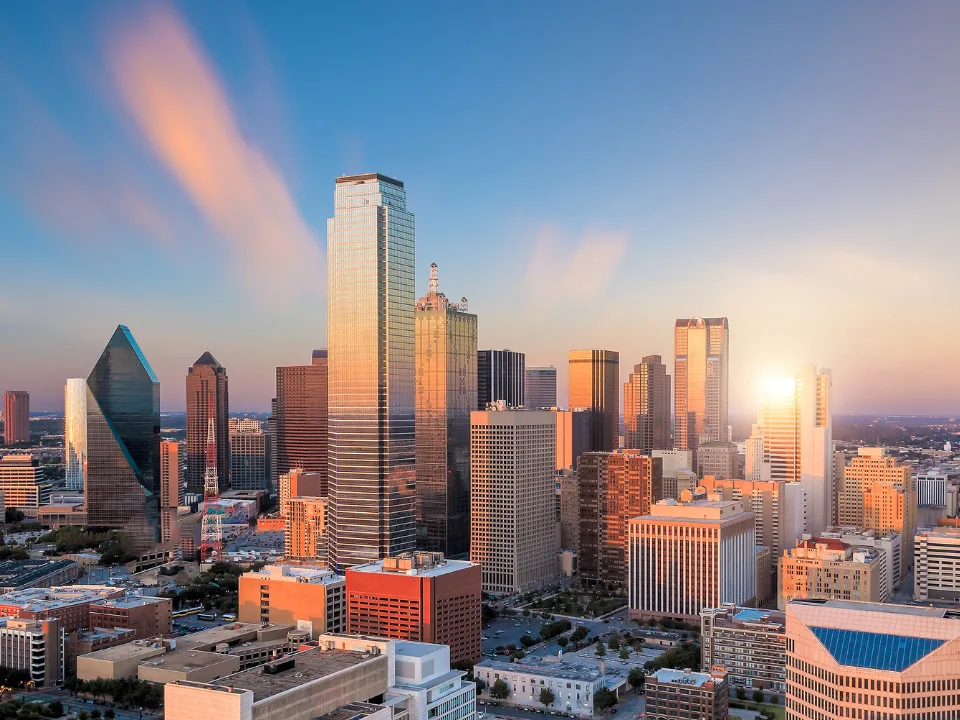
The “coworking penalty” hits particularly hard in some US markets. Boston’s Gillette Stadium exemplifies the issue: citywide, Boston has 65 coworking options, but only one near the venue—a 98.5% drop. Dallas and Miami both tumble from 89 citywide choices to just four near their stadiums, while SoFi Stadium’s Inglewood location chops Los Angeles’s count by 92.6%. Even for the cities that tout strong coworking networks, venues set outside urban cores sharply limit practical access on match days.
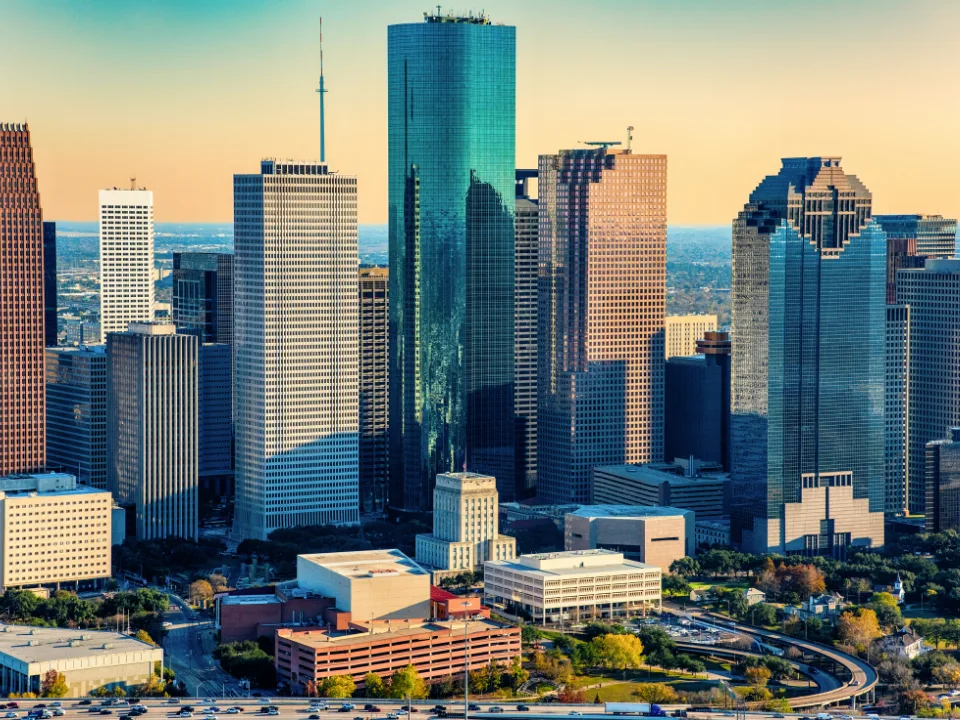
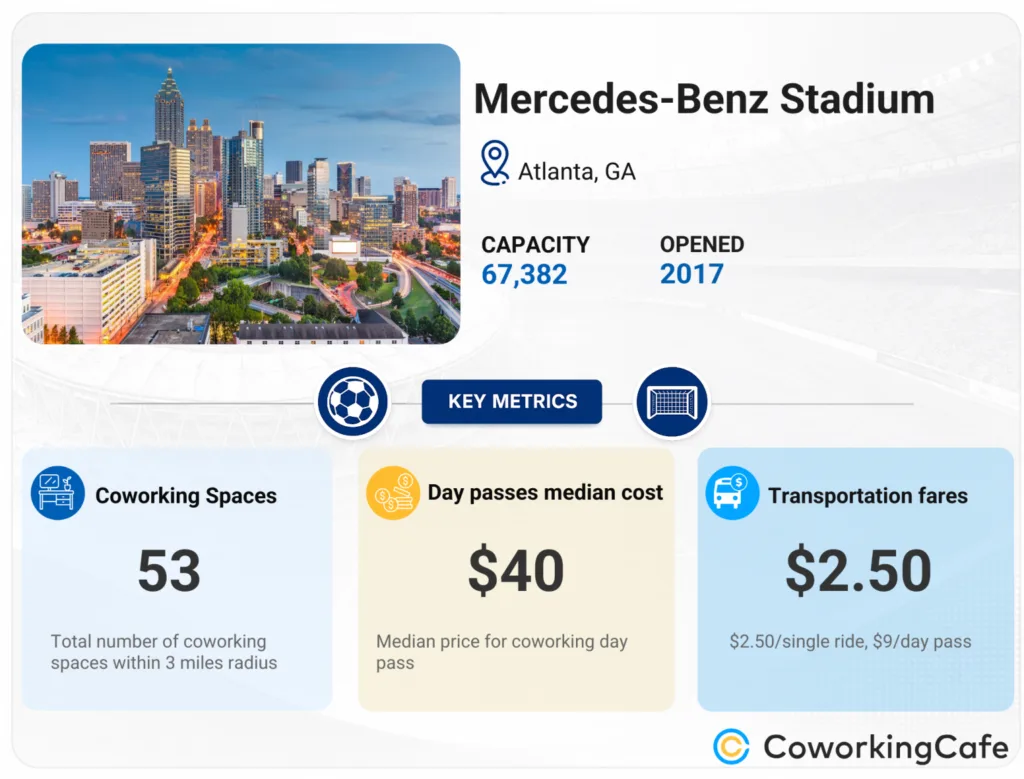
By contrast, Atlanta’s Mercedes-Benz Stadium is unmatched—53 coworking spaces are accessible via the same MARTA transit web that delivers fans to the games, with day passes at a local median cost of $40. Houston isn’t far behind, with 16 workspaces within a three-mile ring around NRG Stadium and the lowest transit and day-pass bundle at just over $31.25 per working day. These two markets are purpose-built for working fans, combining reach, pricing, and transit.
Flexible Work Winners and Losers
Philadelphia and Seattle—often overlooked flexible work hubs—deliver strong value too. Per CoworkingCafe, Philadelphia offers 19 spaces near Lincoln Financial Field at a $32 median day pass, with efficient SEPTA service for $7.50 per day. Seattle’s Lumen Field sits within striking distance of 44 spaces, a $39 pass rate, and dense cultural amenities.
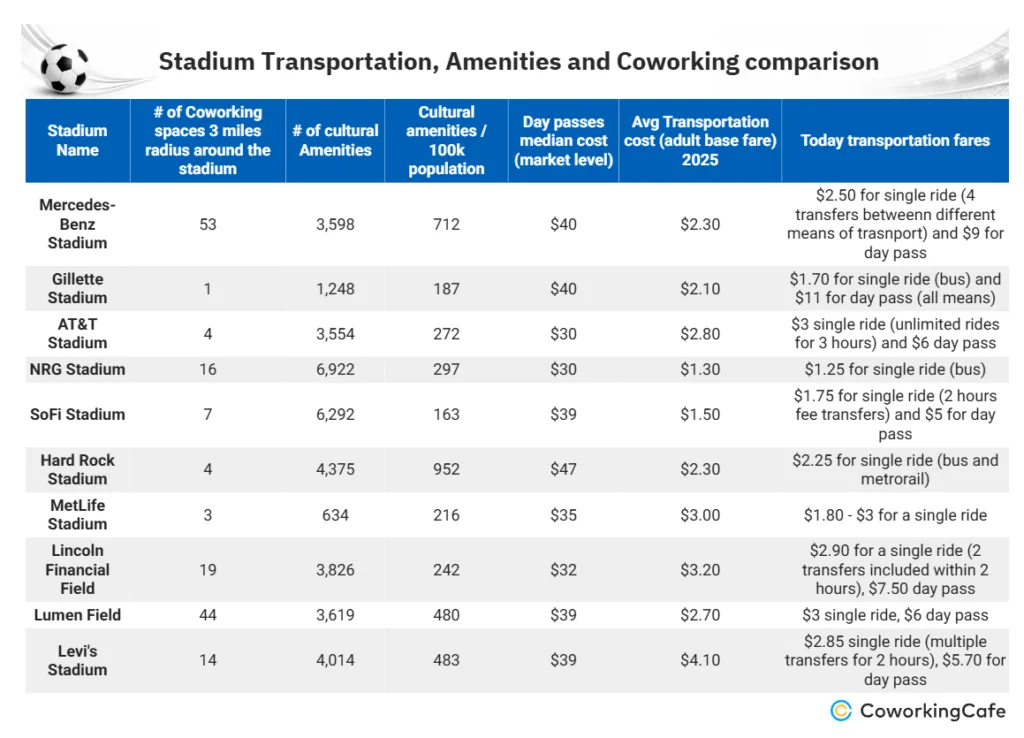
Elsewhere, the story’s less friendly. Miami’s coworking is pricey ($47/day) and concentrated in the urban core, far from the hard-to-reach Hard Rock Stadium. Los Angeles’s market shows citywide supply (94 spaces), but only seven are convenient to SoFi Stadium. Boston and New York present extreme challenges: sky-high game-day transit fares ($80–$150 round-trip), minimal workspace near the venues, and lengthy commutes. San Francisco’s Levi’s Stadium, out in Santa Clara, bucks the trend a bit with 14 spaces, but the cost and travel distance are steep and the network reflects Silicon Valley’s scale more than San Francisco’s core.
Why It Matters
This divide creates more than an HR challenge. It creates a clear CRE opportunity or obstacle. The outcome depends on location and workforce needs. Companies must consider more than employee availability during the tournament. They must also assess whether a city supports productive remote and traveling workers. The 2026 CoworkingCafe analysis highlights Atlanta, Houston, Philadelphia, and Seattle as strong examples. These cities support drop-in work, spontaneous meetings, and transit-connected workspaces. As a result, flex office providers can market tournament-ready locations and services.
However, cities and venues outside urban cores face a different challenge. Limited suburban workspace options reduce flexibility and convenience. Professionals often must commute into cities to work, then travel back to stadiums for matches. The gap is significant. Data shows urban areas average 33 workspaces within a three-mile stadium radius. Suburban areas average just 5.5. This disparity affects more than workers. It also impacts event planners, sponsors, and CRE brokers seeking foot traffic and visibility during a global event. Companies that overlook these constraints risk lower productivity and frustrated employees.
The issue becomes more important as World Cup activity transforms workspaces and commercial districts into unofficial fan hubs. Consequently, proximity and flexibility gain value for commercial property stakeholders. Some host cities are also pursuing stadium-centered redevelopment strategies, using major venues to attract investment, visitors, and year-round economic activity beyond match days. Urban coworking markets continue to expand while suburban options lag behind. Event-driven demand could therefore create leasing opportunities and temporary activations near stadiums. However, success depends on having the right infrastructure already in place.
What’s Next
As the 2026 World Cup approaches, property owners and operators in host cities are already tailoring their workspace and retail offerings for tournament traffic. Brokers should zero in on stadium-adjacent properties—and existing coworking operators have a rare chance to convert visiting professionals into long-term clients through short-term passes and gameday promotions.
For employers, this year’s World Cup is a stress test for hybrid and remote policies—a live-fire drill revealing which markets make flexible work genuinely possible during major events. Players in cities with stadiums inside the urban fabric stand to benefit most, both in workplace satisfaction and in capturing event-driven business as the world’s biggest sporting event arrives stateside.