








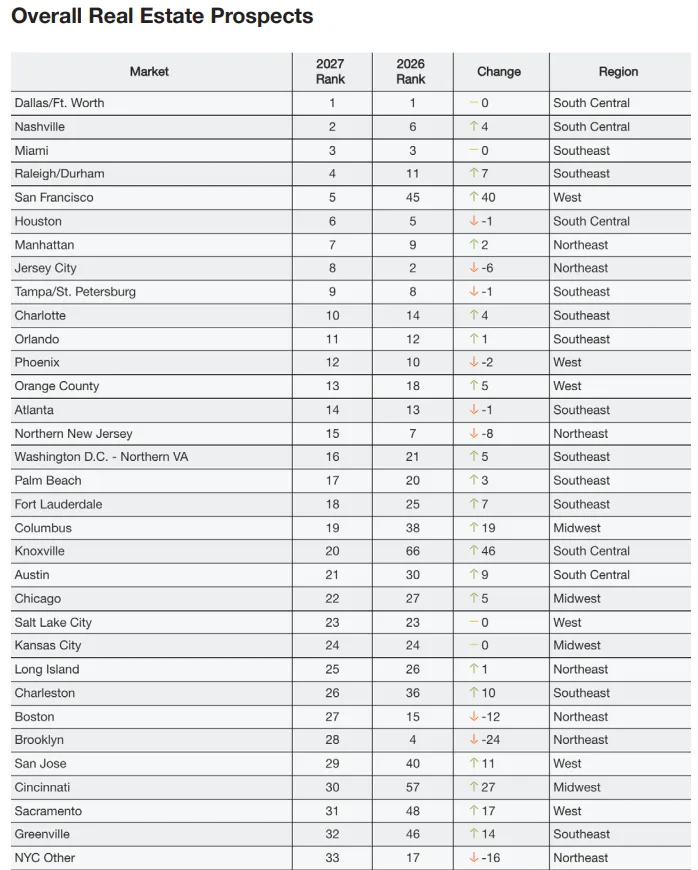
- ULI and PwC’s 48th Emerging Trends report ranks Dallas-Fort Worth the top U.S. market for a third straight year, followed by Nashville, Miami, Raleigh/Durham and San Francisco, which jumped 40 places.
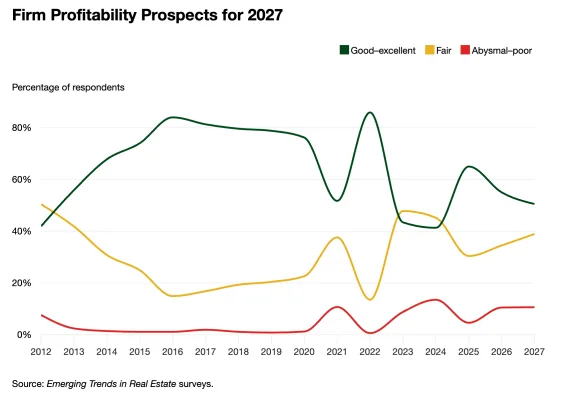
- Only 50.5% of survey respondents rate their business conditions good to excellent, down from 55% last year and 65% the year before, yet the survey’s buy barometer hit its highest reading ever.
- Industrial leads established property types while multifamily and data centers slipped, and returns now depend more on income growth and submarket selection than on cap rate compression.
Dallas-Fort Worth is the top U.S. market to watch for a third straight year in ULI and PwC’s Emerging Trends in Real Estate 2027 report, released Oct. 27.
The 48th edition draws on more than 500 interviews and nearly 1,000 survey responses from investment, development, lending and advisory firms in the U.S. and Canada.
Get Smarter about what matters in CRE
Stay ahead of trends in commercial real estate with CRE Daily – the free newsletter delivering everything you need to start your day in just 5-minutes
You Have to Work for It
That is the report’s theme, and the survey backs it up. Business confidence is sliding for a second year: 50.5% of respondents call their own conditions good to excellent, versus 55% a year ago and 65% two years ago.
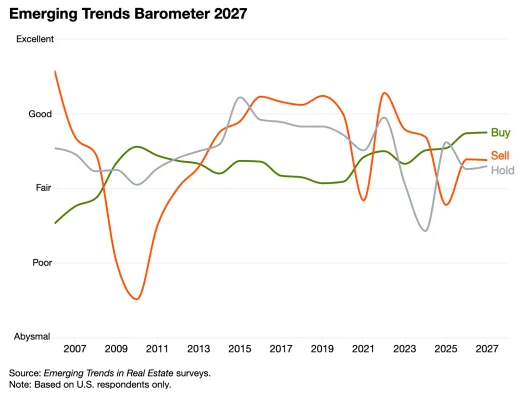
Even so, the buy barometer hit an all-time survey high. The report reads that two ways: conviction that prices have reset, or capital partners pushing to deploy regardless of conditions.
Treasury yields topped 5% in early October, and the report says the higher-for-longer rate debate is over.
The Top Five Markets
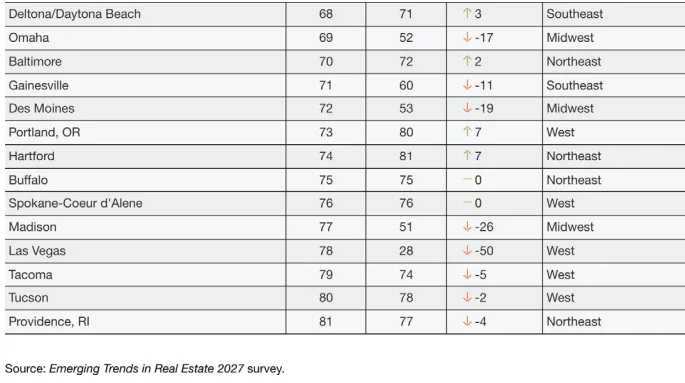
Dallas-Fort Worth leads, followed by Nashville (up from sixth), Miami, Raleigh/Durham and San Francisco. San Francisco jumped 40 places from 45th, as AI tenants helped trim its office vacancy rate by over five points from the peak.
CRE Daily’s coverage of office leasing also found San Francisco leading on AI-driven tech demand.
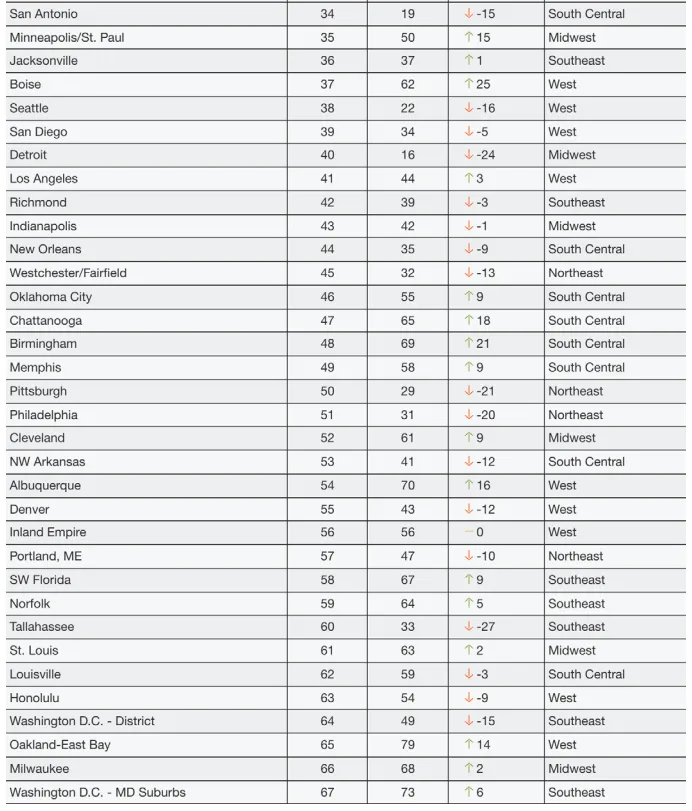
Southern and Southeastern markets fill six of the 10 highest slots. Austin recovers only to 21st, and Knoxville climbs 46 spots to 20th.
In Dallas, Cushman & Wakefield data in the report put Class A office vacancy at 24.8%, about 1.9 points below its early-2025 high, with industrial vacancy at 7.3%.
Property Types Compress
Industrial earned the best investment outlook of the established sectors, retail rose for a fifth year running and office for a fourth. Central city office made the survey’s biggest subsector leap.
Multifamily and single-family both lost ground. Data centers had topped the investment and development rankings three years running, then took the survey’s steepest one-year drop, which the report attributes to power constraints and regulatory friction.
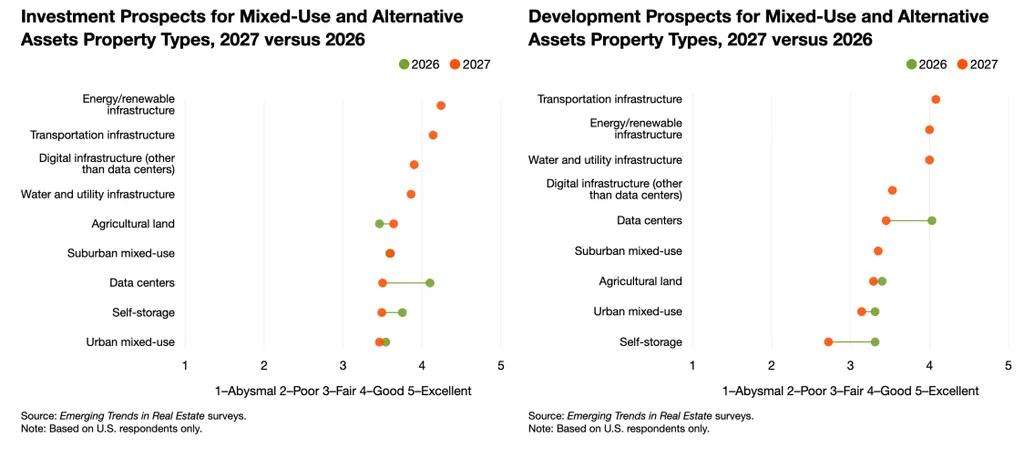
Senior housing and medical office share the top spot among established subsectors. Four infrastructure categories, new to the survey, each scored above every established property type.
Eight Trends for 2027
The report’s eight themes: the fiscal reckoning, a widening real estate universe, policy as a new kind of geography, demographics, a sorting of submarkets, a coming supply gap, AI paired with human judgment, and district-scale places.
Thinner development pipelines should help industrial, hospitality and some multifamily markets, the report says, while office and life sciences stay under pressure. A shrinking construction pipeline also anchored Marcus & Millichap’s recent rent outlook.
Why It Matters
Where returns come from has shifted. Rising income now drives value more than cap rate compression, the report says, and limited partners care more about cash distributed relative to capital paid in than about IRR.
The geography is shrinking too. The report treats the submarket, not the metro area, as the map that increasingly matters, and one investment executive in it says the premium now sits with whoever picks assets best.
What’s Next
The report expects distress to stay localized rather than spread through the system. Upcoming loan maturities and liquidity needs should push deals to market, and the resulting price discovery should reset valuations.