




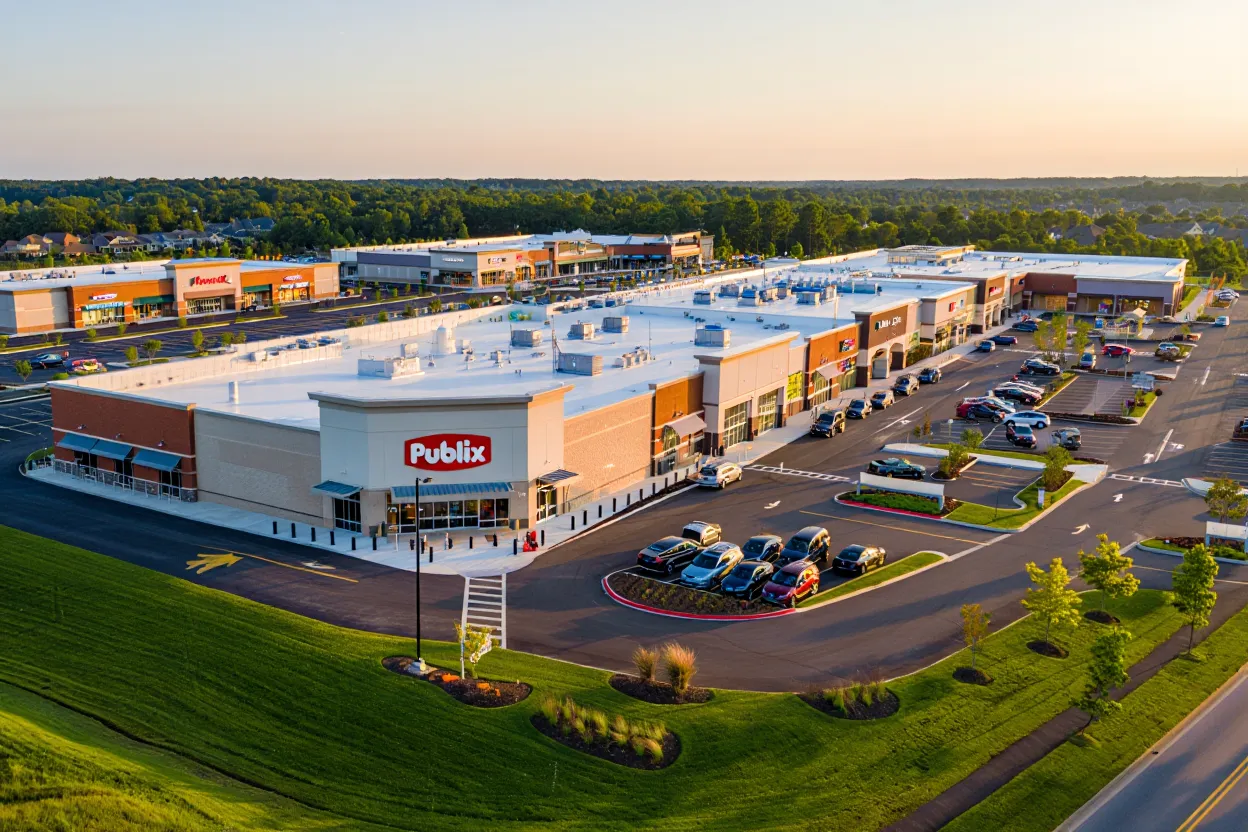



- TPG and major Canadian and Norwegian investors acquired Echo Realty, a 230-property grocery-anchored retail platform, in a $2B transaction.
- The joint venture aims to scale Echo’s operations across the Midwest and Southeast, targeting stable, needs-based assets with leading grocers as anchors.
- Despite overall slumping cross-border Canadian investment, institutional capital continues to pursue grocery-anchored retail amid sector resilience.
TPG Heads $2B Grocery-Anchored Retail Acquisition
Bisnow reports that large institutional players are doubling down on grocery-anchored retail. TPG Real Estate, Norges Bank Investment Management, and two of Canada’s biggest pension funds—PSP Investments and La Caisse—are leading a nearly $2B acquisition of Echo Realty, which operates over 230 retail centers in the US Midwest and Southeast. The group announced the deal this week, signaling confidence in necessity retail real estate. The new owners plan to expand Echo’s holdings in both current and new markets alongside Echo’s current management team.
Get Smarter about what matters in CRE
Stay ahead of trends in commercial real estate with CRE Daily – the free newsletter delivering everything you need to start your day in just 5-minutes
Institutional Appetite for Grocery Centers Remains Strong
Grocery-anchored properties have been a consistent favorite for private capital seeking defensive plays. Echo Realty’s portfolio is anchored by top grocery chains like Publix, Whole Foods, Harris Teeter, and Giant Eagle, with a focus on dominant grocers east of the Mississippi. The company has developed over 16M SF of retail space and typically targets properties with a minimum $15M investment. Recent moves by Blackstone, DivcoWest, Bain Capital, and 11North underscore a broader trend: in December 2025, Blackstone led a $2.3B deal for Hawaii’s largest grocery-anchored REIT, and Bain Capital closed on a $1.6B raise for similar acquisitions.
$2B Value Signals Confidence Amid Shifting Cross-Border Capital
Echo’s sale comes as Canadian capital pulls back from US real estate. According to Colliers, Canada-to-US CRE deal volume fell 32% year over year to $5B through March 2026. Canadian funds now direct 37% of their international spending to US assets, down from 54%. However, the Echo Realty deal shows that resilient sectors still attract major capital. Trophy platforms continue drawing large investments despite weaker cross-border activity.
Why It Matters
Large-scale institutional interest in grocery-anchored retail reflects the sector’s perceived stability as US office and other retail segments face volatility. Operators like Echo, which combine strong property management platforms and high-credit tenants, are seen as best positioned for consistent performance. That demand extends beyond retail, with major institutional investors recently committing fresh capital to large-scale logistics strategies tied to industrial real estate. The transaction aligns with the larger trend of consolidating full-service retail platforms to leverage operational scale and anchor tenant relationships. With $306B in assets under management, TPG’s deal—alongside sovereign wealth and pension capital—keeps the focus on defensive retail as macro uncertainty persists.
What’s Next
TPG and its partners plan to grow Echo’s portfolio, potentially accelerating platform M&A and property acquisitions across existing and new markets. The group’s interest in scaling leasing and property management could set a template for further integration in grocery-anchored retail. Investors should watch for further institutional consolidation as capital continues chasing income stability and market penetration through needs-based retail assets.