







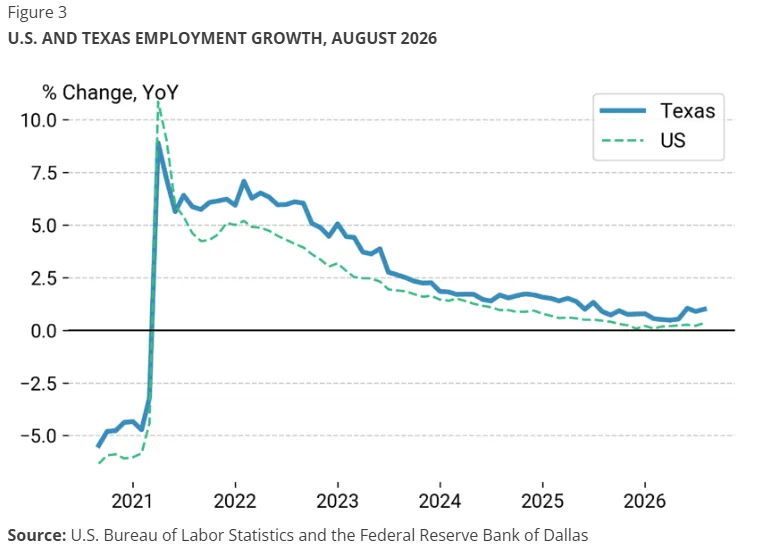
- Texas added jobs at a 1.0% annual pace in August, well ahead of the nation’s 0.3%, with Austin the only large metro to lose jobs, per the Texas Real Estate Research Center.
- The 30-year mortgage rate climbed 37 basis points to 7.03% in September as the 10-year Treasury yield jumped to 5.29%, and the Fed followed with a 25-basis-point hike.
- Rising long-term rates and a surge in AI-related borrowing add financing risk for real estate, even as a balanced labor market suggests unemployment should hold near 4%.
Texas job growth ran 1.0% year over year in August, more than triple the national pace of about 0.3%, according to the Texas Real Estate Research Center (TRERC).
The October outlook from TRERC economist Jorge Barro also tracks a sharp jump in mortgage rates, a Federal Reserve hike and rising debt tied to the AI buildout.
Get Smarter About What Matters in Texas
Subscribe to our free newsletter covering the biggest commercial real estate stories across Texas — delivered in just 5 minutes.
Texas Keeps Outrunning the Nation
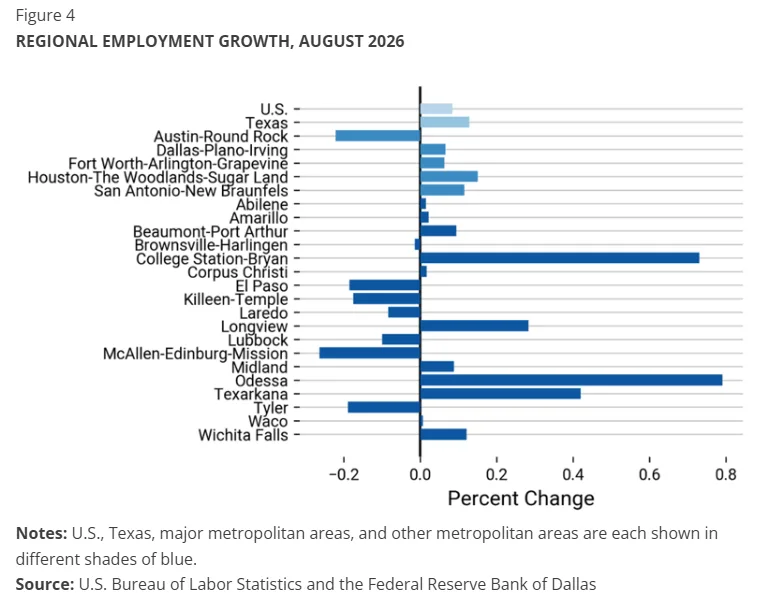
Austin was the only large Texas metro to lose jobs in August. The other large metros added jobs, while smaller metros posted mixed results. TRERC notes that state and local labor data lag national figures by one month.
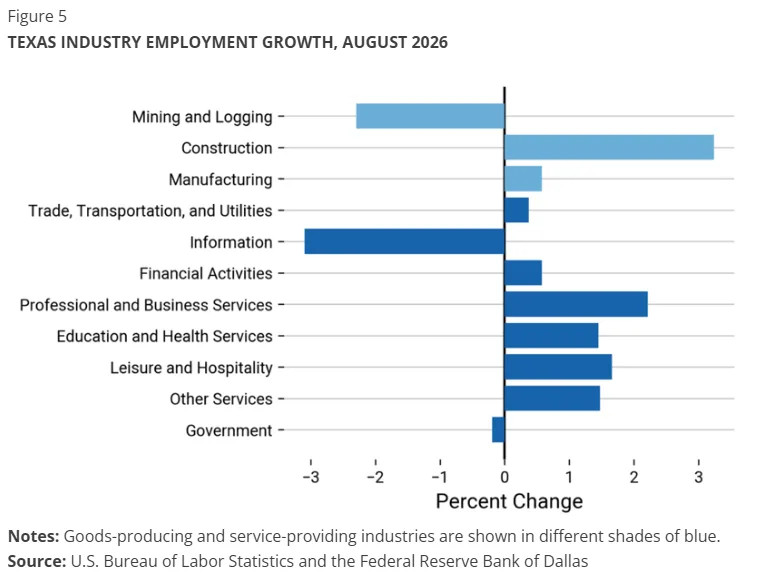
By industry, only mining, information and government lost jobs. Employment growth was more evenly spread across the remaining sectors.
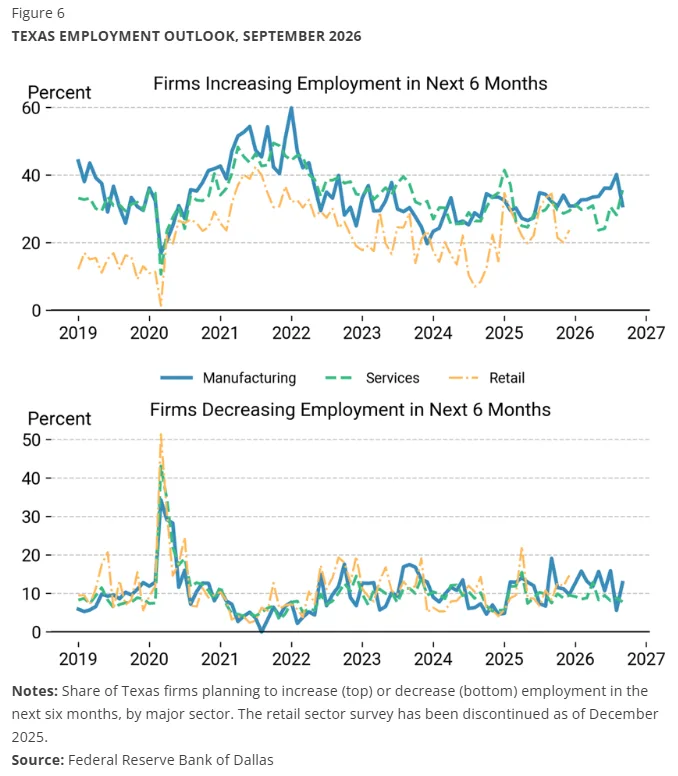
Meanwhile, Dallas Fed surveys showed a weaker manufacturing hiring outlook after several months of gains. The services outlook, however, improved.
Zooming Out to a Cooler National Picture
Nationally, second-quarter 2026 GDP growth rose from an initial 1.5% estimate to 2.2%. However, hiring has slowed. September added just 29,000 jobs, below expectations. Revisions also cut July and August job gains by a combined 60,000.
Unemployment edged up from 4.1% to 4.2% as labor force participation increased. This trend aligns with a recent Dallas Fed outlook for job growth cooling in Texas this year.
Rates Take Another Leg Up
In September, the average 30-year mortgage rate climbed from 6.66% to 7.03%. That marked a 37-basis-point increase. The 10-year Treasury yield, a key benchmark, also jumped 54 basis points, rising from 4.75% to 5.29%.
Meanwhile, the mortgage spread narrowed from 191 to 174 basis points. That puts it near its typical range of 150 to 175 basis points. Therefore, higher Treasury yields, rather than wider lender premiums, explain the mortgage rate increase.
The Fed also raised its short-term rate by a quarter point. This marked its first rate change since a December 2025 cut. TRERC says oil-driven inflation and market volatility could influence the next move.
AI Debt Is the Wild Card
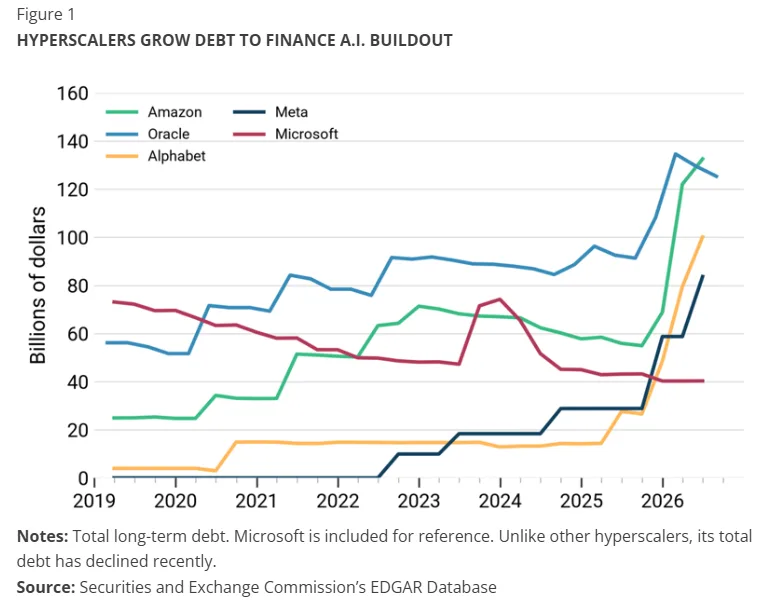
Oracle, Amazon, Alphabet and Meta raised $194B in new debt from January through June. By comparison, they raised $108B during all of 2025. Estimates put AI-related capital spending near $7T through 2032. Market experts see this spending as a possible driver of recent increases in long-term rates.
For now, TRERC says the buildout supports economic activity through spending and hiring. However, lenders expect borrowers to eventually generate enough revenue to cover their obligations.
Breaking even would require roughly $3.7T in annual data-center revenue by 2032. That equals about 9% of GDP and requires annual growth near 45%. Much of the borrowing sits in private credit and off-balance-sheet vehicles. Unlike the telecom bust, this structure makes potential losses harder to trace because the debt is less transparent.
Why It Matters
TRERC views hiring as an early indicator of housing demand and home prices. Therefore, Texas’ employment performance relative to the nation offers a positive signal for the state’s real estate markets.
Financing conditions, however, present a challenge. Higher Treasury yields flow directly into borrowing costs. This increase follows PIMCO’s 6% warning about where the 10-year yield could head.
What’s Next
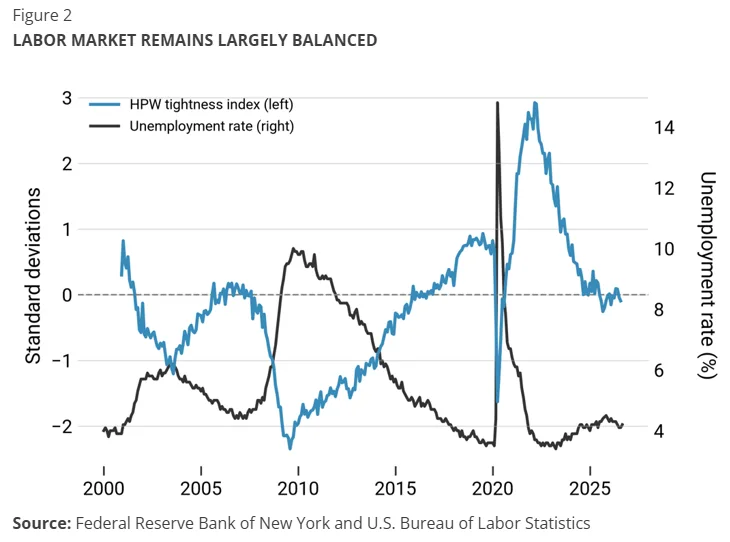
The New York Fed’s labor market tightness index tracks wage pressure. The index ran hot in 2018 and again in 2022, when unemployment hovered near 4% and continued falling. Today, it sits near its historical average of zero. TRERC interprets this as a sign that unemployment should remain stable.
Looking ahead, watch oil prices and the Fed’s next move. Also monitor whether the early manufacturing rebound continues. The Dallas Fed’s September survey showed improvements in current production and hiring, although companies grew less optimistic about the next six months.