




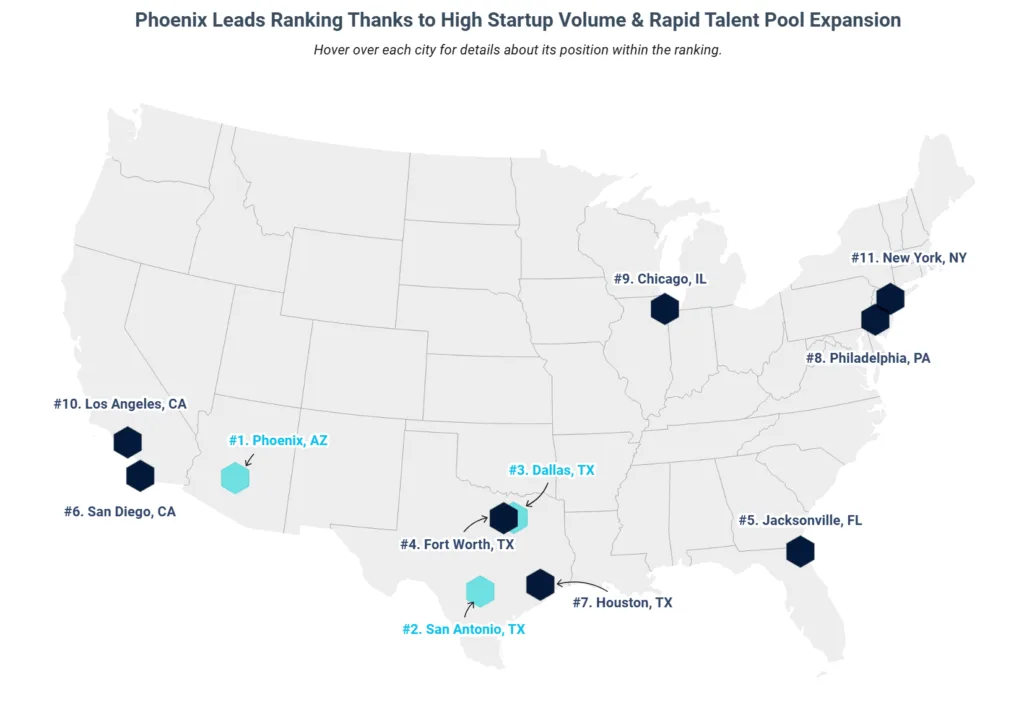
- Phoenix leads all large US cities in startup density and growth, backed by a fast-growing educated workforce and business-friendly conditions.
- Austin tops the list of mid-sized cities, ranking #1 in startup share, growth, and percentage of college-educated residents.
- Cities like San Antonio, Tucson, and Nashville stand out for their low costs and strong startup survival rates, highlighting the rise of affordable innovation hubs.
- Networking, education, and cost factors continue to define which cities are best positioned for sustained entrepreneurial success in a tougher funding environment.
Startup Map Redrawn: The Rise of the Affordable Innovation Hub
With venture capital flowing more selectively than in recent years, US startups are increasingly leaning on local ecosystems and fundamental business strength to survive and grow. A new analysis by CommercialCafe of US cities by population tier reveals that places like Phoenix, Austin, and San Antonio are becoming top-tier destinations for entrepreneurial activity—especially in a climate where cost, talent, and support infrastructure are more critical than ever.
Big City Leaders: Phoenix and San Antonio Set the Pace
Phoenix emerged as the top performer among US cities with over 1M residents, scoring first in both startup density and startup growth. The city also saw a significant rise in the share of college-educated residents, expanding its talent pipeline.
In second place, San Antonio offered the most competitive cost profile—ranking #1 in labor costs, office rents, and regional price parity. These advantages have translated into higher startup survival rates, with nearly 66% of new businesses still active after five years.
Other top performers include:
- Dallas–Fort Worth: Strong across startup metrics and freelance workforce share.
- Jacksonville, FL: Fastest-growing educated population and highest freelance labor participation.
- San Diego: Most educated population and leading concentration of consulting firms.
Despite high operating costs, New York City still excels in networking and Kickstarter success, underscoring its unique creative ecosystem. Meanwhile, San Francisco’s shifting office market is another factor influencing where new businesses choose to set up operations, as rising costs and hybrid work reshape long-standing tech hubs.
Mid-Sized Cities: Austin’s Dominance and Tucson’s Cost Appeal
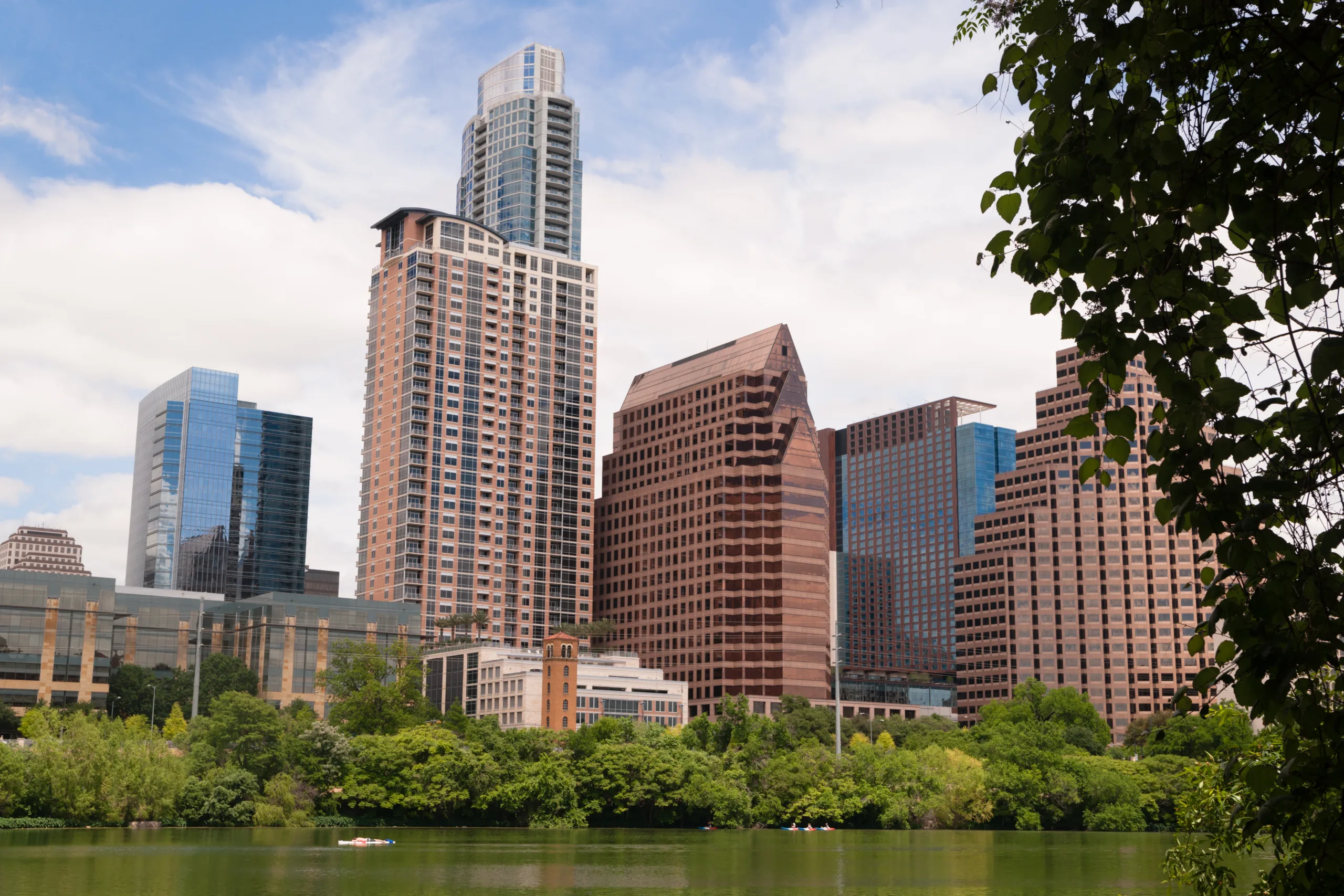
Among cities with 500,000 to 1M residents, Austin took the top spot with leading scores in startup share, growth, and college-educated population. The Texas capital also hosts a strong base of consulting firms, a key support for startups.
Nashville followed closely, leading in Kickstarter success and ranking second for startup survival and freelancer share.
Rounding out the top five:
- Indianapolis: Best for startup survival, low coworking and office costs.
- Tucson: Lowest labor and office costs; top-tier regional price parity.
- Mesa, AZ: Strongest growth in new business formation and educated residents.
Other notable mentions include:
- Louisville: Lowest combined office and coworking costs.
- Albuquerque: Best regional price parity.
Why It Matters
As funding becomes more selective and expensive, cities that combine affordable business environments with strong talent pools are taking center stage in the US startup ecosystem. In fact, many of the top-ranked cities for startup activity are not traditional tech hubs, but rather emerging secondary markets offering a better balance of cost and opportunity.
What’s Next
Expect continued decentralization of startup activity from traditional powerhouses like San Francisco and New York toward more cost-effective, talent-rich cities like Austin, Phoenix, and San Antonio. With remote work models, freelance economies, and municipal support programs gaining traction, the geography of innovation is rapidly expanding.
Get Smarter about what matters in CRE
Stay ahead of trends in commercial real estate with CRE Daily – the free newsletter delivering everything you need to start your day in just 5-minutes