



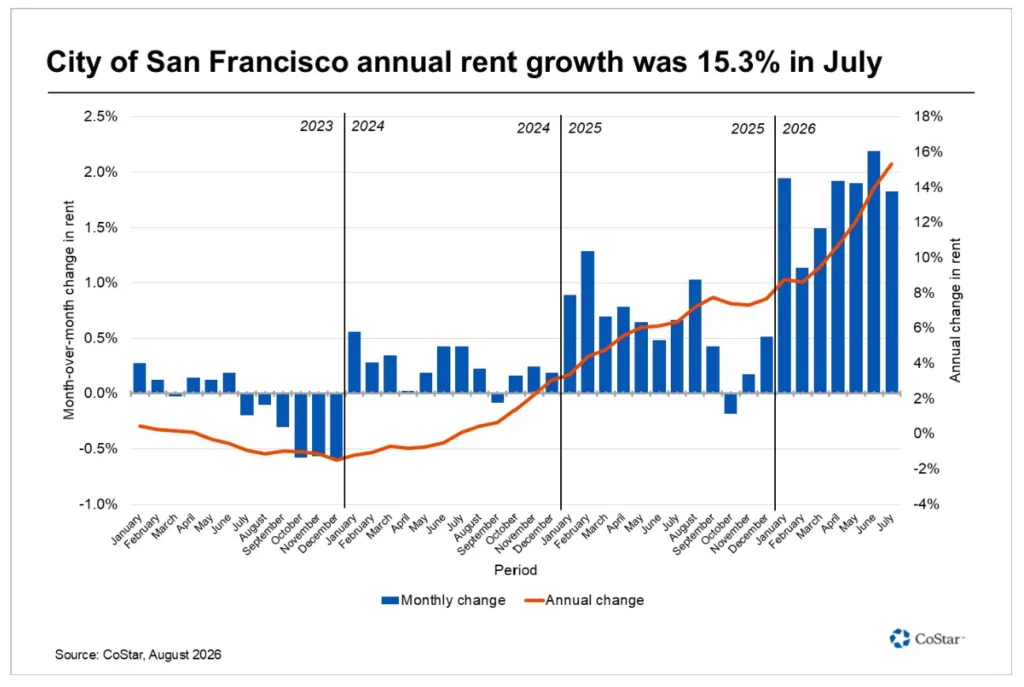
- San Francisco rents grew 14% between March and July 2026 as AI sector hiring accelerates demand, per CoStar.
- Bidding wars, packed open houses, and scams are now routine, with average asking rents at $3,864—over double the US average.
- Limited new construction and rampant demand suggest further tightening, with luxury and affordable housing both squeezed.
AI Gold Rush Reshapes San Francisco Rental Market
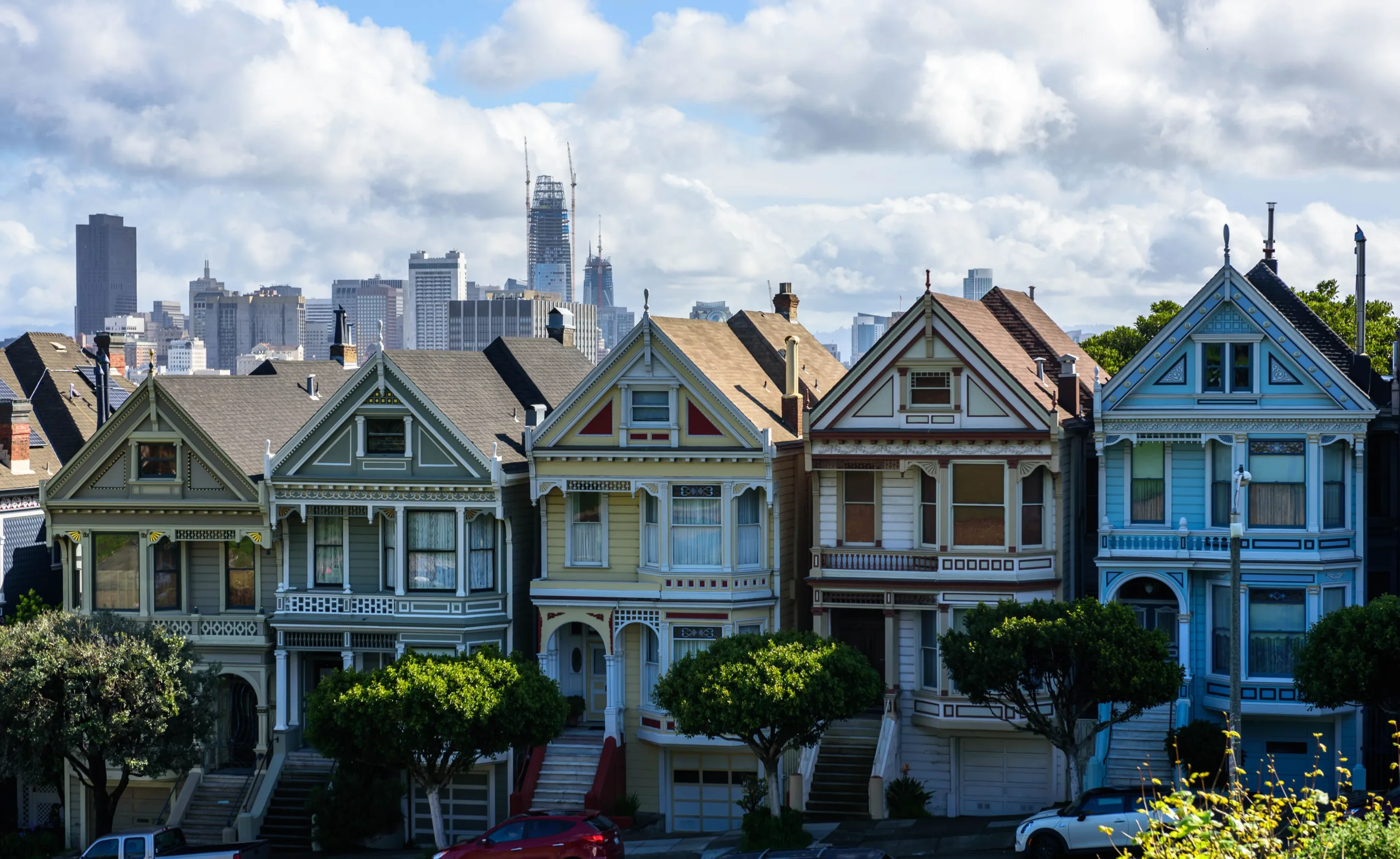
San Francisco’s apartment market, already among the nation’s most competitive, has become a pressure cooker since the artificial intelligence boom drew thousands of high-salaried professionals to the city. CoStar News reports that neighborhoods like the Marina are now magnets for new hires, resulting in a surge of bidding wars and record rents. Low inventory and historic underbuilding have tilted power decisively toward landlords. The city cemented its return as the country’s priciest rental market this summer—leapfrogging New York once again, per CoStar.
The city’s average asking rent reached $3,864 in July, more than double the US average and up 14% just since March 2026. Despite a still-higher vacancy rate (3.6%) than New York (2.9%), tenant competition is fierce, especially as tech workers snap up limited supply at the luxury and mid-market ends. For many, apartment hunting is now a marathon of crowded open houses and digital dead ends.
Get Smarter about what matters in CRE
Stay ahead of trends in commercial real estate with CRE Daily – the free newsletter delivering everything you need to start your day in just 5-minutes
Pandemic Decline Reverses as Demand Rebounds
San Francisco’s rental rebound comes after a period of sluggish demand during and after the pandemic, when remote work and safety concerns led to a highly publicized exodus. According to leasing agents cited by CoStar, portfolios that contained hundreds of vacancies in 2021 have all but disappeared. Data from the city controller’s office corroborates that economic growth, fueled by AI investment, has sharply accelerated since early 2026—even as other California markets cooled off.
Landlords and agents now command an environment that many compare to San Francisco’s 19th-century boomtown ethos: competitive, expensive, and chaotic. Longtime residents and brokers say a city once considered off-limits due to crime or cost is now seeing relentless outbound and inbound prospecting, with newcomers taking up analog strategies—scouring ‘For rent’ signs and networking—in addition to relentlessly scouring digital platforms.
The Details
By midsummer 2026, would-be tenants willing to pay $9,000 a month for a three-bedroom were finding the competition just as daunting as those at lower price points. Rents in popular areas like the Marina and Pacific Heights have jumped more than 50% in some cases since mid-2025, per CoStar analytics lead Nigel Hughes. For example, studios in the Marina rose from $2,500 to $3,800, and one-bedrooms in Pacific Heights now fetch $6,500/month.
In addition to sticker shock, prospective tenants face scams and rampant bidding wars. Some landlords and agents openly solicit ‘maximum rent’ offers, despite gray areas in local tenant law. Open houses routinely attract 40–50 people in an hour, and frustrated renters report being ghosted or facing pressure to decide instantly—fostering a climate that prioritizes speed and liquidity over affordability or stability.
Bidding Wars and Market Friction Shape Neighborhood Dynamics
Key neighborhoods like the Marina, Nob Hill, Pacific Heights, and Noe Valley are seeing the sharpest competition for rentals. Bidding wars—once rare outside New York—have become common, distorting advertised prices and making the market even less predictable. Manhattan is experiencing similar pressure, with bidding wars reaching record levels this summer as renters compete for limited inventory. Subsidies from employers like Kikoff illustrate how companies are adapting to compensate for sky-high housing costs.
Even tech founders and executives accustomed to luxury are reportedly struggling to secure homes, often turning to leasing agents for help. This practice was virtually unheard of among renters in the city until now. The impact reaches beyond tech. Younger entrants and workers with weaker credit histories are increasingly pushed toward surrounding cities like Oakland. Meanwhile, rising rents are spreading across the Bay Area.
Why It Matters
The surge of AI hiring and investment in San Francisco has reignited a perennial market challenge: insufficient housing supply against a wave of well-paid demand. With average asking rents now at $3,864, landlords are again firmly in the driver’s seat. According to the city controller’s August report, new construction remains at ‘its lowest point since the Great Recession’—complicating any rapid response to the spike in demand.
About two-thirds of San Franciscans are renters, with nearly half occupying pre-1940 buildings. This means that today’s market squeeze reverberates widely, not just among tech arrivals, but also for longtime residents whose rent-controlled units are increasingly scarce. Since March 2026, the 14% rent surge marks one of the fastest sustained climbs in the city’s history. Tenant advocates and city officials are calling for heightened enforcement of consumer protections and greater investment in new housing stock, but change is likely to be slow.
Meanwhile, AI unicorns like OpenAI and Anthropic are preparing for public offerings, suggesting continued growth in well-compensated tech jobs—and further demand pressure. Some firms are now offering rental subsidies to help with recruitment and retention, a move that could become more common as both entry-level and luxury renters face supply constraints.
What’s Next
With AI-driven job creation not expected to slow—especially as OpenAI and Anthropic move closer to IPOs—competition for apartments is forecasted to intensify, particularly within the most desirable neighborhoods. Market analysts expect average rents could climb even higher into late 2026, barring a sharp uptick in new development. In response, some employers and startups are likely to further increase rental subsidies or adapt flexible office policies. For city planners and developers, the pivot toward housing starts is urgent, but local resistance, financing constraints, and regulatory barriers will keep timelines long. As a result, San Francisco renters—old and new—should prepare for another cycle of escalation and innovation in how apartments are found, secured, and priced.