






- A living as a service model, bundling rent and services, could challenge the traditional apartment lease structure in the US.
- Deloitte forecasts rising demand as more affluent, older, and mobile tenants extend renting over homebuying well into middle age.
- LaaS could open new revenue streams for major multifamily landlords and reshape public attitudes toward long-term renting.
Flexible Living Models Gain Traction Among Renters
US renters are getting older, wealthier, and more mobile, but the business of apartment leasing still leans heavily on yearlong leases and do-it-yourself amenities, according to Bisnow.
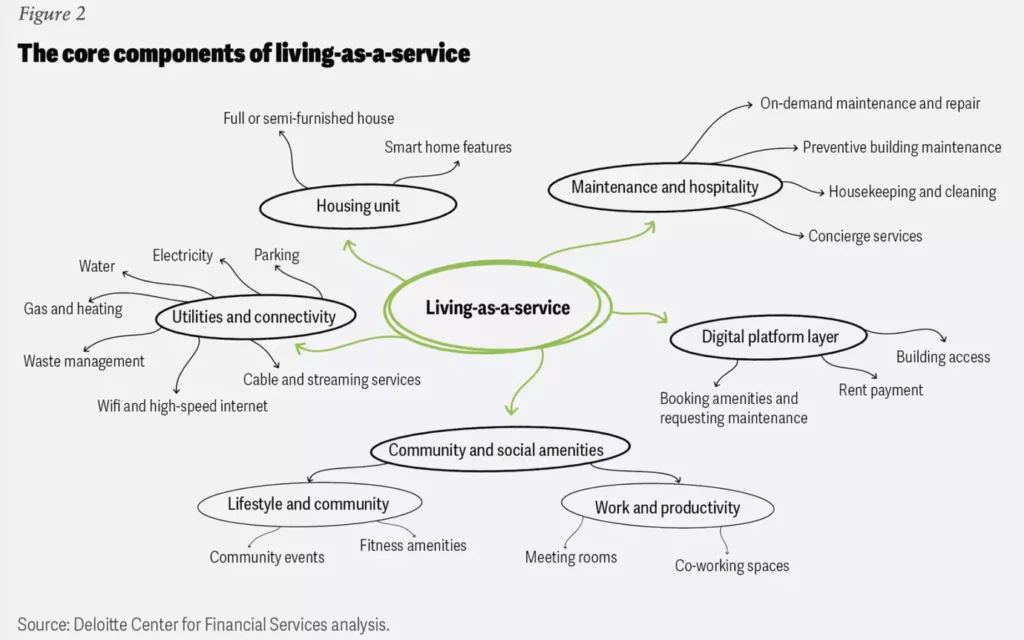
Now, consultants at Deloitte say the industry may be on the cusp of a fundamental shift: apartment ‘living as a service’ (LaaS). Their May 2026 report envisions a bundled subscription model — a single payment combining furnished apartments, utilities, housekeeping, and move-anytime flexibility — that could challenge the sector’s century-old conventions.
Get Smarter about what matters in CRE
Stay ahead of trends in commercial real estate with CRE Daily – the free newsletter delivering everything you need to start your day in just 5-minutes
Renter Demographics and Habits in Flux
According to the National Association of Realtors, the median age of first-time US homebuyers has climbed to 40, compared to the late 20s in the 1980s. Factors include housing prices far outpacing wage growth, higher mortgage rates, and more upper-income households choosing to rent. RentCafe reported a 204% surge in renters earning $1M or more between 2019 and 2023, even outpacing growth among million-dollar homeowners. At the same time, census data shows the share of renters 65 and older jumped 30% from 2013 to 2023, adding 2.4M new senior renters. These trends, accelerated by COVID-era remote work and mobility, are motivating property owners and consultants to rethink standard lease offerings.
The Details
The proposed living as a service model borrows from tech-sector SaaS playbooks. Tenants would sign up for a subscription covering rent, utilities, cleaning, and furnishing under a single, itemized bill. Large landlords with portfolios across multiple markets could benefit the most from the model. That includes firms such as AvalonBay and Equity Residential, whose recent merger created a 180,000-unit platform. Instead of signing yearlong leases, tenants could move between units or cities within a landlord’s network with 30 to 60 days’ notice. The model also emphasizes transparent billing with detailed cost breakdowns. That approach could help address growing regulatory scrutiny of hidden fees.
High-Income Renters Fuel Industry Interest
Deloitte’s report describes the ideal LaaS customer as both affluent and mobile: high-earning millennials, baby boomers downsizing, and new remote workers prioritizing flexibility. Unlike student housing, which has pioneered bundled models, national multifamily firms haven’t widely adopted this approach yet. But Deloitte says industry conversations are growing, citing its own multifamily clients (undisclosed) showing renewed interest. Horning CEO Jamie Weinbaum, who oversees 5,000 units, expects strong demand from young professionals and older renters. He told Bisnow that changing views on the ideal age for homeownership could further support the trend.
Growth Projections Suggest a New Rental Paradigm
Deloitte’s rental housing forecasts (citing Urban Institute projections) lay out three potential US rental-share scenarios by 2035. If the market shifts from today’s 34.3% of households renting to 39.3%, the US would add up to 10M renter households. The same report sees substantial upside for landlords who successfully upsell bundled amenities and lock in longer-term tenants. The model could boost revenue per available unit, reduce turnover costs, and help landlords retain residents drawn by convenience and mobility.
Why It Matters
LaaS signals a move away from the stigma of “perpetual renting” and toward a flexible, premium living experience. As demographics shift and high-income renters redefine American housing norms, this model could appeal to a growing renter base. Many of these renters are no longer rushing to buy homes. The trend could also accelerate consolidation among national landlords with the scale to deliver bundled services. Multi-service subscriptions could also help stabilize income for landlords during market swings, per Deloitte’s findings.
What’s Next
While no national landlord has committed to rolling out LaaS, sources at Deloitte say major multifamily owners are exploring the model, likely focusing first on high-growth metros and luxury-oriented segments. As renter demographics skew older and wealthier, expect broader pilot programs and partnerships between property managers and service suppliers. Regulatory scrutiny around fee transparency will remain high. If LaaS builds traction, the industry’s leasing, management, and asset strategies may need a rethink to compete for the “lifetime renter.”